43…and onwards!

43. R&B “Ian Siegal” guitar
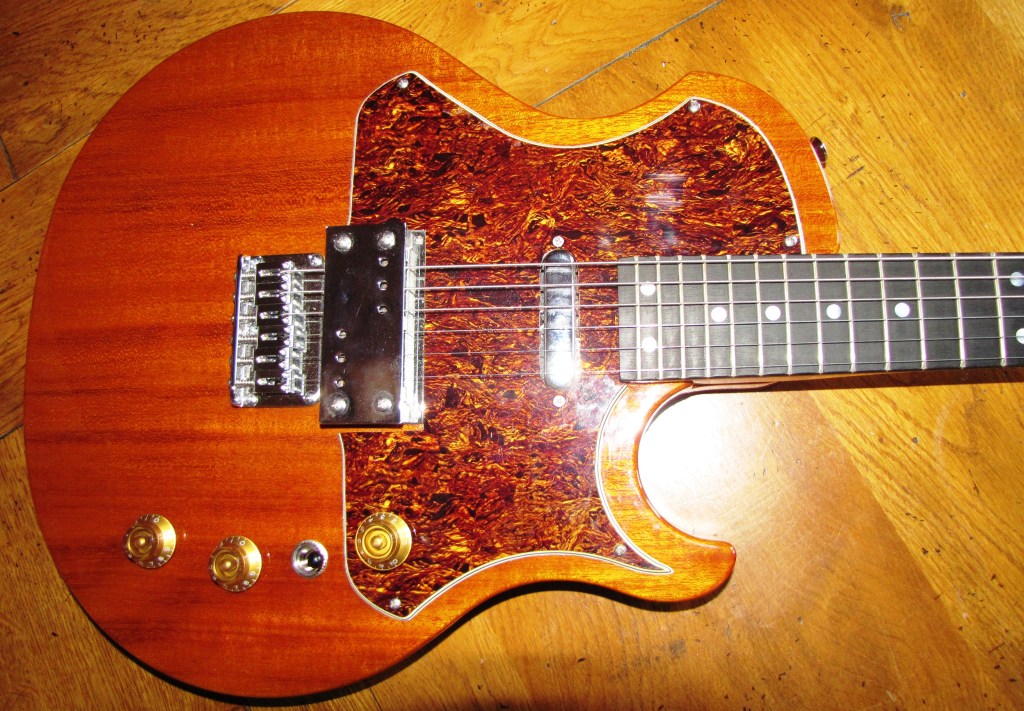
Unique – I’ve never seen another guitar quite like this one!

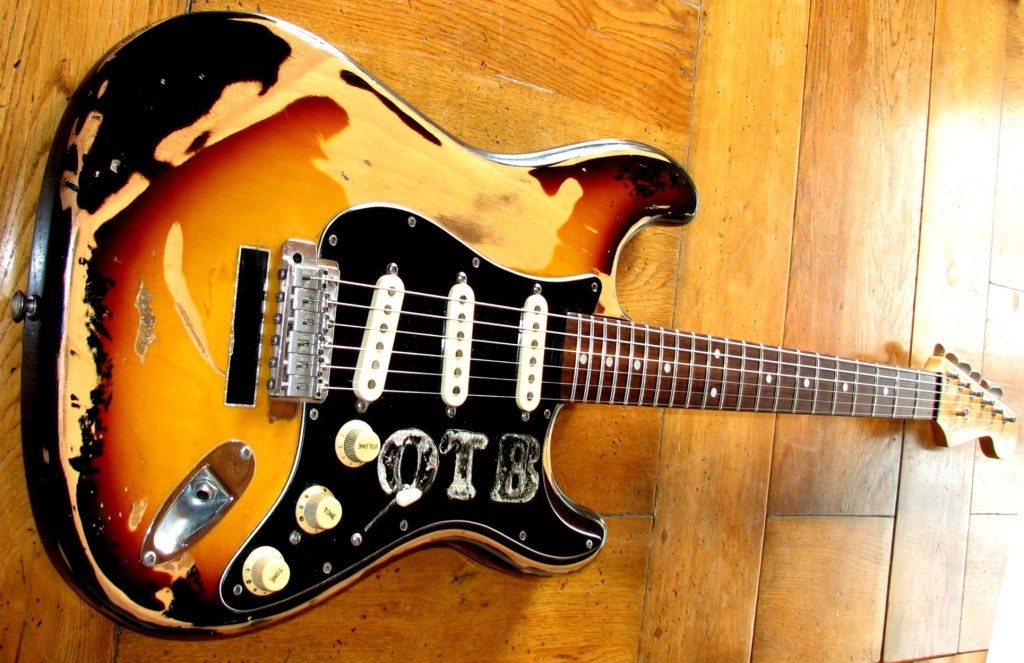
A VERY special instrument this – as befits Guitar Number 43 (still a good few to come, by the way!) Inspired by a friend who is one of the most gifted artists I know, built by another incredibly talented chum and facilitated by the amazing generosity of third dear old pal.
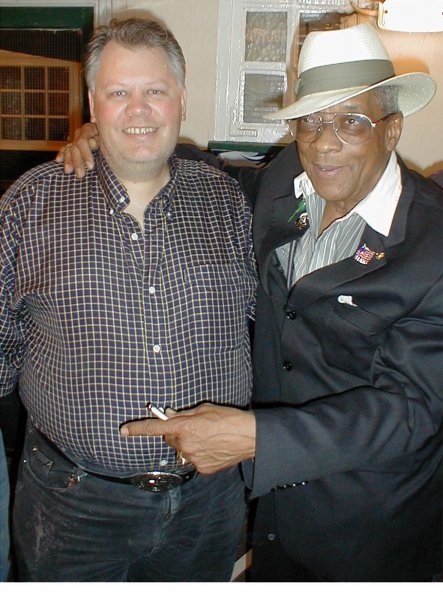
I’ve known Dennis Dudley (aka Blues Boss) for the best part of two decades – we both used to post on an online international blues forum called the Blindman’s Blues Forum, where I ended up making friends all over the world. Dennis lives in Seattle, Washington State, USA, where he’s something of a big wheel on the local blues scene. Not a musician himself, he is nevertheless one of the movers and shakers the Washington State Blues Society who knows the local artists and all the local blues venues. To say he’s keen, loyal and enthusiastic supporter of the musicians he admires is a vast understatement!
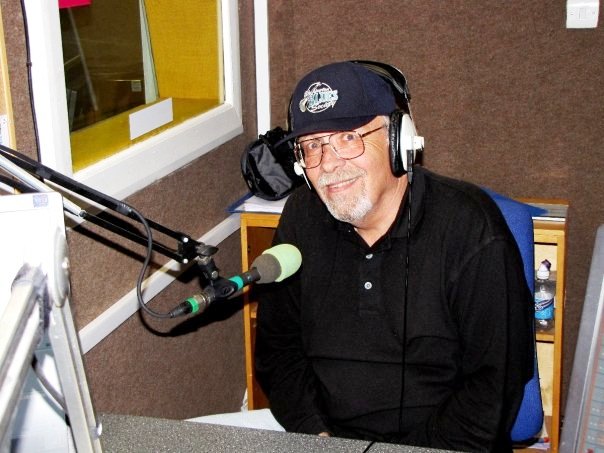
Blues enthusiast and super-fan – Dennis “Blues Boss” Dudley on my radio show during his visit to the UK

Dennis came to the UK in the mid-2000s, spoke on my radio show and stayed with me in Burnham for a couple of days. On two occasions towards the end of the 2000s, I repaid the compliment and visited the Pacific North West and each time, Dennis was a wonderful host and tour guide. (He even managed to swing us guest tickets to see Taj Mahal in an intimate local jazz club. Truly a night to remember!)
Dennis also introduced me Mark Riley, a tremendous guitar player who lives in Tacoma, a thoroughly good guy and builder of fantastic guitars under the R&B brand. (His customers include the great Sonny Landreth, who has a couple of Mark’s distinctive “Map” guitars, including an incredible resonator.)
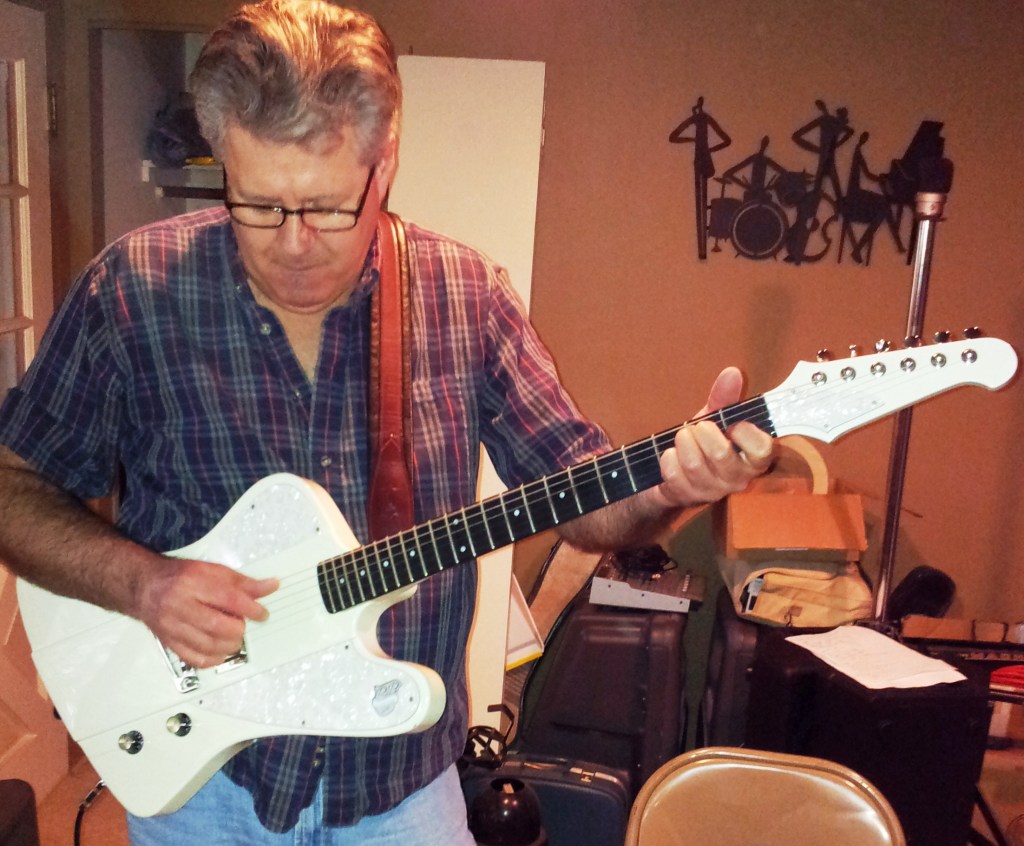
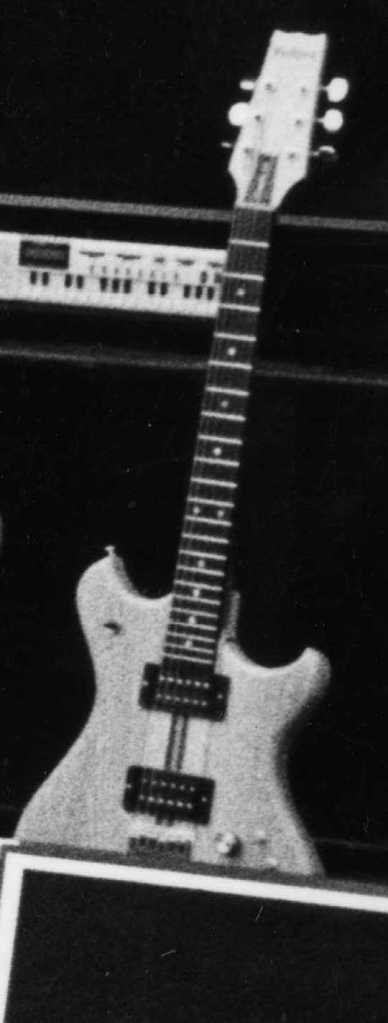
Master craftsman and master musician – Mark Riley with a gorgeous (and slightly scaled-down) white single-pickup R&B Firebird he built

It was me who first introduced Dennis to the music of that amazing talent Ian Siegal. It happened long before I met Dennis in person and he quickly became a huge fan – so much so that he ended up booking and tour-managing a string of Pacific North West dates for Ian, clocking up a couple of thousand miles of driving in the process! Mark and his band provided the backing on those gigs.
In the middle of 2011, Dennis contacted me to say he and Mark were making a guitar as a gift for Ian. Would I be prepared to help out by taking delivery of said guitar and then publicly presenting it to Ian at an opportune moment? Both WOLFPACK and Ian were due to play Newark Blues Festival in September, so that was the obvious place to do it. And yes, of course I was willing to help!

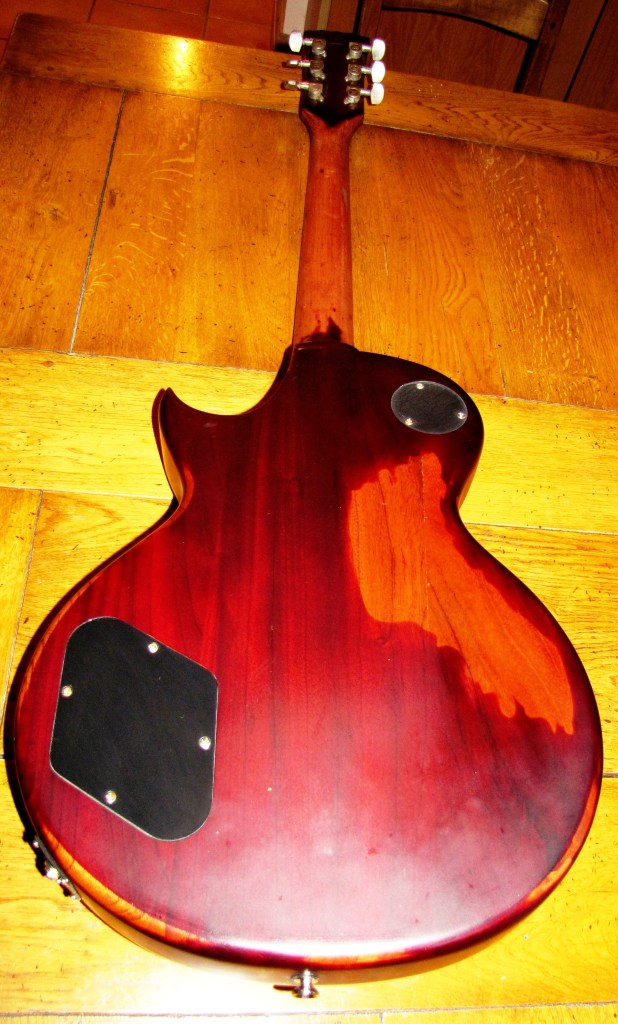
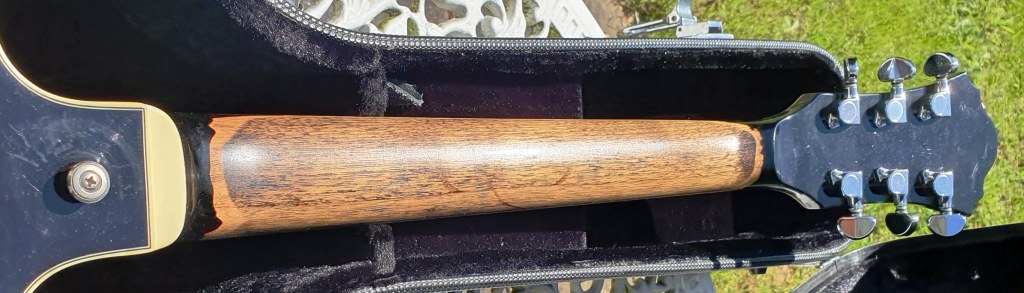
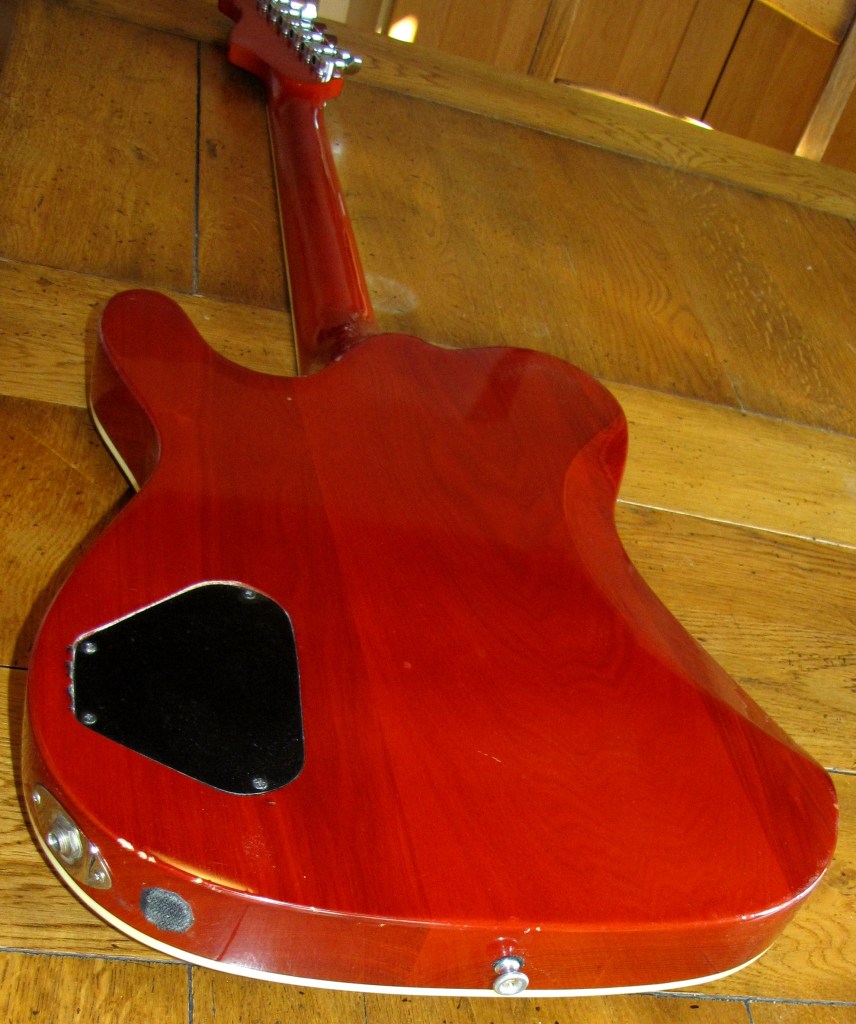
Stunning – the reverse side of the R&B guitar

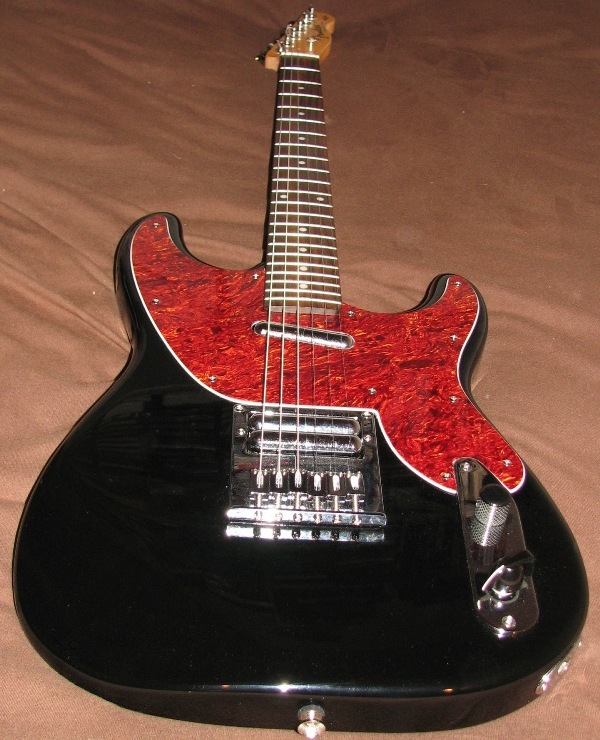
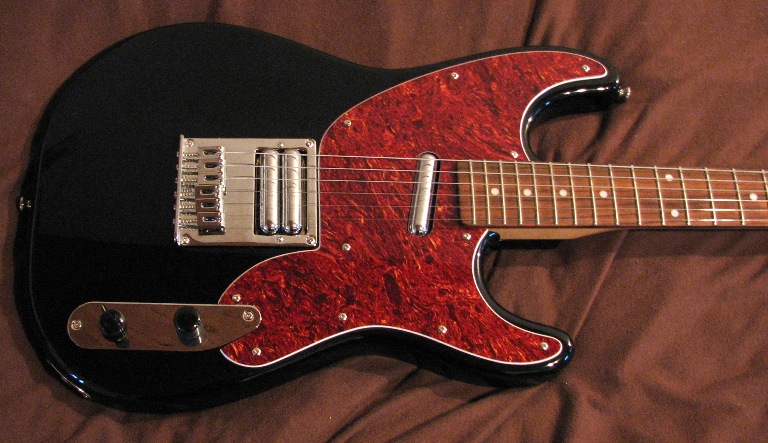
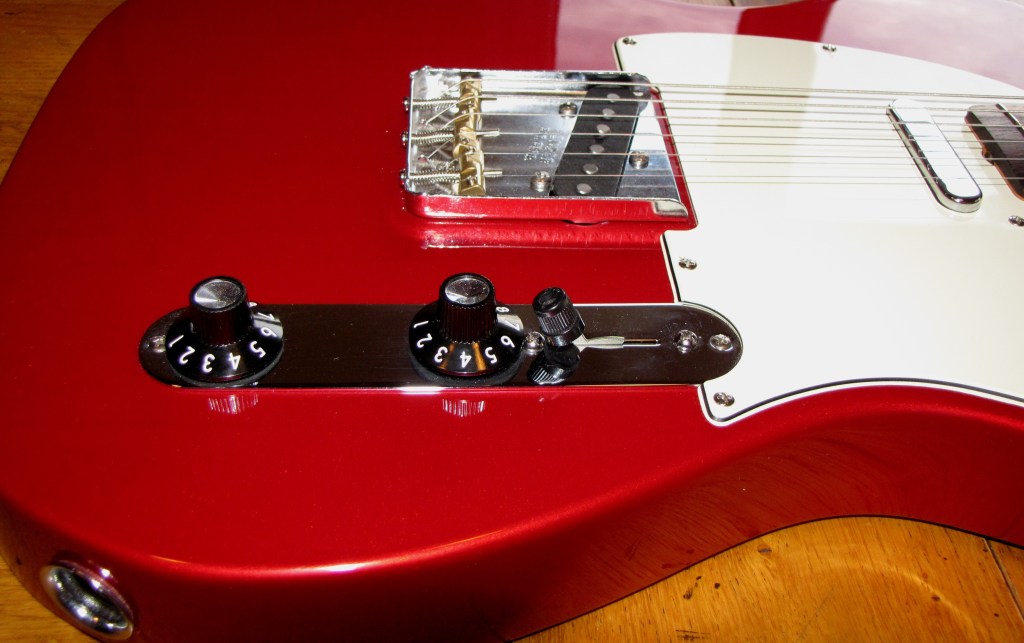
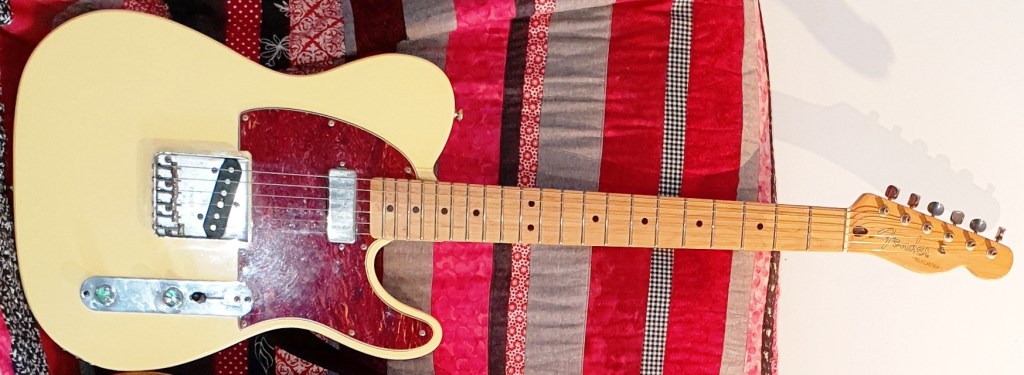
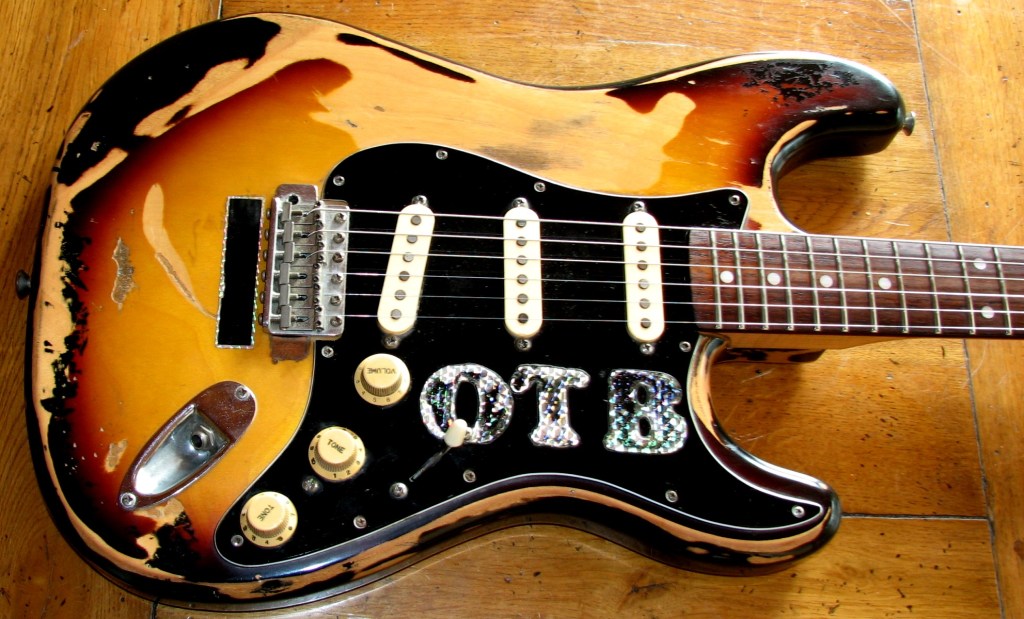
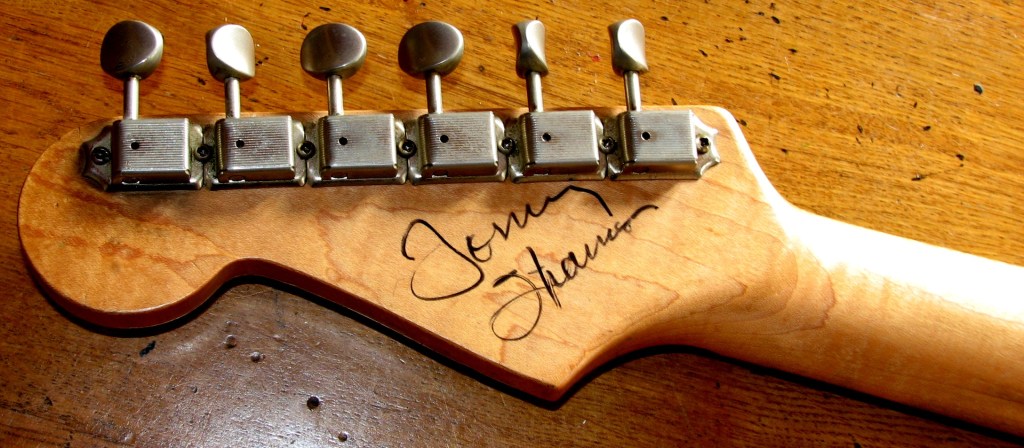
The guitar duly arrived at my house. It was a stunner. Beautiful mahogany neck and body, tortoiseshell scratch plate with a matching headstock facing, incorporating the R&B logo. Evidently, Ian had spent some time on the road with Mark enthusing about the ferocious-sounding pickups Supro used to fit to their old lap steel guitars. Ry Cooder famously fitted one to his “Coodercaster” and Ian would later wind up with something similar in a Tele. This guitar sported one of Jason Lollar’s replicas of the Supro lap steel pickup at the bridge plus a Tele pick up at the neck. It was an idiosyncratic guitar, the shape unique, but vaguely reminiscent of the old Silvertones Ian favoured at the time, definitely a work of art and a labour of love – crowned by an engraved brass plaque on the back of the headstock.
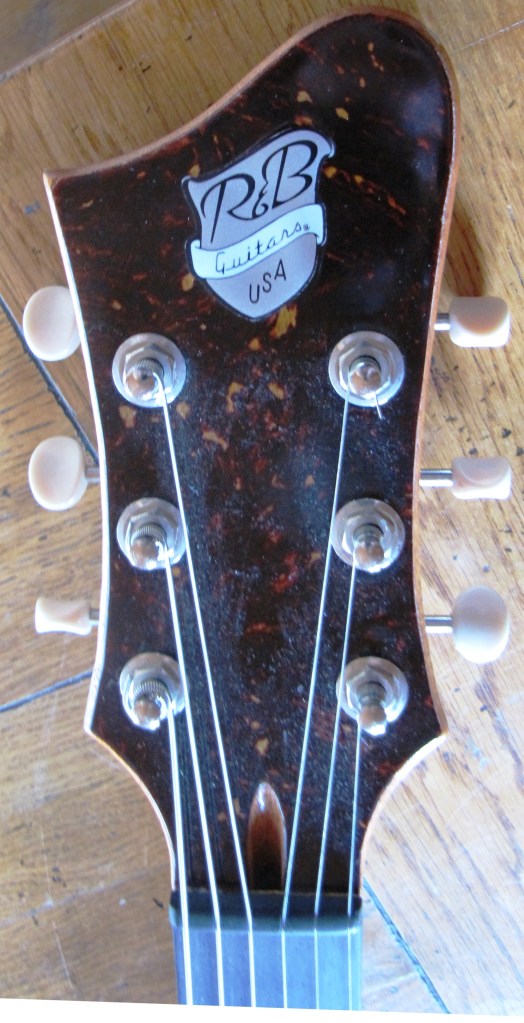
Familiar, yet distinctive – the R&B headstock

September came along and I duly presented it to a suitably gobsmacked Ian during of his set on the main stage at Newark. A couple of months later, I got a message from Dennis. Ian had contacted him to say the guitar was absolutely beautiful, but he really wasn’t getting on with it and didn’t think he’d be able to put it to much use. Rather than see it go to waste, Ian very graciously suggested that I might like it instead! Wow!
So the guitar returned to Burnham. I was delighted.

The plaque on the back of the headstock

First thing I did was to string it with a set of my favourite 13-56 Newtones – this instrument was always going to be about slide guitar – and take it out. I played it quite a few times at jams and on plenty of WOLFPACK gigs, but as with so many of my guitars, eventually, it went back under the bed, relegated by my old faithful Squier 51 with the Hipshot bridge.
There was something about that lap steel pickup that didn’t work all that well with the Tele pickup. I ended up removing the neck pick up altogether, an arrangement that worked rather better, but if I’m perfectly honest I haven’t used this guitar as much as I ought to have done in the intervening years. That’s the trouble with so many guitar players. No matter what gets put in front of us, we unerringly seem to return to the familiar.Having said that, I do dig it out from time to time. Most recently, when I started writing this blog I tuned it up and – as is sometimes the case – it instantly gave me a song. It’s called the “Lockdown Boogie” and you can hear the demo I recorded on Mark’s R&B here. You can probably guess what it’s about…

The R&B with the Mojotone Gold Foil offered up on the pickguard. It’s too nice a guitar for me to risk spoiling myself, so it’ll soon be off to a local luthier for installation!

While I was recording with the R&B, I took a notion to fill that empty front pick up slot. On the advice of two people who know about these things (Mr Siegal, and Owen) I ordered a Mojotone gold foil pickup, which arrived in early May. I haven’t fitted it yet, but I’m hoping it will site nicely with the Lollar pickup – after all, that’s the combination Ry Cooder uses on the Coodercaster. Watch this space for confirmation!
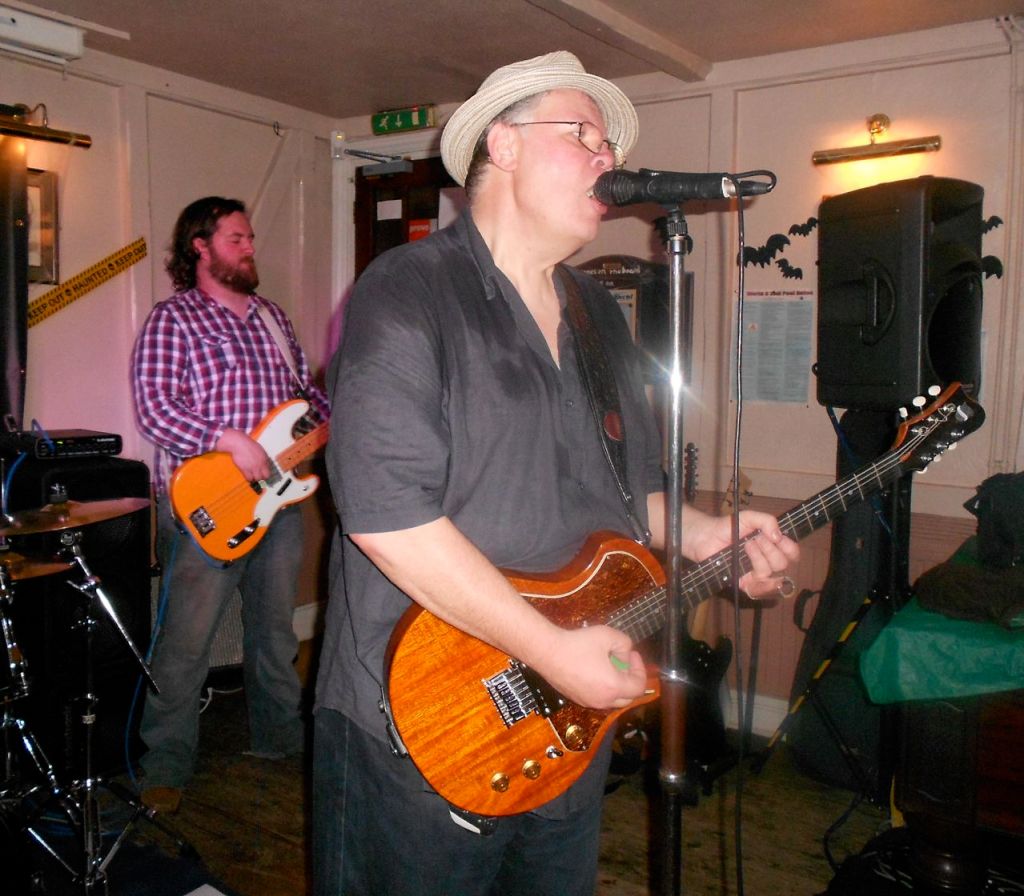
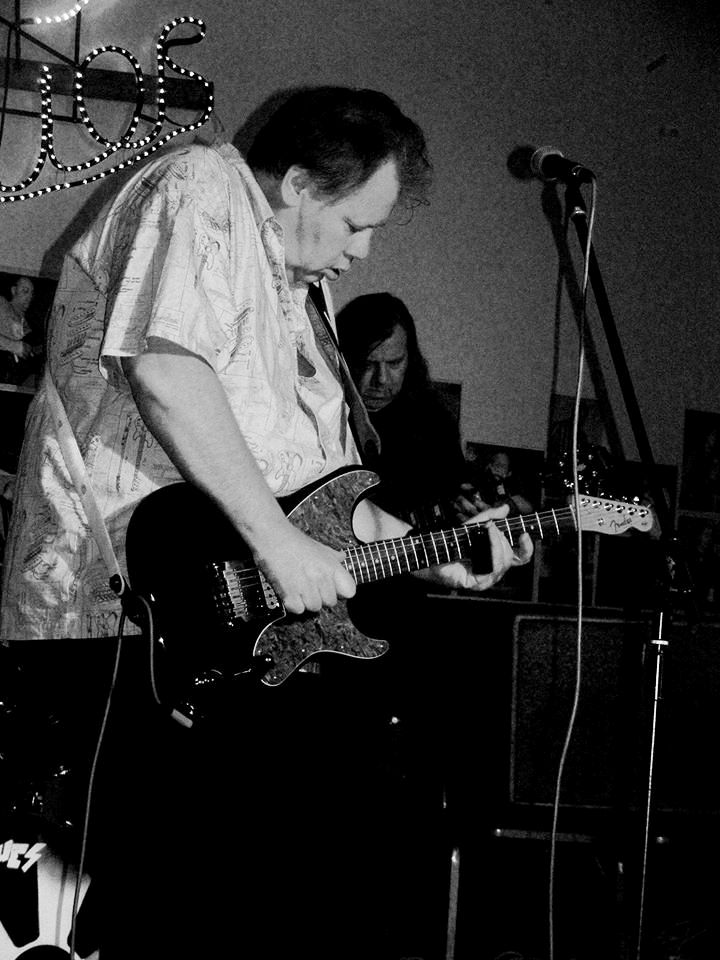
Yours truly playing with R&B with WOLFPACK a few years ago.

CODA: Since posting this blog, I’ve modded this guitar a couple of times. You can catch up with the latest developments here:
60. Evolution – Revamped R&B “Ian Siegal” guitar
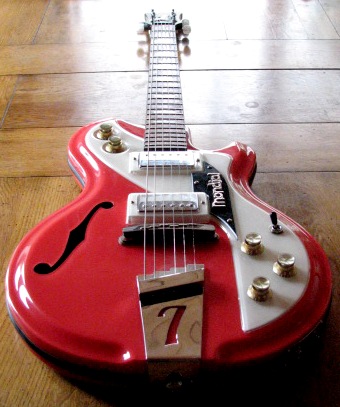
An Italia Flirtation…

42. Italia Mondial

IT’S hard to know what to say about this guitar which isn’t instantly said by the pictures. I saw a photo of one in a magazine and fell in love with it there and then!
Clever chap, Trevor Wilkinson who designed this and all the other eye-catchingly retro guitars in the Italia range. (He is also the man behind a load of rather nifty aftermarket guitar hardware and, of course the Vintage Lemon Drop Les Paul copy which was a regular standby of mine for quite a few years – see No 37.)
His Italia designs succeeded in capturing the essence of great, weird and funky old guitars from the past by makers such as National, Airline, Silvertone et cetera in a range of modern, playable, usable and affordable instruments. (Which is more than can be said for a lot of the old guitars which inspired them.)
The Mondiale’s body was wood, the same as most guitars, but was encased in a plastic jacket reminiscent of the old plastic bodied National “Map” guitars much beloved of Jack White, he of the White Stripes, among others. The two controls on the top bout recall that old red and white classic, too.
Two humbuckers, plus an acoustic pickup under the wooden jazz guitar-style bridge got the noise out to the amp – it occurred to me that I might be able to use this for the acoustic gigs of which I am perpetually promising myself to do more.
In practice, this guitar truly was all about the looks. It played OK, but not amazingly well. It sounded OK, but not amazing – and the acoustic pick up was, frankly, a bit of a dead loss.
It was the kind of guitar that’s great to hang on the wall and look at – I sort of wish I still had it for that reason alone – but it was never going to be a solid, gigging instrument. Not entirely surprisingly, it didn’t stay with me in Burnham for very long.
To borrow a fishing analogy, having caught it there, I soon threw it back into theBay.

Fancy – but it was all about the look.

An Intruiging Hybrid…

41. Surf Green Fender Japan Pawn Shop 72

I REFERRED obliquely to this undeniably pretty piece of Fender Japannery in my lengthy screed about Squier 51s (No 17). The familial relationship is plain to see.
There was no doubt about it. This was a fancified Squier 51, but with a strong tip of the hat to the Fenders of the early 1970s.
Unlike the Squier 51, it had a full-depth Strat body, but with a Thinline-style f-hole. (Still not sure whether this looks right or just plain wierd!) The ’72 sported a through-strung hardtail Strat bridge, a generic humbucker at the bridge, a recreation of Seth Lover’s Wide Range humbucker at the neck and a rosewood-board neck. As well as the infamous three-bolt neck fixing, it has the neck-tilt mechanism and “bullet” truss road adjustment found on Strats and the more high-end Teles from 1972 onwards. I have to say, however, the neck fit was a million times better than most 70s American Fenders I’ve played!

Handsome hybrid – the ’72 featured the Squier 51 layout and a rather attractive three-ply version of the pickguard, but with two humbuckers. The f-hole and recreation of Seth Lover’s Wide-Range humbucker in the neck position recall the second series Tele Thinlines of the 70s.

Unlike its stablemate, the Pawn Shop 51, this guitar came in some attractive finishes, including Surf Green, a perfect match for my 62 Reissue, “Hubert”. I simply had to have one, I decided, as soon as I saw a picture.

Fender Japan guitars are, almost without exception, excellent instruments, but cheap they’re not and they tend to hold their prices in the secondhand market, too.
I spent two or three years stalking Pawn Shop ’72s on eBay, waiting for a nice Surf Green one to come up at the right price. Eventually, in very early 2015, I did find one. It was a long and tortuous drive along the south coast from my (soon-to-be ex)-girlfriend’s flat to Folkestone to pick it up…then the car broke down on the way home.
It might have been an omen. For one thing, my regular assignations in Brighton (not to mention opportunities to peruse the labyrinthine, guitar-lined rooms of GAK, just off the Laines) were coming to an end. More to the point, for all its prettyness, the Pawn Shop ’72 never really spoke to me the way so many other guitars have down the years. I took it to a few jams, but that was about it.

Seventies pedigree -The Pawn Shop ’72 had a lot in common with a lot of 1970s Fenders, but was actually rather better-made!
PS: The early 80s “Rivera design” Deluxe Reverb II it’s leaning against was one of two Deluxe Reverbs I had stolen in June, 2015. The really old, really valuable Silverface 72 Deluxe has never surfaced. The Rivera design one showed up on eBay earlier this year and l ended up getting it back, after l agreed to pat a small sum to the guy who had it (bought legitimately, apparently, from a secondhand shop).

A couple of months after getting it, I had the chance to buy an amazingly clean, great-sounding 72 Deluxe Reverb from a mate for an irresistible price. Suddenly I needed funds. This was one of three guitars I sold to pay for the amp.
Not that it did me a lot of good… To this day, it’s hard to look at pictures of that Pawnshop 72 without thinking about the way that lovely old Deluxe Reverb was stolen from outside my house six weeks after I bought it, along with a heap of other cherished gear…though fortunately, no guitars.

Siblings – the ’72 alongside my original Hipshot-equipped Squier 51
Surfin’ birds – the ’72 alongside my Surf Green USA ’62 Reissue Strat

Two more Squiers from Indonesia…

39. Squier Tele Custom w/P90s

THIS guitar caught my eye on eBay after my pal Dave Werewolf bought one of these for himself in 2010 and I sort of fell in love with it. It was a relatively brief infatuation, however.
Made in the same Indonesian factory as my favourite Squier 51s, these Teles are fantastic guitars for the money – with a twist. They have the pickguard and control layout of a 70s Tele Custom (like Cundo’s ’72) but in place of a Tele pickup and a Wide Range humbucker, they have a rather nice pair of “Duncan Design” P90 soapbars. They play well and those soapbars sound really good. The one mod I did was to disconnect one of the volume pots! I gigged this guitar a decent amount, but fickle sod that I am, yes, it ended up back in the pile – and thence back on eBay.

That two volume control thing didn’t really work for me, so I rewired it. I hope I wired it back before I sold it!

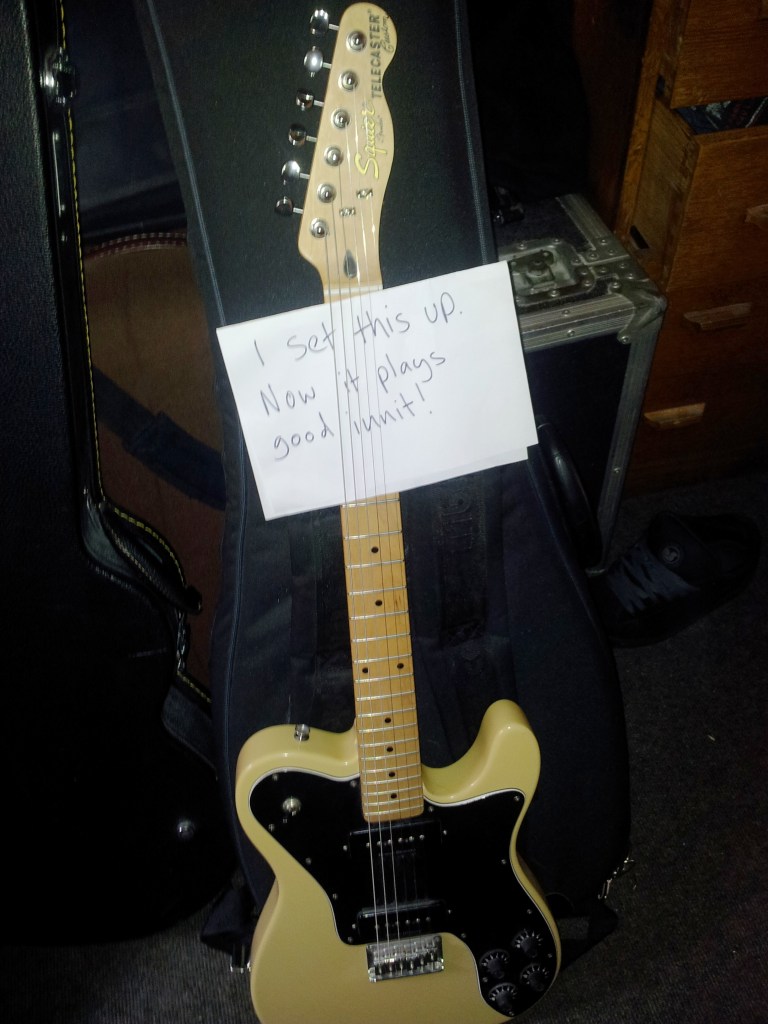
My other memory of this guitar relates to one of Owen’s rare visits home for Los Angeles. I came back one day to find the Tele sitting in my room on a stand, a bit of paper tucked in the strings with the message: “I set this up. It now plays good innit!”
It did, too. Boy, I miss having that guy around!

A message from Owen
Stop-gap – the purple Strat. Not a bad little guitar, really…

40. Purple Squier Strat bought in Seattle

FOR the sake of convenience, I’ve lumped this one in with the Squier Tele Custom , though my acquaintance with it was extremely brief. It was bought for one specific purpose and then sold on.
I got it on my first visit to Seattle, Washington State, USA, in 2009, not all that long before I got the Tele Custom above it. I was in the US to catch up with my pals Blues Boss and Mark Riley (more Blindman’s Blues Forum buddies). It was purple, it played OK and it was $80 – back in the days when a pound still got you about $1.50.

Big-head – I’ve never really been a fan of the post-CBS Strat headstock shape, but this guitar did the job

The idea was to find an inexpensive guitar I could play in my motel room and more importantly, when Blues Boss paraded me around a succession of blues jams and gigs in the Pacific North-West (the first one barely an hour after I stepped off the plane at SEATAC International Airport!) Visit Dennis in Seattle and you’re pretty much guaranteed not a second will go to waste!
Not much else to say about this guitar, except that it came back on the plane to the UK with me. I sold it within a month – and turned a half-reasonable profit on the deal! 

Stateside action –  yours truly playing the purple Strat at the Wilde Rover Jam, Kirkland, Washington State, October, 2009

A JV’s Homecoming…

38. 1982 Squier JV 57 Strat

IF you asked me to compile a Top Ten of all my guitars, past and present, this would most DEFINITELY be Top Five material. I’ve known this Strat – or known of it – for the best part of 40 years, even though it’s only actually belonged to me for a decade or so.
These early “JV” Squiers are truly remarkable instruments and highly sought-after these days. Every time I pull it out to play it (something I’ve not done often enough lately, I’d admit) I feel very grateful to actually have it.

Collectible – the elegant decal identifies this as one of the second series of JV Squiers. The first ones – the REALLY valuable ones – have Fender in large letters and “Squier Series” in smaller script.

A bit of background about the JV series…After remaining largely unchanged since the early 70s, Fender’s guitar range underwent a major revamp in the early 80s, with the launch of new models, including the USA-built reissue series (my old 52 reissue Tele and Surf Green 62 reissue Strat are both fine examples). In response to competition from the likes of the Japanese Tokai brand, Fender also launched a whole new “budget” brand of Japanese-built instruments under the Squier name. (Squier was a brand owned by the Fender company from the days when it marketed Squier strings in the late 50s.)
The original JV (Japanese Vintage) series comprised matching 50s and 60s reissues of the Tele, Strat and Precision Bass, plus (I think) a 60s Jazz Bass, all built to an incredibly high spec, based on original Leo Fender-era blueprints and in many ways, more accurate that the USA reissues. They also featured American hardware and pickups.
Unsurprisingly, they were an instant hit for one very obvious reason – they were amazingly good guitars (as were the Tokais) and markedly better than many of the instruments produced by Fender USA from the mid-70s. Rumour has it around this time quite a few famous players started leaving their treasured vintage instruments at home and toured instead with Squiers and Tokais. Ronnie Wood was definitely pictured gigging them on Stones tours in the 80s.
If you’ve been reading this blog from the start, you may remember me falling in love with a gorgeous Fiesta Red JV Squier 62 reissue in the early 80s when they were brand new. Well, the beautiful two-tone sunburst guitar pictured here was the 1957 reissue counterpart of that guitar.

Under the pickguard – the electrics are all original, with the exception of the five-way switch which replaced the original, 1957-issue three-way.

I remember my Burnham buddy Simon Trussell buying this Strat – from Honky Tonk Music in Southend in 1982, he tells me. It was secondhand when he bought it, so the original owner could only have had it a matter of months. Simon’s band, Carmilla Rouge, used to rehearse in the hall behind the New Welcome Sailor pub, just along the road from my house, and I remember him showing it to me. Up to that point, Simon had played a succession of rather iffy home-made guitars (I remember a vaguely Les Paul-shaped one and a sort-of Flying V) so this was his first “proper” guitar. He still had the JV Strat a few years later when I went in the studio with his band to produce a demo for them, though at some point after that, foolishly, he sold it.
What I hadn’t realised was that Simon had actually sold it to a mutual friend, a bass-playing songwriter acquaintance of Howard Bills named John Barry, from Witham. John often used to come out in the van with us on Automatic Slim gigs and was also the original owner of the infamous “Fender Fire Door”, a Tele-shaped guitar Ian Cundy bought from him and still uses for slide guitar.

Fall baby – a pencil mark on the end of the neck shows the neck is dated September 13, 1982.

Fast-forward something like 15 years and John was doing some recording with my pal Pete Crisp at Saint Studios in Burnham. My notoriety as a buyer of guitars was clearly spreading. John phoned to say he had a guitar he wanted to sell to finance a bit of kit for his home studio. Would I be interested? Well, what do you think?
It was Simon’s old JV Squier, a little more beaten-up, minus a couple of knobs, a switch tip, the backplate and a tremolo arm, but otherwise all there, in all its glory. My first reaction was, sorry, I wasn’t interested. It had a maple fingerboard – and I didn’t do maple board Strats. My second thought – after lifting it from the case, was that it was as light as a feather and well and truly felt like a really good, really old vintage Strat! My third thought was JVs were changing hands for serious money – the kind of money I couldn’t justify spending on something I probably wouldn’t use much.

The sunlight picks up the crazing in the original nitro two-tone sunburst finish. A black car bonnet (even a filthy one!) makes a great place to photograph guitars, I’ve found.

I still can’t believe the price John was asking. I won’t name the figure, but it was a lot less than the examples I’d seen on eBay (and a lot less than the two JV Strats my pal John Edmonds subsequently bought, impressed after playing this one). He’s a stubborn old bugger, is John Barry, though and he was insistent he wouldn’t take a penny more. His argument was that it was missing several bits, it had a few marks and dings and he knew how much he needed to make from it. Thanks, John!
A couple cream knobs, a trem arm and a switch tip from eBay (all suitably grubbied-up by me) replaced the missing bits (I never use the backplate on Strats). The frets were very worn and it desperately needed a refret. A visit to the magnificent Martyn Booth’s workshop near Sudbury, an anxious wait of a couple of weeks and a fairly substantial chunk of cash left me with a truly amazing guitar, the equal of any Strat I’d played up to that point.

The JV Squier neslting in the tweed Fender case that came with my Surf Green 63 Reissue.

I ended up playing that Squier Strat at WOLFPACK’s very first gig and just about every subsequent one for the next five years, alongside my Vintage Lemon Drop Les Paul. You can hear the Strat on both the WOLFPACK albums, too.
These days, Simon lives a mere 200 yards up the road from me. He popped round last year to ask me to solder something on one of his guitars and was more or less dumbstuck when I dug the JV Strat out of a case and put it back in his hands. I didn’t let him keep it though… A truly great guitar and a DEFINITE keeper!

The JV in action
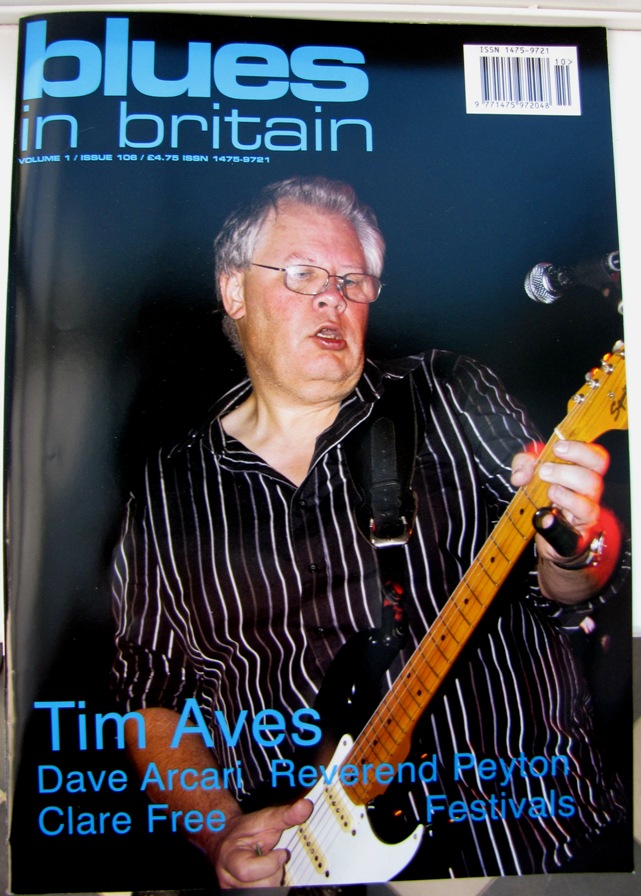
Front page news – the JV even once made the front cover of Blues in Britain magazine! A rare shot indeed – I was playing standard-tuned slide when the pic was taken, some I hardly ever do!

One For Greeny…Almost a Les Paul Pt1

37. Vintage “Lemon Drop” Les Paul copy

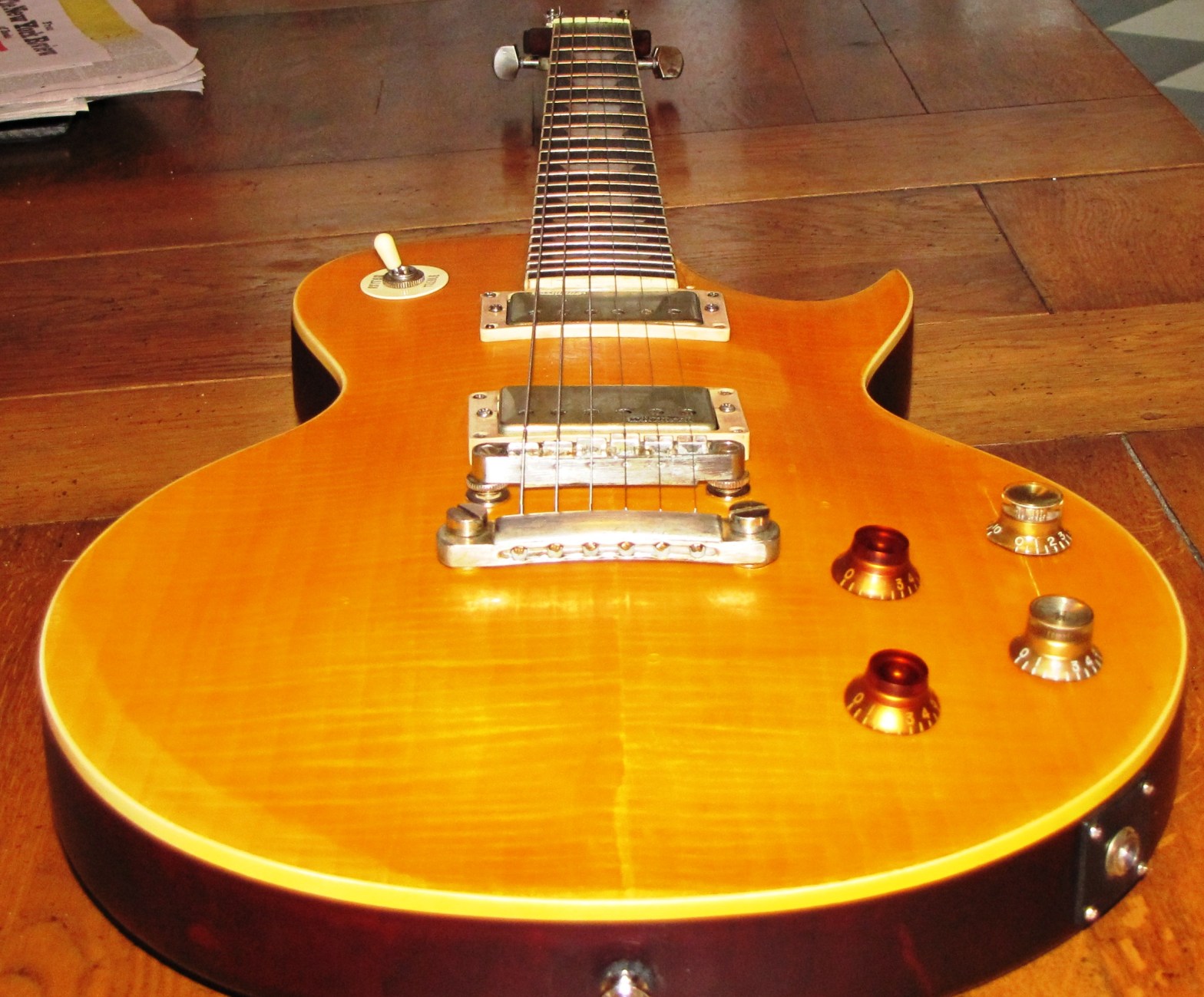
THIS rather attractive Les Paul copy turned out to be a real surprise – of the pleasant variety. I bought it from a mate on a whim. Then I became really quite attached to it and it ended up seeing me through some of very important years of my musical life.
I got it soon after we started taking WOLFPACK out on the road and along with my lovely old JV Squier Strat (a later entry in this blog), the Lemon Drop ended up getting played at almost every gig WOLFPACK played up and down the country during the first few years of the band’s moderately distinguished run.

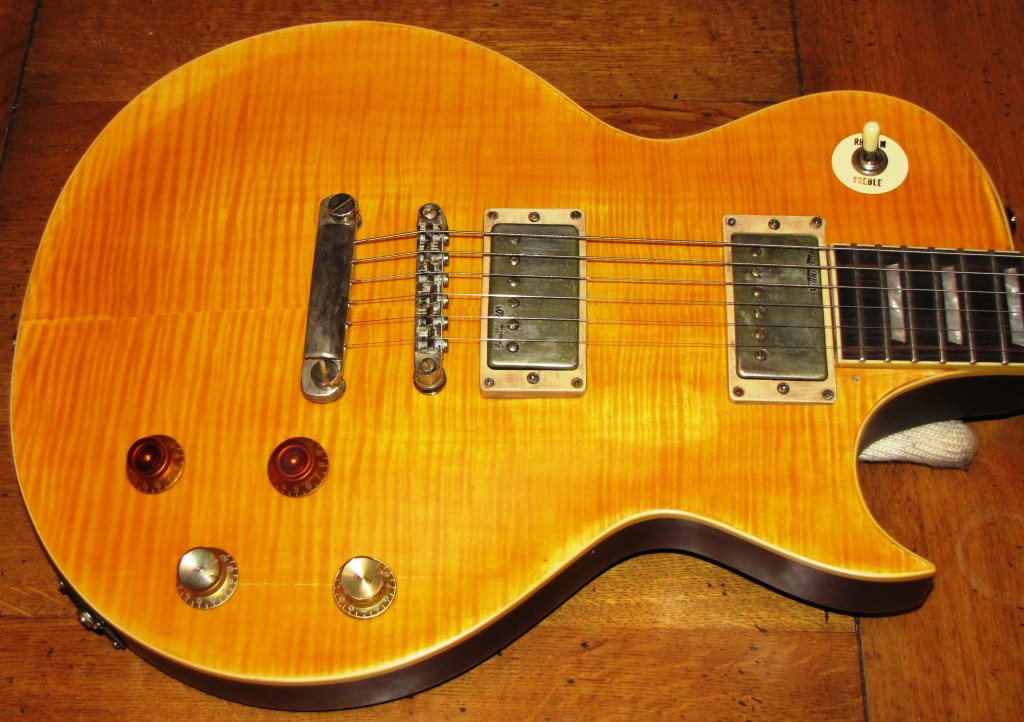
Fair copy – the Lemon Drop was faithful to Peter Green’s famous guitar, right down to the odd control knobs. The giveaway, however, was the more pointy bottom horn, presumably to keep Gibson’s lawyers happy.

I’d long sort of fancied the idea of having a Les Paul, but could never really justify the cost, nor did I much relish the prospect of gigging such a glossy, expensive beast, given how hard I was on guitars. Whenever I looked at Les Pauls, the ones I really liked were always the ones that looked as if they’d lived a little (or a lot). Trouble is, they also tended to be the ones from the Gibson Custom Shop that came with the kind of price tags that’d get you a pretty decent used car down the London Road in Southend.
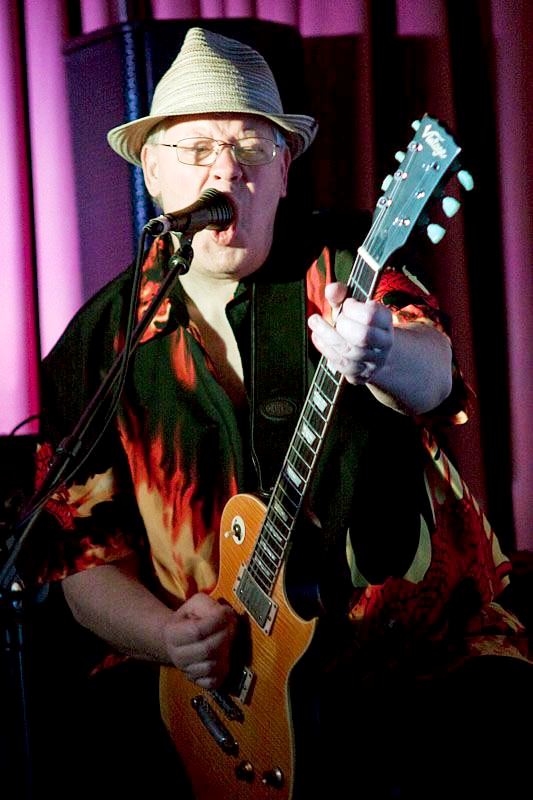
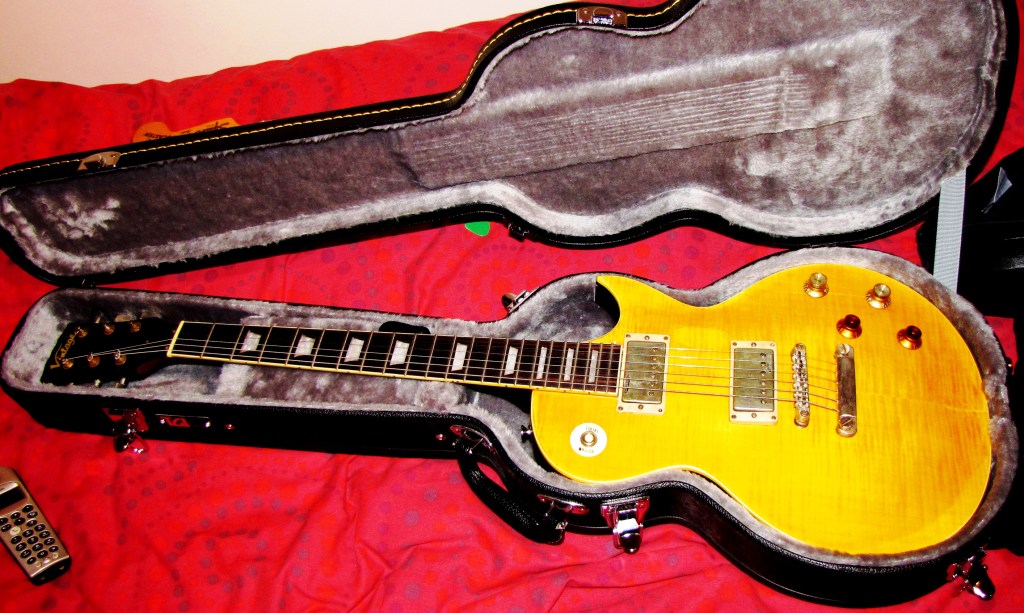
So the look of the Trevor Wilkinson-designed Vintage Lemon Drop, modelled on Peter Green’s famous and much-played 1958 Les Paul, suited me to a tee – and so did the price. The body shape was subtly different, presumably to keep Gibson’s lawyers at bay, but unlike so many Les Paul copies, including Gibson’s own budget-brand Epiphone Lesters, the headstock was more or less the right shape.

Wear and tear – the back of the body and neck both featured some pretty convincing relicing. I’ve seen more fake-looking ageing on £3,000 guitars from the Fender Custom Shop!

It didn’t hurt that it was relatively light, played really well, and actually sounded fantastic – not to thick and heavy, unlike so many Les Pauls. And in the middle position, the pickups had that famous out-of-phase sound Greeny featured on songs such as “Need Your Love So Bad”. It was also reminiscent of Freddie King’s Les Paul tone – and more usefully, the hollow sound Hubert Sumlin had on many of Howlin’ Wolf’s finest recordings.

Constant companion – the Lemon Drop was a constant companion during my WOLFPACK years. I even played it sitting down while recovering from my second hip replacement op!

Inveterate tinkerer that I was, I changed the tuners for a set of Wilkinson tulip buttons like the ones I’d put on the Flying V – I love the way they look on a Gibson headstock. But that was all I changed.

The headstock with its replacement tuners. I know Peter Green’s guitar didn’t have this type of tuner, but I just felt they looked WAY cooler than what it came with!

I’d probably still have the Lemon Drop but for the fact a few years ago, I ended up taking custody of a really nice real Les Paul – part of Dave Werewolf’s amazing guitar collection. When he emigrated to Thailand, my dear old friend Dave was kind enough to agree to me using one very special instrument – a 1972 Les Paul Deluxe Gold Top (converted at some stage to take full-size humbuckers), rather than putting it in the lockup with all the others. It was an amazing guitar – heavy, but everything a good Lester should be.
So, after it had sat unplayed under the bed for a year or so, I reluctantly decided the Lemon Drop was surplus to requirements. Having bought it from a mate, I ended up selling to another mate. I quite like the symmetry of that… Mind you, what he really wanted as soon as he played it, was Dave’s Goldtop – and that definitely wasn’t for sale!

Bargain – the guitar came with a very nice fitted case.
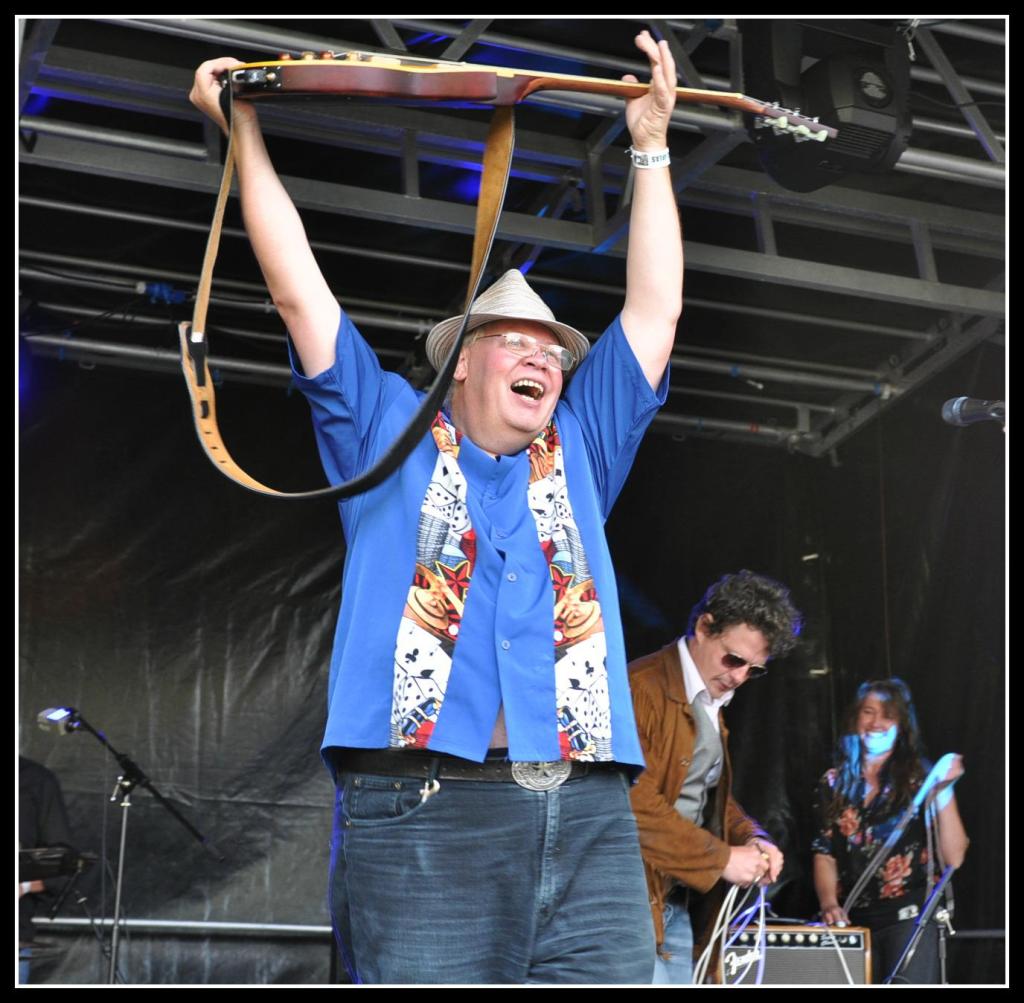
A moment at the end of WOLFPACK’s gig at Newark Blues Festival in 2011. Yes, that is Ian Siegal in the background. He sat in with us for the last number.

Bonus ball: A clip of the Lemon Drop in action with WOLFPACK at Newark Blues Festival… https://youtu.be/ToiRT2WNYhQ Check out the walkabout from about 9 minutes in!!!

A Surprising V

37. Korean Epiphone Flying V

I DON’T think it ever occurred to me I might one day end up playing a Flying V.
I grew up in a musical world where Vs were pretty much the province of the metal end of rock – TOTALLY Nigel Tufnel! Only later did I start to appreciate them in the context of other great players such as Albert King, Hendrix and the brilliant Lonnie Mack.
I spotted this rather nice little guitar dirt cheap on eBay. It was a Korean-made Epiphone – Gibson’s budget brand. It looked really cool and hey, it was £80! It was black – not usually a favourite colour for me, but “none more black” and somehow appropriate for a V – and it had some kind of hot DiMarzio pickup fitted at the bridge. That pickup on its own was probably worth half what I paid for the guitar, I figured.
It played well, sounded good – really good – and unusually, had just the one volume control, Fender style. I later learned that these particular Korean Epiphones were quite sought-after. What wasn’t to like about it? Well, for one thing, it had to be collected from Twickenham, l;iterally in the shadow of the famous rugby ground, and not exactly the easiest place to get to from Essex!
Having twice done battle with the M25, me being me, I quickly decided to give the headstock a bit of a makeover. Someone was selling snide Gibson V truss rod covers on eBay and it occurred to me that if I sanded off the Epi logo, blew the face of the headstock over with gloss black and fitted one of these covers, it would look pretty much like a pukka Gibson. Add a very pretty set of green aged Wilkinson tulip-button tuners – far cooler than the functional generic tuners it came with – and a pair of more period-correct knobs and the look was complete.

Fake… but with a Gibson truss rod cover and a set of green tulip-button tuners, who was to know>

The resulting guitar was as light as a feather, perfectly balanced and surprisingly useable – so long as you stood up. (Flying Vs were truly make for posing with – and never really meant to be played sitting down – even if the originals did have a rubber pad on the bottom edge to stop them slipping off they player’s lap!)
For a couple of years, I gigged it a fair bit before my attention turned elsewhere and the V found itself back in agrowing pile of guitars that didn’t played often enough to justify their retention. In short, it became candidate for eBay during one of my periodic guitar culls.

For some reason, these particular Epi Vs had a more Fender-friendly one volume, one tone control layout, which suited me to a tee.

I didn’t try to pass it off as a genuine Gibson – but I did turn a modest profit, even allowing for the extra bits I bought and the nice, shaped Ritter gigbag I had to buy for it and which, for obvious reasons, wasn’t worth keeping when I sold it.
Very occasionally, I still get a twinge of nostalgia for that Flying V – looking at these pictures is enough to do that. In all honesty, though, it would take a pretty exceptional V to get me reaching for the credit card now. Maybe one of those cool, red 60s-style ones with a Vibrola trem, like Hendrix played? I like to think that at my advanced age, though, I’ve grown out of my compulsive guitar-buying phase, but you never know…

The V in action…
A nice companion for my 91 Firebird

A Fancy for a Firebird…

36. 1991 Gibson Firebird V

I’VE always been a Fender man. Something to do with having been serially obsessed with a succession of Fender players, I think…Richie Blackmore, Wilko Johnson, Gypie Mayo, Stevie Ray Vaughan, Sonny Landreth.
It didn’t hurt, either, that the guitarist I’ve spent most time standing alongside on stages near and far- my Automatic Slim compadre Ian Cundy – has been inseparable from his trusty 72 Tele Custom for almost as long as I’ve known him. (He had a Japanese Tele Thinline copy when I first met him.)
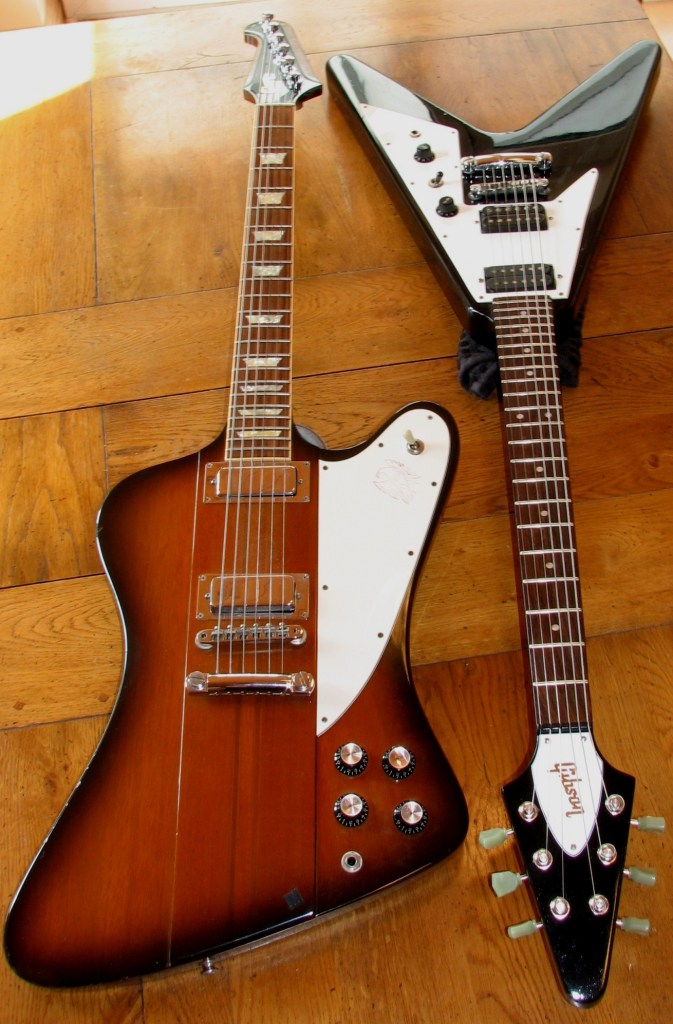
Having said that, if ever there were a guitar from “Brand G” to tempt me over to the Dark Side, it was always going to be Gibson’s original “reverse” Firebird – officially the Coolest Guitar on the Planet, as far as I’m concerned. I suppose, in an odd way, it remains, in some ways, the most Fender-like of all the classic Gibsons.
Such a beautiful thing. It’s easy to believe the story (I’m pretty sure it’s true, actually) that when Gibson were after a really cool, contemporary new look for a new guitar in the early 60s, they drafted in the inspired designer who put the tailfins on all those classic late 50s Cadillacs.

The back view clearly shows the neck and the centre of the body are made from a single strip of laminated mahogany

I don’t remember where I first saw one, or who was playing it, but I do recall drooling over pictures of the gorgeous three-pickup Firebird VII played by Roxy Music’s Phil Manzanera – all glossy red paint and gleaming gold hardware – and admiring Johnny Winter’s battered old sunburst Firebird V. (That was before Winter he started playing those weird headless guitars.) Long before I bought my Firebird, I was getting a vicarious thrill from leafing through small ads in magazines and auctions on eBay. I should have recognised the signs. My credit card finger starting to twitch.
One fine day in about 2005, I spotted a 1991 sunburst Firebird V on eBay with a ridiculously low starting price. Ridiculously low, but still a lot more than I’d ever paid for a guitar up to that point. I felt I just had to punt a bid on it, never thinking for a minute I’d win it. Turned out I was the only bidder. Shit, I thought. I’m going to have to buy it now! So before the start of my afternoon shift one morning, I headed to North London – Clapton, to be precise, which I took as some kind of omen – to collect it.

Beautiful…I just HAD to have it, didn’t I?

The seller was a spotty lad of about 24, a DJ type (he was actually wearing a baseball cap backwards!) Almost the first thing he said was that he wasn’t prepared to let it go for the auction’s closing price – he wanted at least £50 more. Apparently, his dad had bought him it for his 15th birthday and he felt bad enough about not playing guitar any more – and terrible about letting it go, but he was broke. I could have got really shitty about it, but call me soft-hearted, a sucker for a sob story… I decided it was well worth the extra £50. I didn’t quibble about it and walked out clutching an enormous brown coffin of an oblong Gibson case (the handle was broken). It was actually bigger than any bass case I’d owned in a previous life. If I’m honest, I was in a bit of a daze.
One of the things I loved instantly about the Firebird was that it wasn’t a pristine Gibson “furniture” guitar. It’d been a careless teenager’s plaything and bore the scars to prove it. Nothing major – I even liked the way years of play meant the gaudy Firebird emblem on the pickguard was almost invisibile!. The point was it was sufficiently beaten-up for someone as hard on guitars as me not to worry about, even though it was the most expensive guitar I’d ever bought – my fourth single most valuable possession after the house, the car and the Matchless Chieftain I used to own!
It was – still is – a thing of huge beauty, a graceful, elegant instrument, with a through-neck – the neck and the central part of the body one long piece of laminated mahogany. It’s surprisingly light for such a big instrument – did I mention that Firebirds are HUGE? Yep! A good six or seven inches longer than your average common or garden Strat or Tele. That, in itself, takes a bit of getting used to – if only so you don’t clobber your bandmates when you suddenly swing around on stage. It also hangs differently on a strap – you quickly discover everything is at least two frets further to the right than you expected! Then there are the two volume controls and two tones, not to mention a pickup selector seemingly yards away, down on the bottom horn. Anyone who’s ever got to grips with a Firebird is likely tell you the same – it’s a learning curve! But worth it.
I’ve actually done very little to this guitar since, other than admire its graceful lines – and play it quite a lot, of course.

The elegant Firebird headstock, with the Steinberger Gearless tuners
The reverse of the head, showing the new tuners and the screw-holes where the original Klusons were fixed

The one major modification I made early on. I swapped out the distinctive Kluson straight banjo tuners for a set of Steinberger Gearless tuners. I’d been eyeing these in the Stewmac catalogue for some time (just in case one day I bought a Firebird copy with conventional tuners!)*
The Steinbergers are half the weight of the clunky old Klusons, which helped cure the Firebird’s neck-heavy tendancies. They tune incredibly precisely and also preserve the Firebird’s incredibly clean, sexy outline. My decision was vindicated by Gibson itself. About five years later, Gibson started factory-fitting Steinbergers to its regular Firebirds. However, mine has the original Steinbergers you haved to tighten with a spanner to lock the strings – the current ones have a rather ugly T-bar on each machine.
* I’ve long had a bit of a bee in my bonnet about various copies – especially the recent Gibson Studio ‘Birds, with their set necks and conventional tuners. My WOLFPACK colleague Joel Fisk had one for a while and it was a nice guitar, but it just looked WRONG! (For that matter, I never really liked the look of the later “non-reverse” Firebirds Gibson started making the mid-60s. If it ain’t broke etc etc.)
I’ve gigged my lovely old Firebird on and off in every band I’ve been in – not all the time, because in its case, it’s too big to fit in the car whenI’m carrying more than an amp and a couple of guitars to a gig – but pretty often. It’s another one of those guitars, like the Twincaster, that I like to use when playing big high-profile gigs…it’s just so photogenic!

Photogenic… the guitar, if not the owner!

What’s more, it’s definitely one of the guitars I’ll never, ever, sell. If fact, I quite fancy another one – either a white Firebird V or VII, or maybe a single-pickup Firebird l. I might even go for one of those rather fetching blue Epiphone Bonamassa models, which have a proper through-neck and straight-through tuners. I’d even put up with having that guy’s name on the headstock – that’s how cool I think they are! 

I have even been known to tune it up to A and play slide on it!
Good company 1 – stay tuned for a subsequent blog entry about my Flying V adventure
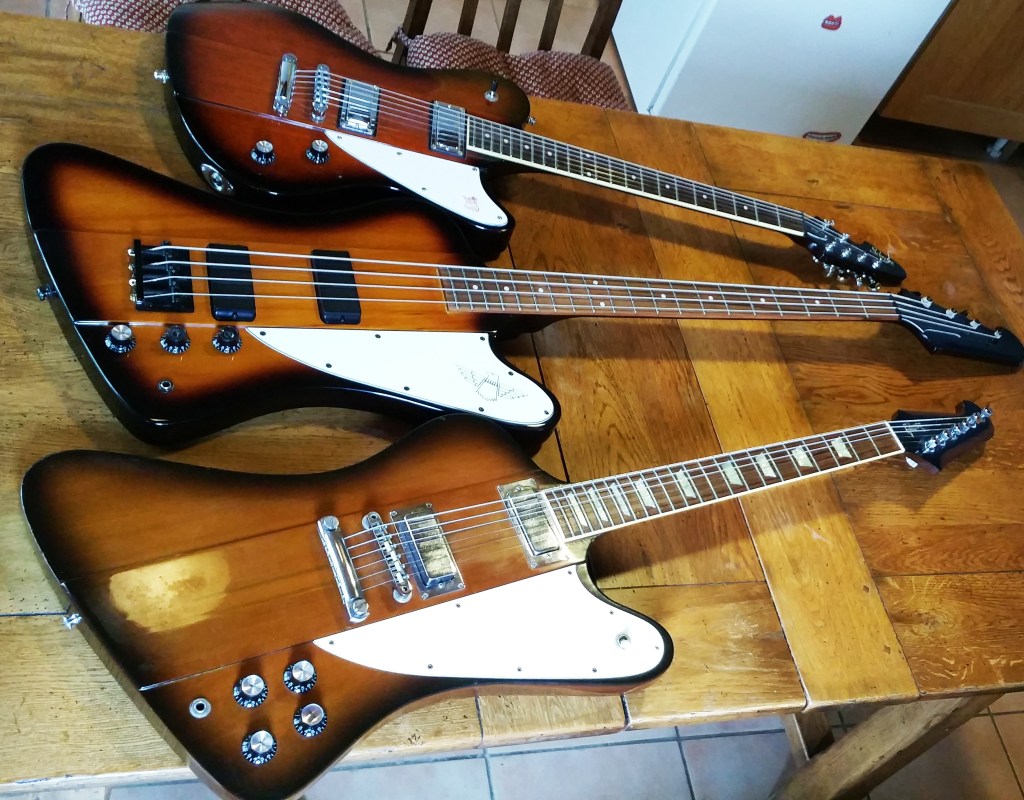
Good Company 2 – the Firebird with my Schecter Ultra”Firewolf” (more of which later in this series) and a Tokai Thunderbird briefly owed by my bass-playing stepson, Rob.

The Twincaster

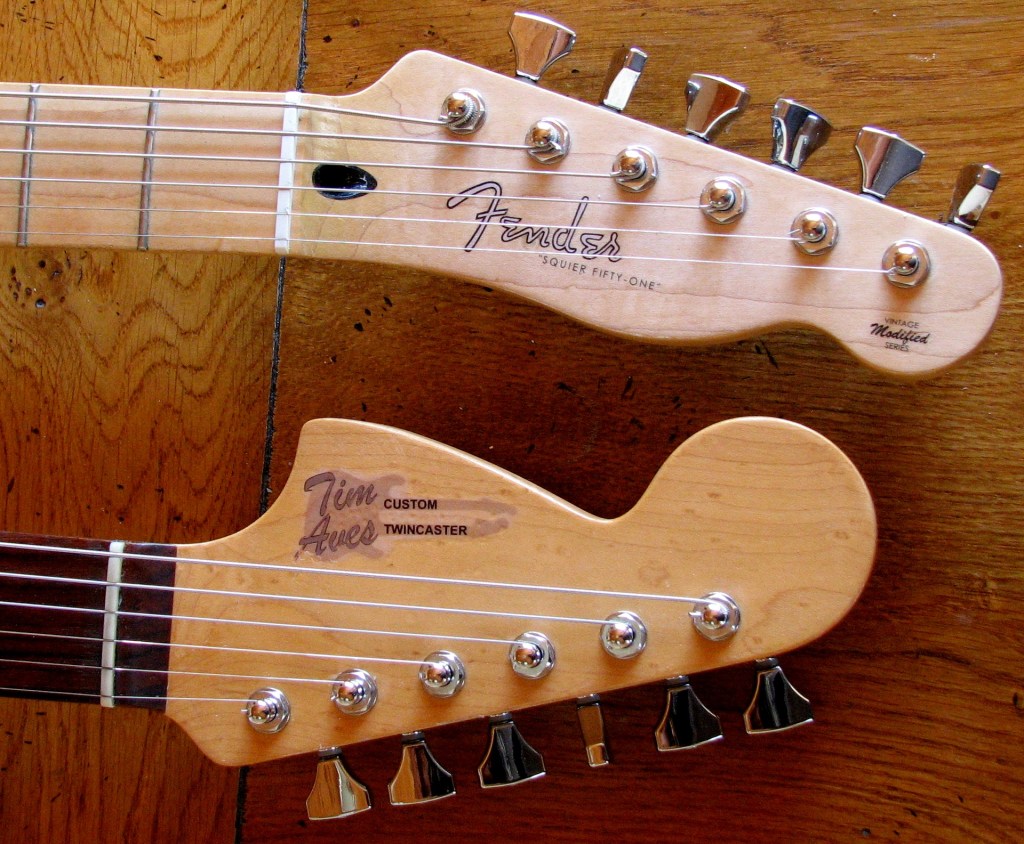
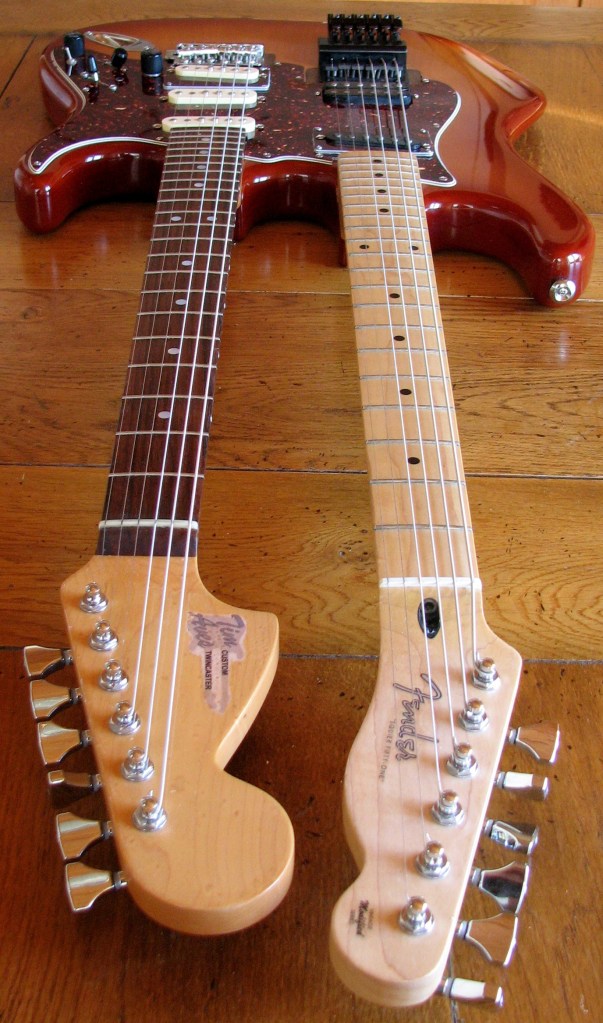
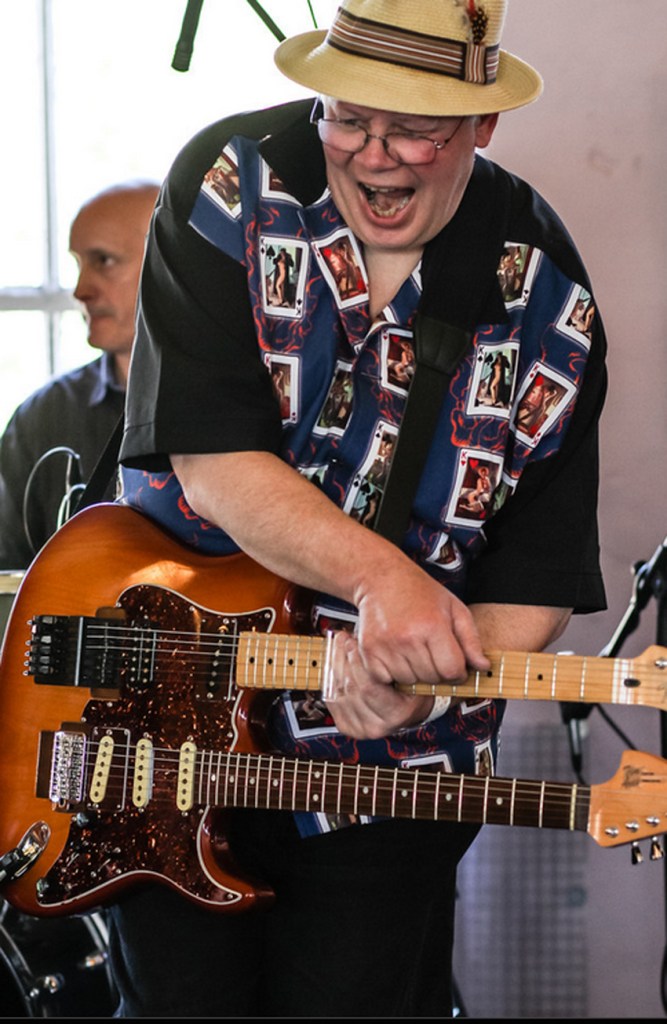
35. The Tim Aves Twincaster

WARNING: Just the one guitar in this entry, but this tale is something of a saga!
It seemed such a good idea. I spotted this amazing-looking Warmoth twin-neck body on eBay about 15 years ago. This was back in the days when Warmoth was at the zenith of the American guitar parts industry. (Other companies are available now.) Back then, if you were looking to put together a high-end guitar to your own exact specifications, but didn’t possess the necessary woodworking and finishing skills, Warmoth could oblige – at a price. I spent almost as many hours dreamily perusing the neck and body options on the Warmoth website as I did trawling eBay for bargains. While gazing slack-jawed at all the options I’d also dwelled more than once on the super-pricey twin-neck bodies on offer. You could have a twin-neck Strat, half Strat and half Tele, or even a combination of a Strat and a Precision bass. Truly the stuff of guitaistic freakshow fantasy! The starting prices were in the £400 region, depending on how rare/exotic was your choice of timber.
So when I spotted this used, but very clean, Warmoth twin Strat body with a matching tortoiseshell pickguard on eBay for a mere £70, I simply HAD to have it. It was a bargain such a thing of mind-bogglingly great beauty.

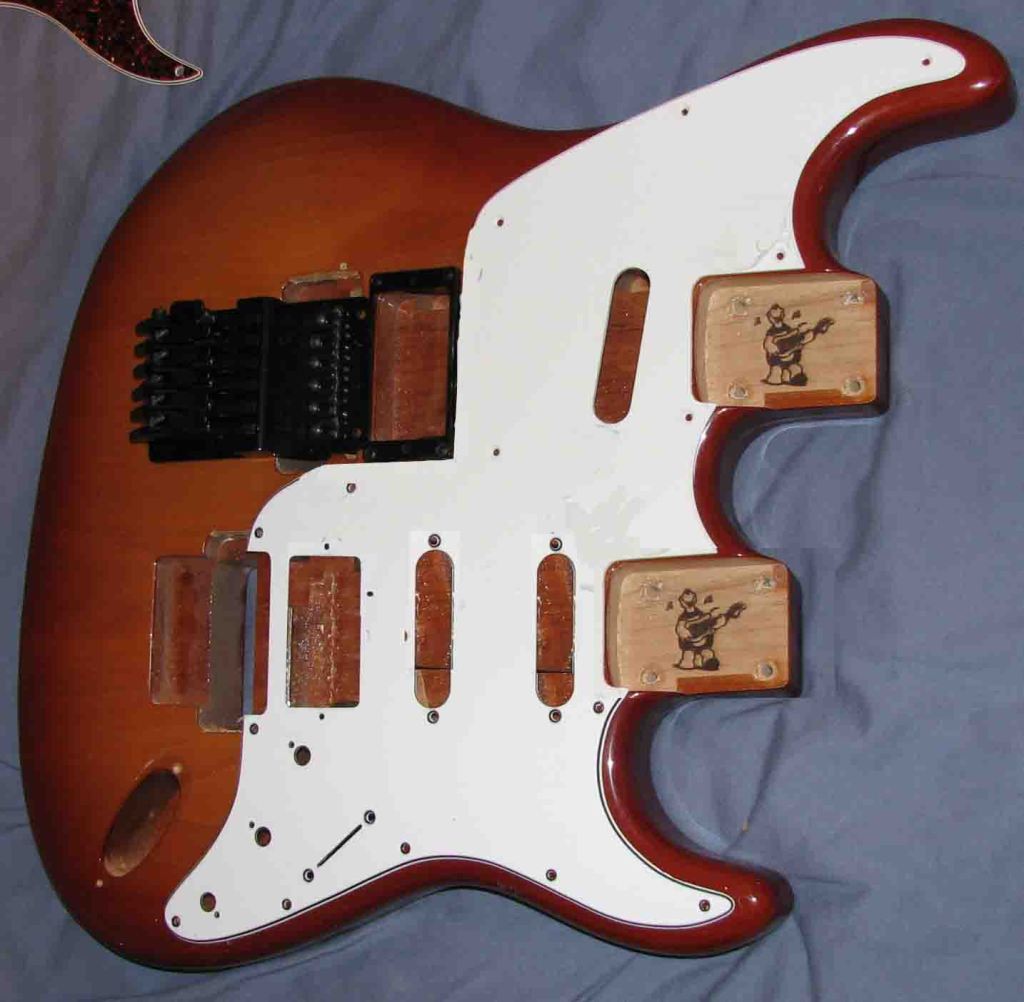
Potential – the body before the trem routs were filled and with a paper overlay of the more Squier 51-esque pickguard I originally envisioned

What arrived – still in its original Warmoth shipping box – was indeed, a thing of beauty. The problem then was simple. What the hell to do with it!
The original owner was preumably a bit of a rocker – he’d ordered it with both bridge cavities back-routed to take Floyd Rose tremolos (eeugh!) The upper of the two necks had originally been served by a pair of humbuckers, while the bottom neck had an HSS configuration. (I think I’ve seen a picture somewhere of Ritchie Sambora from Bon Jovi sporting a very similar twin-neck Strat, so the guy may have been a fan – or even played in a tribute band to New Jersey’s second finest.)
A plan began to form…my two main guitars at the time were a Strat and the Hipshot-equipped Squier 51 I used for slide. Why not combine these two favourites in just one guitar? I tend to use a shorter strap for playing slide, so having the slide neck at the top, and the normally-tuned Strat neck below made sense.

Thing of beauty – the Twincaster body after my pal Simon had filled the trem routs

I found a genuine Squier 51 neck for sale on eBay and really lucked out with the second neck – a cheap used Warmouth large-headstock Strat neck. The Strat neck was a leftie, so the mirror-image arrangement meant the tuners didn’t get in the way of each other and hell, it looked neat. Couldn’t have been better, really.

Heads first – the reverse Strat neck worked really well in this configuration, as did the Hipshot Ultralite tuners.

Those horrible Floyd Rose trem back-routs were a problem – solved by my dear old pal Simon Pyke, whose woodworking skills greatly exceed mine. He found a couple of nice bits of hardwood and carved them to fit, so I could screw a Hipshot Trilogy to anchor the top neck and fit a standard vintage-style Strat trem (the only option I’ll countenance!) for the lower one.
The pickguard had a couple of pickup holes that were the wrong shape – I didn’t really want to think what it would cost to have a custom guard made this big. Fortunately, I managed to find a torty Strat pickguard that matched pretty well and cut out a couple of oblongs, with Strat single coil openings in the middle to fit over the original humbucker routs. It looked pretty good – better than I’d hoped. The original plan was to go with this arrangement until I was sure I was happy with the guitar, then order a new guard. In the event, it never bothered me and so I never bothered.

Control layout – one volume, one tone, a selector for each neck and a mini-toggle switch to chose which neck was connected. It even had a “both on” option in case I ever had a chance to play the Twincaster with a second guitarist! Sadly, this never happened.

So… switching. The pickguard had holes for a standard Strat setup – one volume, two tones, plus a single pickup selector, with a mini-toggle switch to choose between necks. I decided I wanted a pickup selector for each neck, so I cut a slot across what would have been the neck pickup tone pot hole and fitted a second three-way Tele switch for the top neck.
I managed to find a set of original Squier 51 pickups on eBay for the upper neck, while the bottom one became home to a set of GFS noiseless pickups – the latter an experiment which didn’t really work out. Luckily I had a set of Fender Texas Specials knocking about in my bits box and they did the job well enough and the cream pickup covers looked great against the red tortoisehell.
Hardware-wise, I bought a secondhand Hipshot Trilogy on eBay (they don’t come up all that often, so that, too, was a stroke of luck) and one of Gotoh’s excellent trems for the bottom neck. Tuners presented a quandary. By rights they should have been Klusons, but they needed to be as light as possible to help the thing balance. I settled on Hipshot Ultralite locking tuners – two sets, one left-handed, one right. They’re really great tuners, as it happens.
It’s an exciting time when a project that’s taken a huge amount of thought, time and trouble (not to mention expense) finally nears completion. It was a good year before I got to this stage and it was nerve-wracking finally to wire in the electrics, string the thing and do a rough set-up. (Getting the Hipshot calibrated to give you the tunings you want is an evening’s work all on its own – two or three hours or tuning, checking, tweaking the various grub screws with an Allen key, tuning again, checking again and so on.)

It all worked first time, which was something. However, nothing had quite prepared me for the shock the first time I actually strapped on this monster! The swamp ash body itself was reasonably light, considering its size, but two necks, five pickups, two bridges and a dozen tuners left it tipping the scales at a weight roughly equivalent to that of a baby elephant! I had to buy one of those special elasticated straps that are supposed to ease the load on the shoulders (it made very little difference), a special stand…and where on earth do you find a case for something like this, FFS?

The answer to that last one is that you don’t. I had to make one. I was rather pleased with the result – especially the luminous green fun-fur I used to line it!
Was it worth all that trouble? Well, it was a fun build, but ultimately, it was more fun to plan and build than to play. I did take it out and play it a fair bit at gigs and jams and there are quite a few pictures of me playing it – not least because it was, undeniably, a photogenic beast. I would often deliberately play it at the more high-profile festival gigs specifically because I knew it would catch the photographers’ eyes! It never failed in that respect.
However, the day came, during one of my guitar culls, when I decided to part with the Twincaster. I guess it probably stook me about £600-£700 in parts and I did wonder if it might be hard to sell for that kind of money. I suspected I might have to break it up and sell it as parts – a sad notion, but something that tends to be the fate of many expensive and specialised custom guitars. They’re often worth more for their parts than as a whole. In the event, though a nice man saw it on eBay, took a shine to it and bought it for a price I was prepared to let it go for.
I hope it made him happy and didn’t hurt his back too much…

PS: Here are a couple of clips of me wrestling with the beast at a jam….
https://youtu.be/j3Q7-NrD7_4
https://youtu.be/37tUaNuQoYg

Fun project – playing slide on the Twincaster with WOFLPACK at the 2013 Hebden Bridge Blues Festival

An Even Odder One…

34. Casio DG 20 synth guitar

THERE’S only one person to blame for the appearance of this, the oddest of all guitar-shaped things in this blog. I name Dr Ika – Georgian neuro-surgeon-cum-guitar player, technical genius and all-round good bloke! Ika’s been a regular at the Hot Hob Jam in Brentwood where we have gone to jam for almost as long as I can remember. However, for me, his most memorable appearance was the evening he showed up at Pam’s Bar (as the jam venue was then known) with this odd-looking plastic thing, and proceeded to play some fair-to-passing Hammond organ parts on it.

Dr Ika with his Casio…

Actually, this was hardly my first encounter with the wonderful world of Casio synthesisers, though. I had one of those dinky little VL Tone mini-keyboards when they came out (and drove all within earshot nuts with the preset “German Folk Tune” it played when in demo mode. I can still hum that bloody tune now!) I remember pecking out a few Depeche Mode tunes and the lick from “Enola Gay” on it before getting bored and consigning it to a drawer somewhere and returning to things with strings!
Back in the days when I worked in Chelmsford town centre in the late 80s, I remember strolling into Dixons and being intrigued to see a DG20 for sale – alongside something that looked like a kid’s plastic saxophone, but made similar noises when you blew into it.

Rear view – the DG 20 ran on half a dozen big torch batteries, which didn’t do a lot for the weight!

Back to Ika and his remarkable organ (!!!). By the time I saw him playing his DG20, in the very late 90s or early 2000s, even, they’d been long discontinued in favour of a more traditional Strat-shaped guitar with some kind of MIDI pickup plus conventional pickups (JJ Cale played one of those as his main electric for years) I’d just about forgotten the DG20 had ever existed, but it doesn’t take much to get me going and Ika’s performance got me jonesing for one.

The pointy end of my DG20

Casio must have been churned out these guitars by the thousand, so they could hardly be described as “rare” in the way some optimistic eBay sellers crack on, presumably to justify ridiculous price tags. (If you should fancy one, there’s a guy here selling one for £425 FFS! I think I paid £60 for mine.)
What was it like? Well, not much like a guitar, to be honest. INCREDIBLY hard to play. The strings were make of black nylon and were all the same thickness and kind of slack. The “fingerboard” – such as it was – was made out of rubber (yes, seriously) with vertical, moulded ribs where you’d expect frets. You strummed the strings and pressed down on the rubber, beneath which switches told the DG20 which notes you wanted to hear. Yes, it did play guitar chords, but it was a horrendous thing to make sense of, requiring flawlessly consistent fingering of the kind I was never going to manage. And of course, you couldn’t bend strings. Well you could, but nothing happened!
It had a built-in speaker (you could also plug into an amp) and a built-in drum box that was every bit as bad as the rhythm units found in the very cheapest and nastiest home organs. As for the sounds, they ranged from the cheesy (organ, plinky guitar, plonky piano) to, well, the even more bizarre and even more cheesy! It ran on six big, fat torch batteries. Oh and it had MIDI. Rumour had it, you could hook it up to some pretty serious synth and rock out…if only you could get the hang of that horrible fingerboard and strings!
Unsurprisingly, I never attempted to play it in public and I ended up selling it a couple of years later – for a profit, I hasten to add. Before that, Owen did, however, get a better handle on it and wrestled manfully with the false-triggering to record some pretty convincing organ parts though a stereo Leslie pedal for at least one track on “Roadtrip”, the Legendary Great Lost Armadillos Album that we spent four years recording, but never finished. Those tracks might yet see the commercial light of day one day – a case of tracking down the relevant hard drive and transferring the stems on to Rooks Yard’s Pro Tools system to mix. In the meantime, here’s a sneak preview of one of the tracks featuring Owen on Casio DG20 organ…
https://soundcloud.com/user-936350189-935113577/the-rockin-armadillos-i-got-my-brand-on-you/s-b5SsuXXewLI
PS: As a bonus, here’s an amusing YouTube clip I found illustrating the wonder that was the DG20… enjoy! https://youtu.be/HLPu871kMVY

Take your pick… the DG20’s array of sounds and cheesy drum patterns…

An Odd One

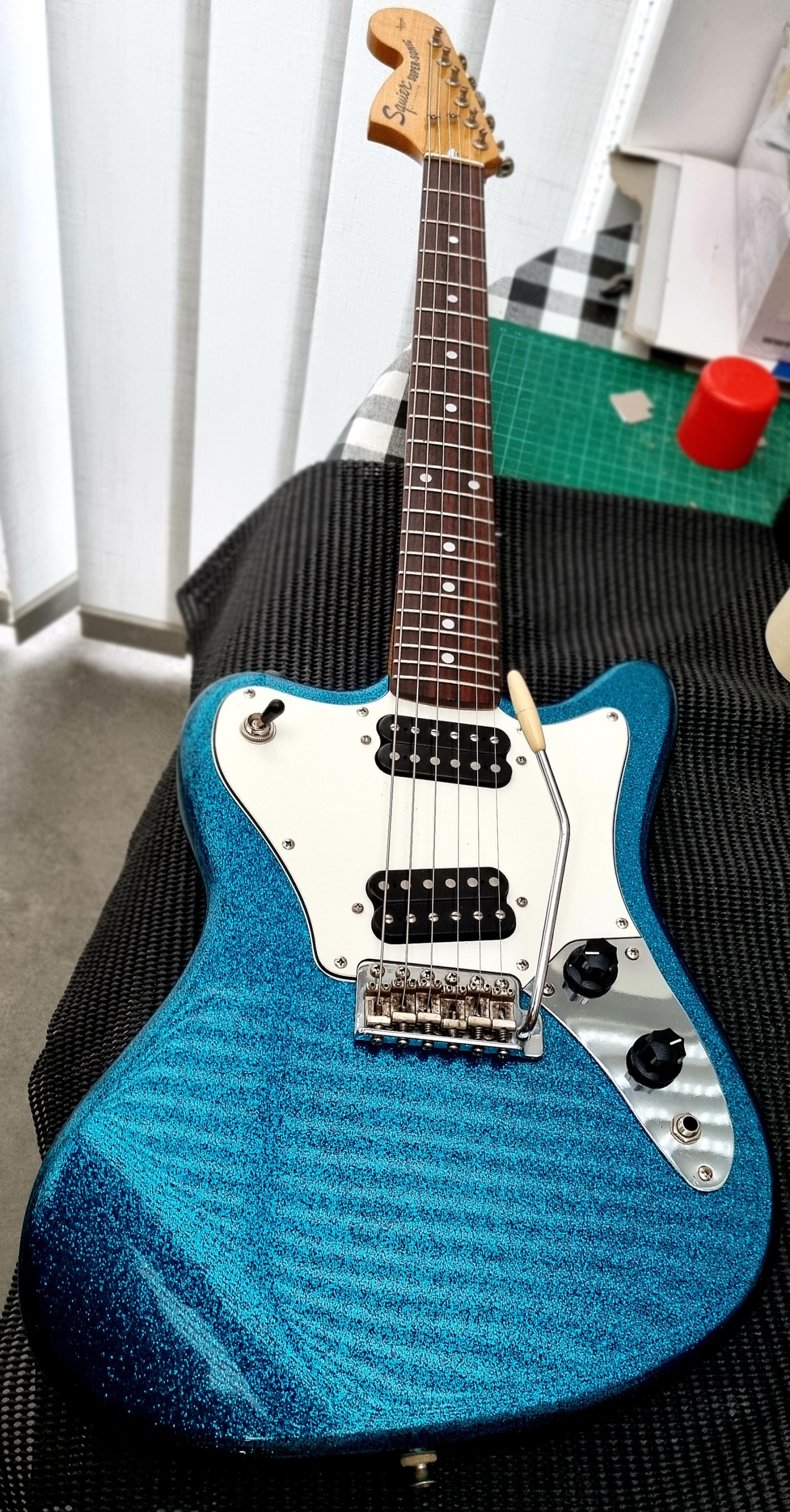
33. Squier Vista Series Super-Sonic

THIS distinctly odd bird came into our household as a consequence of two singular obsessions, both of which I’ve touched upon before. On the one hand, there was Owen’s desire for a Lake Placid Blue Strat. On the other was my growing fascination with Strats with left-handed headstocks (See No 24). I can’t honestly remember where this funny little guitar came from, though I do know where it went – more of which later.

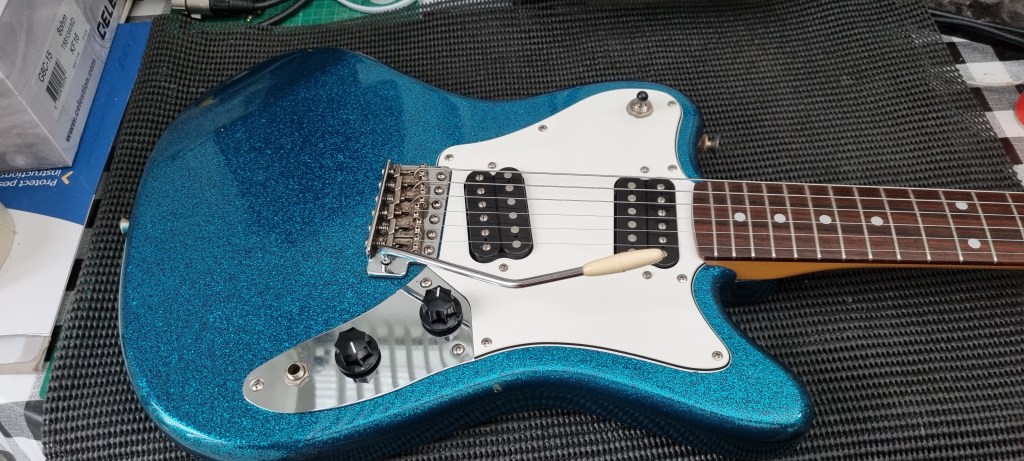
Oddball – the Super-Sonic’s body is like no other Fender!

In the 90s, Fender Japan made some very fine guitars, some under the Fender brand name – and others with Squier on the headstock. Squier, of course, had generally been a budget range, but in this case, the build quality of these Vista Series Squiers, made between 1996 and 1998, was easily on a par with the Fenders that were most likely coming off the same machines at the same factory anyway.

Owen with the Super-Sonic

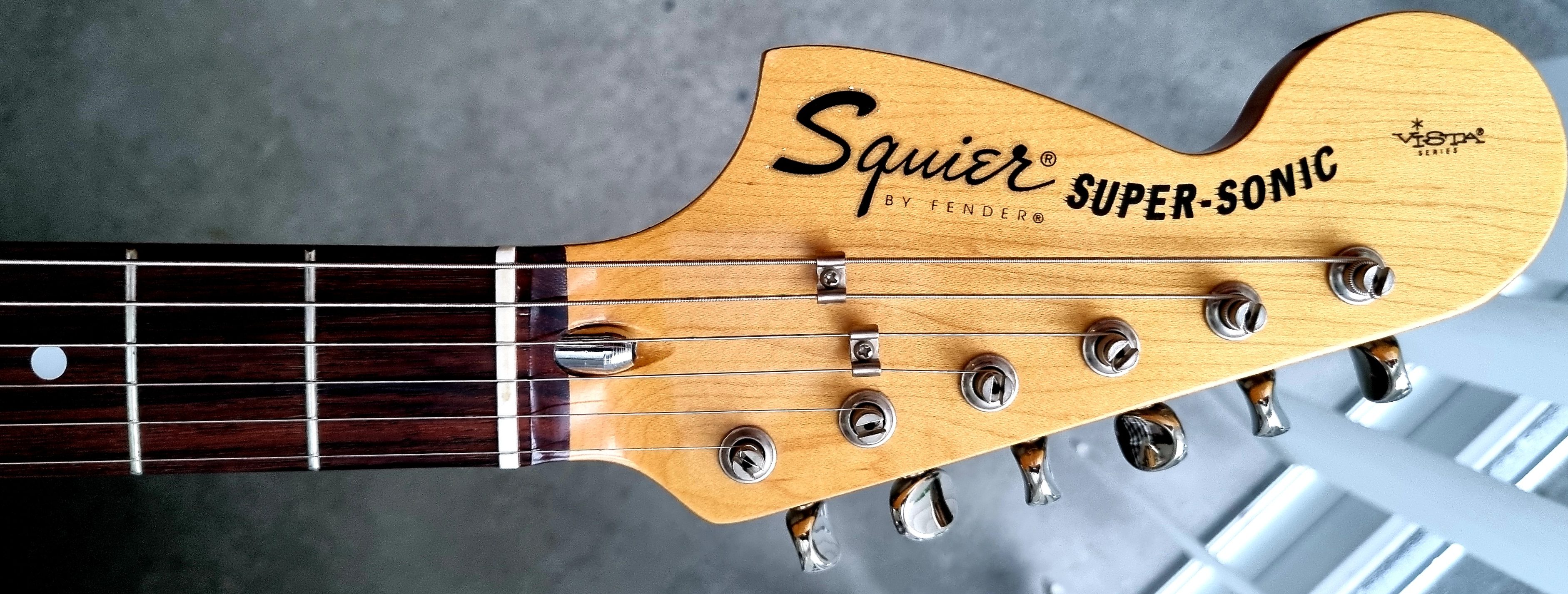
The Vista series seemed to be aimed at the alternative/indie rock crowd – I seem to remember Courtney Love having some kind of signature model – and they were certainly quirky enough. The Super-Sonic definitely fitted that weird and whacky offset vibe, with its squat, upside-down body and large, 70s-style reverse headstock* – slightly oddly, fitted with a 70s-style bullet truss rod adjuster, though still boasting a four-bolt fixing at the heel with with a really odd-shaped neckplate.

*I’ve since read the inspiration of the Super-Sonic may have been photos from the early 60s showing Jimi Hendrix playing an upside-down Fender Jazzmaster. If you turn the Super-Sonic upside-down, it does sort of look like a left-handed Jazzmaster, so there may be some truth in this.

Inspiration – Jimi Hendrix playing an upside-down Jazzmaster during his time with the Isley Brothers in the early 1960s


I’d had half an idea I might take off the neck and put it on a Strat, until I discovered the Super-Sonic had a 24″ scale length – same as the Jaguars and Mustangs beloved of many of the indie crowd – and a full inch and a half shorter than the Strat. So much for that idea… It would never have quite played in tune.

The upside-down headstock is one of the things that first attracted me to the Super-Sonic.

Still, was a beautifully-made instrument. It played well and the blue sparkle (almost Lake Placid Blue, but not quite!) was rather fetching. It had a Strat-style bridge and tremolo system and a very non-standard neckplate (with the strap button attached at the heel via one of the neck screws in a most non-Fender way).

The build and finish quality on this guitar was fantastic, but the electrics left a lot to be desired. Cheap, unreliable pots and switches – and I never much liked the sound of the pickups. I took this picture just before i replaced the cheap switch on Dave’s Super-Sonic

The noise came from a fairly indifferent pair of humbuckers – the bridge one slanted the opposite way to a Strat pickup. Oh, and no tone control, just a volume control for each pickup, a la Gibson. Weird, and indeed, whacky.

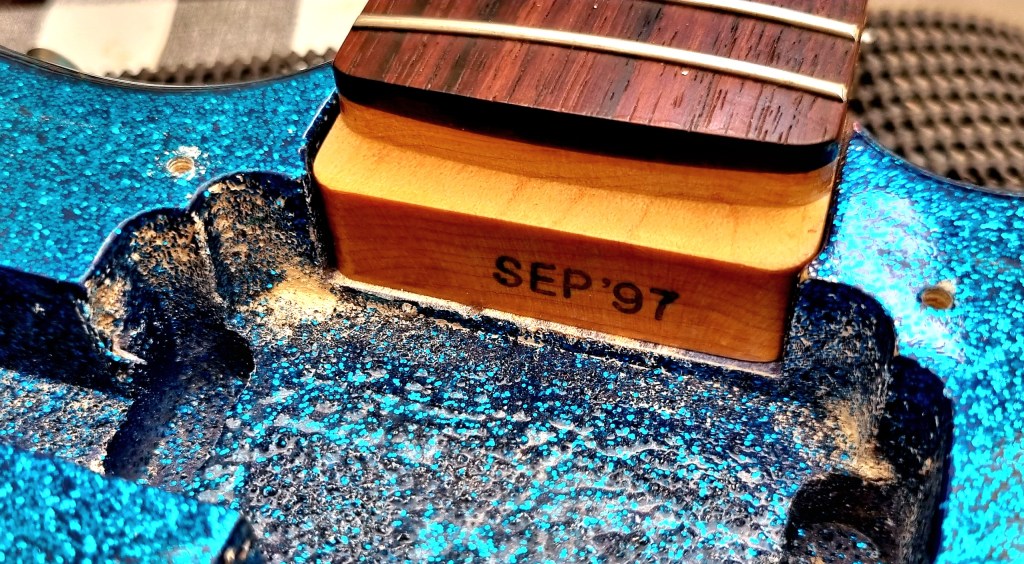
The end of the neck carried the date stamp Sept ’97. Fender Japan clearly used standard-sized neck blanks for the 24″ scale Super Sonics – the fingerboard stops well short of the neck.

FOOTNOTE: In November, 2021, my pal Dave confirmed the Super-Sonic was, indeed, still in his lock-up. He lives in Thailand these days and occasionally asks me to take out bits of gear out to sell for him – the Super-Sonic being the most recent case in point.

In recent years, Fender has at least twice revived the Super-Sonic in various forms, usually carrying the Fender logo on the headstock (something it probably should have had in the first place). There was a Fender Mexico version in 2012 and new for 2021, Fender Japan has issued a new version for the Japanese domestic market.

The American guitar dealer and vlogger Trogly recently bought one in each of the three available colours and had them shipped them to the US to review on his YouTube channel. I would imagine he reckoned he would he’d find takers to give him his money back at his current $1,699 asking price. At the time of writing, it looks as if he’s found buyer for one of them, though the black and the white models are still up for sale.

Meanwhile, the original Squier versions of Fender Japan’s sparkly oddity have since acquired a bit of a following, years after they were discontinued. These 90s originals are now valuable collectors’ pieces, fetching several times their original asking price – look on Reverb or eBay right now and you’ll probably see the odd one being offered for £1,000-plus. No wonder Dave wants to sell his!

Under the pickguard – quite an usual rout and the heel of the neck.
  • When I wrote my original blog post about the Super-Sonic, in the depth of the first coronavirus lockdown in 2020, I struggled to find a picture of it. Having taken it out of storage and cleaned it up to sell (I also replaced the terrible pickup selector with one that works!) it also presented an idea opportunity to take a set of pics to go with this updated piece. I hope you enjoy them. 🙂

A Pair of Semis

31. Blue Ibanez AS73

SEMI-ACOUSTICS have never really been my bag. Not sure why. Probably something to do with the way I long preferred Fenders to Gibsons, plus the fact they never quite sit right on my tummy! However. no true nerd’s guitar journey would be complete without at least one semi – and this was mine.
I looked at quite a few cheap and cheerful 335-style semis, but in the end it was always going to be between an Epiphone and an Ibanez. To my mind, the Ibanez won hands down. Even the non-Japanese ones (this was from Korea, I think) had a certain classiness about them which transcended mere looks and build quality.
The AS73 was basically a Gibson ES335 with a lot of corners cut to stay within budget (they retailed at the time for about £300, I think) and enough subtle differences to the shape of the head and body to save Ibanez from being sued. The finish and playability was exceptional for the money – even the pickups were perfectly good, though I’m sure plenty of people who know more about 335s would tell me different!
I bought this rather stunning blue one on eBay sight-unseen (or unplayed) for £150 with a very nice fitted hard case – yet another good example of the eBay gamble paying off.

It was a lovely, lovely guitar, but in all honesty I was really too married to my Strats at that point for it to get all that much serious use. It ended up being appropriated by Owen, who was really getting into the whole air-coming-out-of-the-f-holes thing you get from semis at serious volume. In fact, he quickly became a master of keeping the thing absolutely in that super-exciting edge-of-feedback state. I was happy for him to put it to good use.

Just in case – I kept the hard case from the blue AS73

32. Sunburst Ibanez AS 73

I WAS happy for Owen to use my blue AS73, but rather less happy about the modifications he wanted to make. He’s one of those players who rides the volume control (singular) all the time, and found having one volume for each pickup and neither of them anywhere near where he was used to finding one on a Strat was a royal pain in the proverbial! His plan was to rewire the guitar so it had one volume and two tones – with the volume moved so it sat in roughly the same place, relative to the bridge, as it would on a Strat.
As I say, there was no way he was going to start drilling holes in my beautiful blue guitar, so we found another one he could modify. This equally beautiful brown sunburst Ibanez also came from eBay, also for £150, albeit in a special gig bag, rather than a case.
He did the business with it and actually, far from ruining it, he did a tidy job. You can hardly see the two extra holes in the body. But the mods didn’t stop there. Oddly, considering both were the same model of guitar and not that far apart in age, the brown one had a rather chunkier neck, which ended up being shaved down by Feline guitars in South London, then left unfinished in Owen’s preferred fashion.

The neck after it was shaved

Thus modified, that brown semi served Owen very well. It was his main guitar with us in the latter days of the Rockin’ Armadillos, where it contrasted very nicely with Alex’s Strat sound, and went on to see good service with him in Purple Melon before they moved to Los Angeles.
Owen went; the guitar stayed, He never showed any inclination to ask for it, so I ended up selling the blue one with the brown one’s gig bag, keeping the case, and calling the brown one mine. It still is…at least until Owen wants it back!

Owen playing the AS 73 with the Rockin’ Armadillos in the early 2000s

My Fake Mosrite

32. Mazeti Mosrite Ventures Copy

ANOTHER relative cheapie, but I make no excuses for buying this stunning guitar. I’d long had a fascination for the oddball instruments produced by the American company foudned by Semie Mosley – it probably started the first time I saw Johnny Ramone playing one as The Ramones stormed through something like 38 songs in just over an hour at Cambridge Corn Exchange in around 1978.
My interest in them was later cemented by seeing the wonderful Mike Keller playing slide on a Mosrite with Doyle Bramhall’s band at the Austin City Limits Festival in Austin, Texas in 2004. Mike’s a very fine player, who I first saw playing at Antone’s in Austin in the late 90s – I still have the excellent “Keller Brothers Live at Antones” album somewhere. He went on to play in the Fabulous Thunderbirds. Google him. If you like that kind of lowdown and dirty Texas blues, you’ll love his stuff.

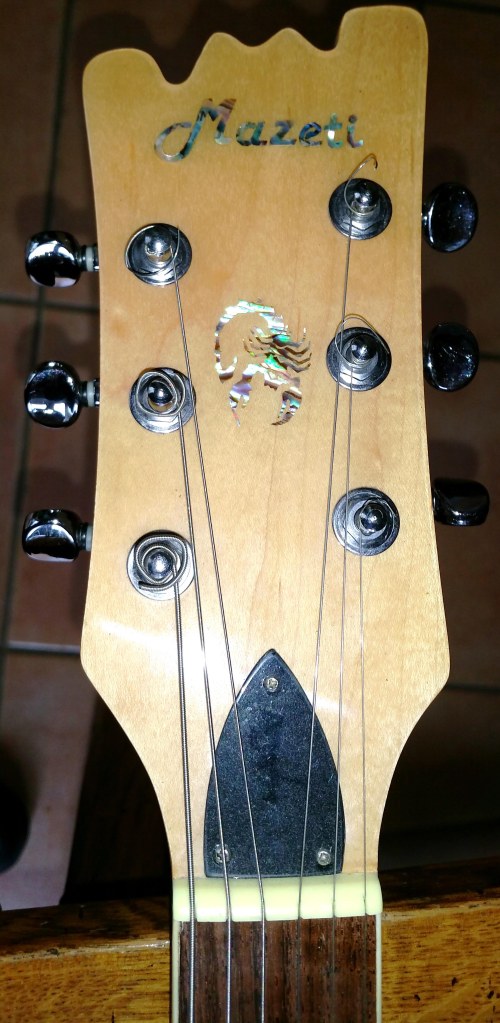
Cool head – the busiess end of the Mazeti

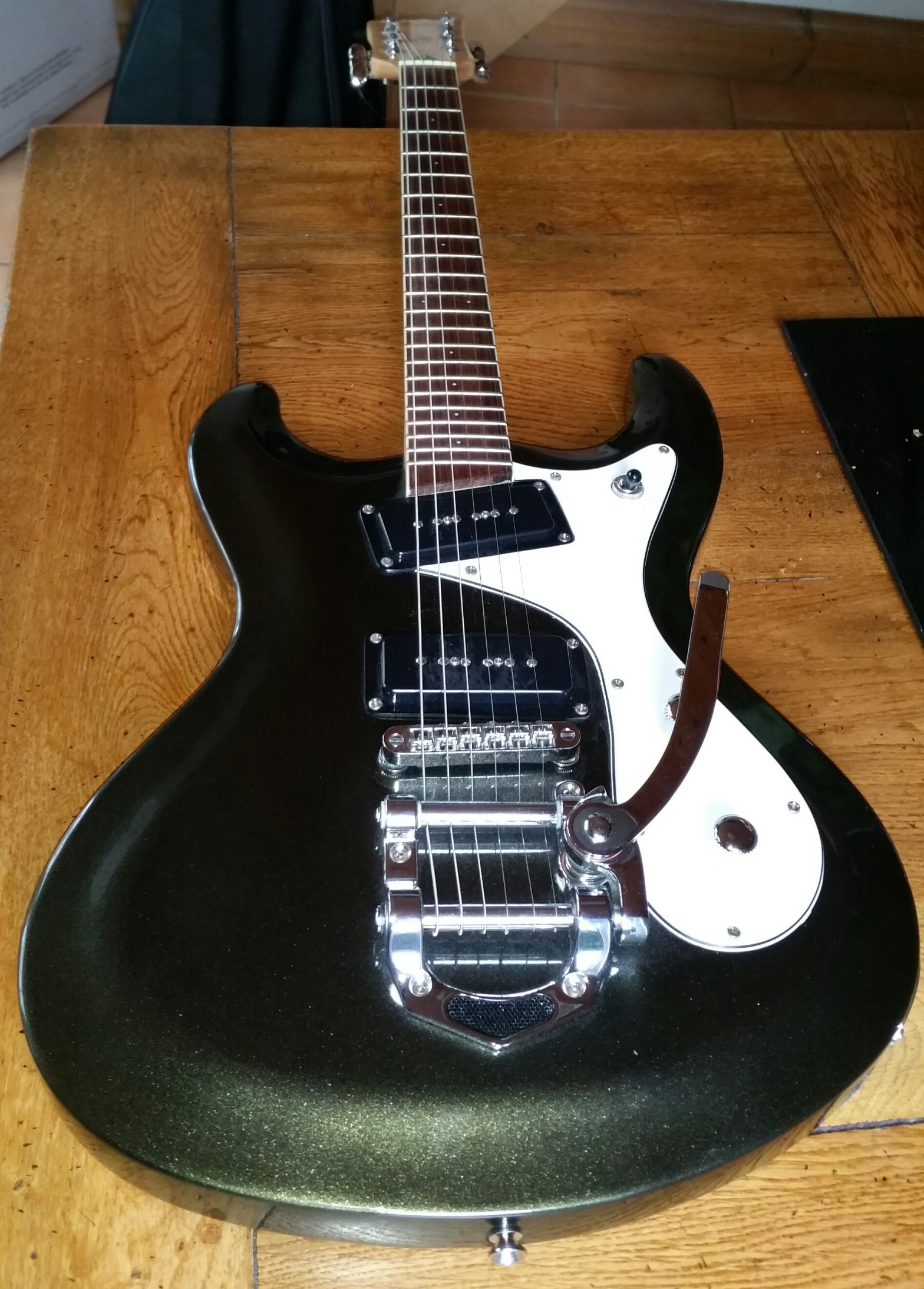
As I recall it, the Mazeti cost me £120 brand new from another dealer on eBay. When I won the auction (it was the second one I’d bid on and I was beaten first time around) I couldn’t quite believe the bargain I’d got. When it arrived, the extent of the bargain became even more apparent. This was a GREAT guitar – a bit on the weighty side, maybe, but quirky, beautfully made, a real looker and fitted with a pair of viciously hot, but incredibly toneful soapbars. The Bigsby trem was a bonus – to this day, it’s the only guitar I’ve ever owned with a Bigsby. (Fun to play; not so much fun to restring!)
It’s one of only a handful of guitars I’ve owned that I never, ever, bothered to modify in any way – yes, it really was that perfect.

The Mazeti in action…

Yes, I regret parting with it – not least because I’ve never seen another one – on eBay or otherwise. I’d probably still have it, but for the fact I had a chance in 2015, to buy a gorgeous, pristine 1972 Deluxe Reverb for an unmissable price. The Mazeti was one of three guitars I decided to sell to raise the money to buy the amp.
Quite a lot of you all know what happened six weeks after I got the amp, so I won’t tell the whole sad story again… 😦

It looked great propped up against my Matchless Chieftain – sounded great, too!

A Charming Cheapie…

31. Wesley Tele with P90s

I TOOK a lot of stick over this guitar…a LOT of stick! It cost me £46 brand new (including shipping) from a dealer on eBay who was marketing a whole range of Far Eastern Wesley-brand instruments with idiotically low starting prices on the auctions.
Since then, the likes of Tank and my good friend Joel have never, ever let me forget that I once sang the praises of such a cheap and cheerful guitar. I still maintain, though, it was worth every penny – maybe not all that much more, though.
Photogenic it certainly was – and very reminiscent of some of the reinventions of the Telecaster Fender itself was beginning to bring out at the time, a kind of cross between a Thinline Tele and a Les Paul Special.
Set neck, edge binding, no pickguard. Gibson-style bridge/tailpiece and a pair of soapbars – visually it sort of gelled. £46 was the auction’s starting price, but also the way the auction ended – I was the only bidder.

Back view – the lacquer was quite thin and brittle, as you can see from the edges of the guitar. The round Velcro pad by the jackplate was there to hold one of my AKG wireless transmitter bugs in place.

When it arrived, I was reasonably impressed with it, too. The neck was bigger and chunkier than I was used to, the pickups and the electronics were nothing to write home about, but the guitar was perfectly useable, and after all, it had set me back just forty-six quid. Delivered!
It arrived in 2007, while I was convalescing at home after my heart attack, and was the first guitar I’d bought since coming out of hospital, so it would bound to have a bit of a special place in my heart. I couldn’t wait to be allowed to drive again, so I could take it out to a few jams and play it in anger and also gig it with the Armadillos.
I actually gigged that guitar a fair amount for a couple of years on and off, so it couldn’t have been that bad. I upgraded the pickups with something slightly better from the GFS website at one stage, but in the end, despite its sentimental value, it had to go.
Back on eBay it went – can’t remember how much I got for it, but I’m pretty sure it was more than £46, so the joke’s on you, guys! 

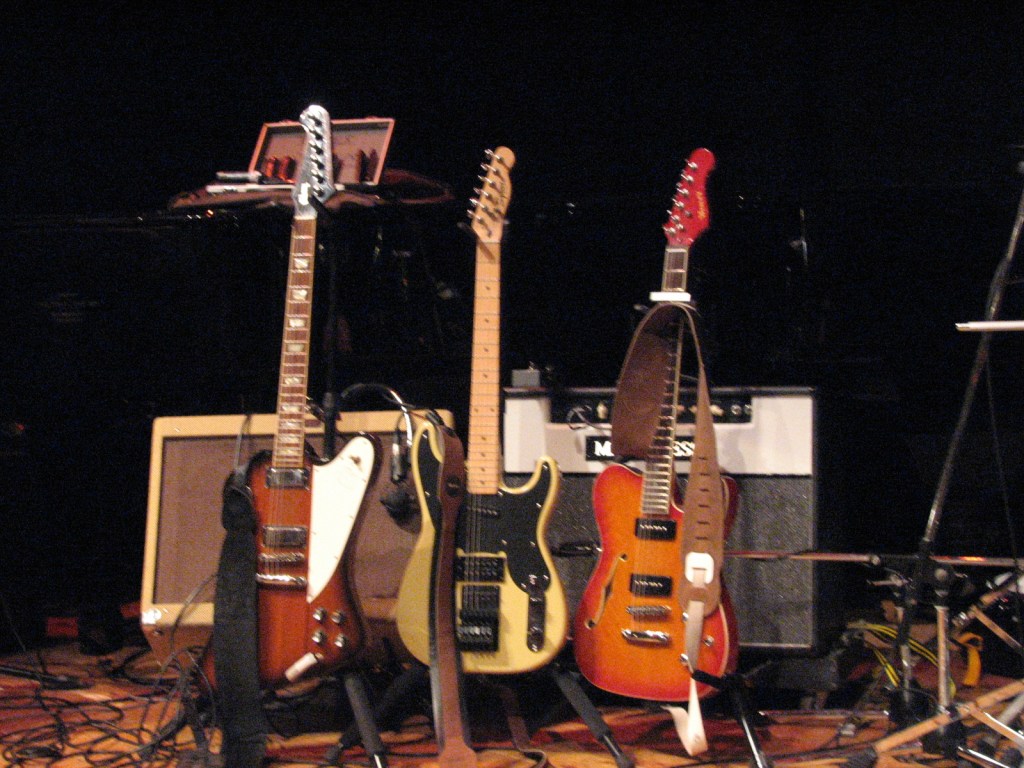
Cool lineup… the Wesley capo’ed up and parked on stage with my Squier 51 and my Firebird. If I ever begin a “43 Amps” blog, the Matchless sitting behind it will play a starring role. And a £46 guitar though a £2,000 amp was quite a combination!

A good idea at the time…

31. Line 6 Variax 30

AN odd one, you might think, to find lumped in after three acoustic guitars, but believe it or not, I bought this bright red digital guitar, primarily to use as an acoustic guitar.
It’s a modelling guitar and doesn’t have any conventional pickups. Instead, rather a transducer under the bridge picks up the string vibrations and sends them to a really clever bit of advanced electronics which converts them into the sound of almost any guitar you care to name – from a vintage Martin acoustic to a National, a Strat or a Les Paul, and all sorts of weird and wonderful things in between. Yes, really!
Not only that, it allows you to programme in almost any tuning you like, electronically – a bit like my Hipshot Trilogy bridge, but all done by a couple of chips under the pickguard.

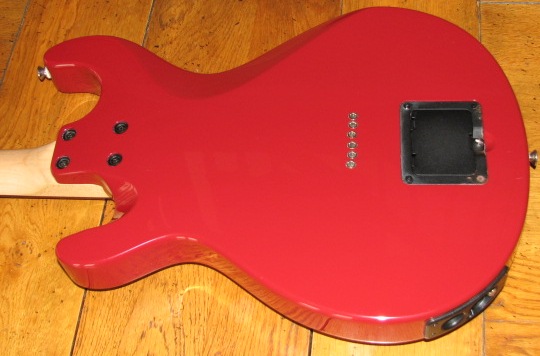
The back of the Variax – it ran on a shitload of AA batteries, of a special stereo lead linked to a power supply.

It’s a great idea, but there just had to be a catch, didn’t there? Otherwise, surely every other famous guitarist in the world would be using them by now, wouldn’t they?
The truth is it worked, after a fashion, but never quite responded convincingly enough to the way you hit the strings. The (more expensive) dedicated acoustic model works better – my mate Dave Werewolf swears by his! But for me, it really was a case of a nice idea which came tantalisingly close to working, but never quite cut it.
I was certainly very taken with the idea for a while, mind. I even bought a spare body on eBay, intending to strip off the paint, lacquer the bare wood and fit a tortoiseshell pickguard to lend it a vaguely more “acoustic” vibe. That never happened, of course. I still have that spare body in a box somewhere in my garage if anyone would like to make me an offer. I think it would probably take a fairly standard Strat-type neck…

In action with Los Tres…
That spare body…. make me an offer

Canadian Cedar…

30. Simon & Patrick SP6 acoustic

THE Tanglewood acoustic was OK, but there came a time when I decided I needed a more serious acoustic. That was where this delightful cedar-bodied Canadian beauty came in. At one stage in the early 2000s, a dear friend even offered me the long-term almost-permanent load of a beautiful, well-worn 1964 Gibson acoustic and foolishly I declined, saying I didn’t think I was worthy of it. (I wasn’t, but that’s another matter.) I ended up in Guitar Village in Farnham, Surrey with a Simon & Patrick in my hands and another serious jones! It was love at first strum. I didn’t buy that one, but it became the latest obsession. I ended buying a secondhand damaged-and-repaired Seagull acoustic sight-unseen on eBay, because it was cheap and Seagulls were made in the same factory as the Simon & Patricks.
Big mistake. Turns out there was a world of difference between the two marques, most crucially the really strange-feeling V-shaped necks on the former. So back that one went on eBay, minus the rather nice hardshell gigbag it came with – and off I headed to Trevor Durrant’s in Colchester, where he did me a really good deal on an SP6 Cedar.

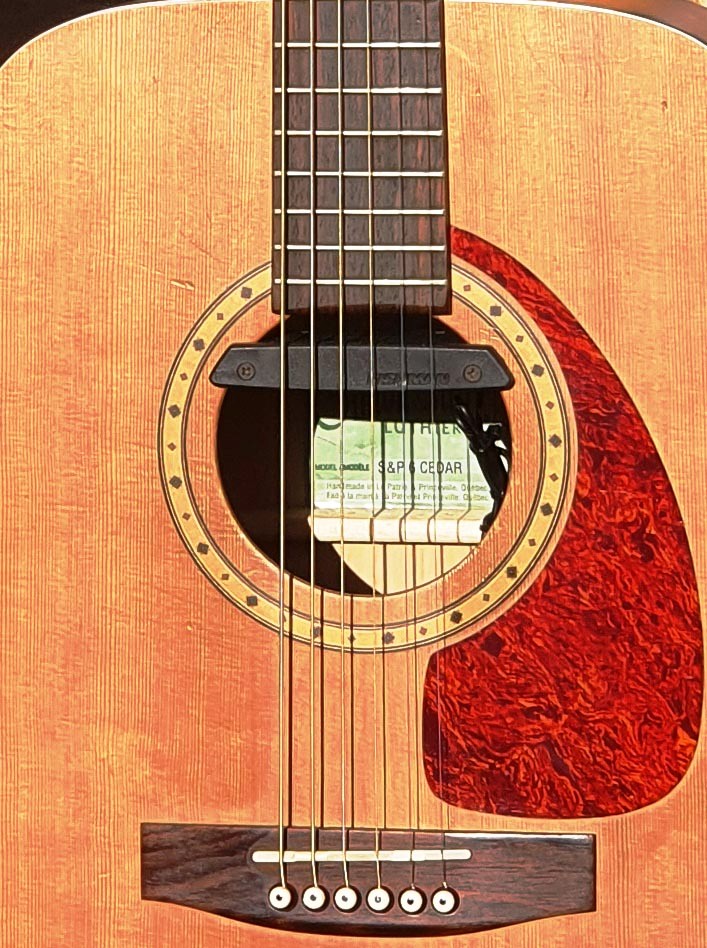
The Simon and {Patrick with its Fishman pickup in the soundhole

It’s a brilliant-sounding guitar – one which has matured very well in the 15-odd years I’ve owned it, a sign of a decent bit of timber in that Cedar soundboard, even if it is rather soft and is now covered in little dings. Quite how well it had aged only became apparent when Owen paid a flying visit from California a couple of years ago and picked it up, having not heard it in the best part of ten years. Ears of a bat, that boy. He simply couldn’t quite believe how different it sounded! The sound has enough detail for my cack-handed attempts at finger picking, but it’s when you use a flat-pick and strum big, open chords that it really comes to life.
Foolishly, I’d opted for the more expensive electro-acoustic version. I should’ve known the fitted undersaddle piezo wouldn’t be a patch on a Fishman, even with its fancy B-Band preamp. I persevered with the pickup for years, but eventually gave in and fitted another Fishman. It now sounds as good plugged in as it does acoustically. I don’t gig it all that often – its usual home these days is on the wall of the control room at our studio, Rooks Yard, where all manner of really good players have used it for tracking on sessions. 

Simon and Patrick SP6 – plain, but rather beautiful in its own way

Unplugged… but not really

28. Tanglewood acoustic

I’VE never been much of an acoustic player, but all the same, I’m sure most people who play guitar would tell you there was the odd time when it’s really, seriously handy to have an acoustic guitar knocking about. Solo and duo blues gigs, for instance, where an electric guitar sometimes doesn’t look or sound quite right without bass and drums.
And busking. Not that I’ve ever busked – though there was a time in the early 90s, when my job security looked a tad tenuous and I feared I might need to take to the streets with a battered old acoustic and sing for my supper. On reflection, it’s probably just as well I never needed to. I’d have either got a lot better at the strummy, singing stuff pretty quickly…or starved. Well, maybe not starved, but not become quite as fat as I am now, anyway.
In pursuit of this notion, I decided to buy an acoustic – and was very lucky to find a really smart-looking secondhand Tanglewood dreadnought in the old Zings music shop by the bus station in Maldon. Even then, £60 didn’t usually buy you much, but with new strings, this one sounded as good as it looked, played pretty well, too and even came with a fairly rudimentary cardboard case.
That was my one and only acoustic for years and years and it saw me through quite a lot of gigs and a couple of home-recorded cassette albums with my mate Phil Davies – we called ourselves Slim Tim (a reference to my band Automatic Slim, rather than to my waistline) and Lightin’ Phil (not a typo – he was an electrician!)
Quite early on, the upgrade bug bit. I replaced the tuners (those really horrible items with the diamond-shaped chrome covers over the gears you see on loads of cheap guitars of all sorts) with a nice set of Gotohs and installed a piezo pickup under the bridge. The latter lasted about six weeks. It sounded awful – I’ve never much liked under-bridge pickups, as they always sound brittle and pingy to my ears. Fine, if you’re Monty Montgomery and that’s your sound (allied to technique to die for and an array of pedals) but otherwise a bit of a no-no.

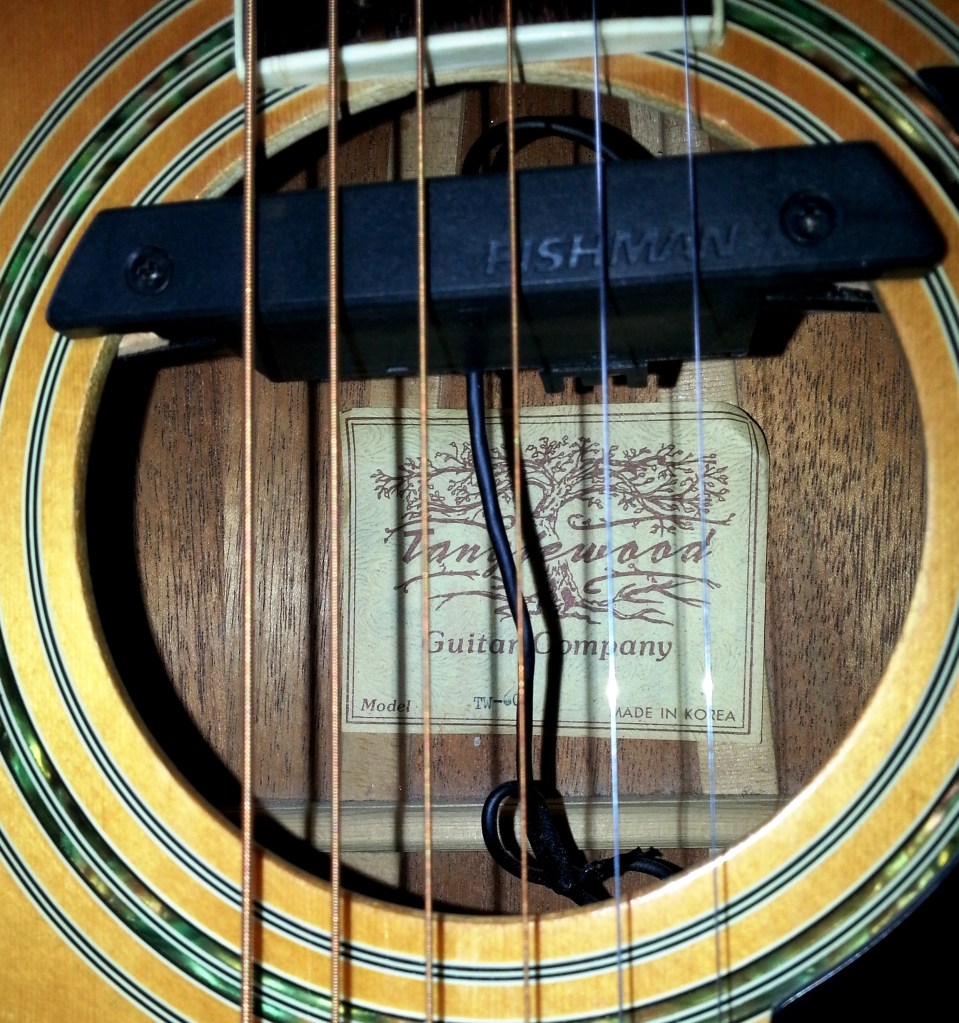
The Fishman pickup I should have kept…

I found a great secondhand Fishman Rare Earth humbucker on eBay and I’ve sworn by them ever since. It’s a trifle illogical that a magnetic soundhole pickup should actually sound more “natural” and “acoustic” than a transducer, but I’m far from alone in being a big fan of Fishman magenetics. Actually, I bitterly regret keeping the pickup in the Tanglewood when I sold in the early 2000s, it haveing been superceded by the Simon and Patrick. I thought at the time it would add to the saleability of the guitar.
It did. And someone got a pretty substantial bargain. Bugger!

The Tanglewood in action (pre istallation of the pickup) with me and Lightin’ Phil
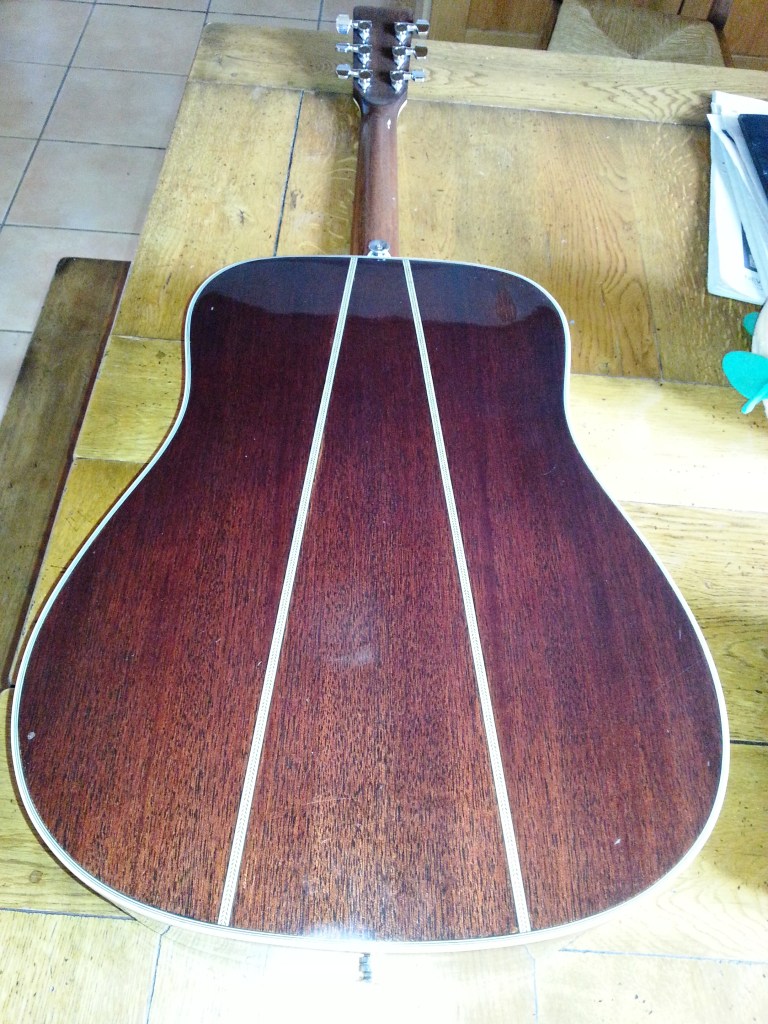
Even the back was rather attractive.
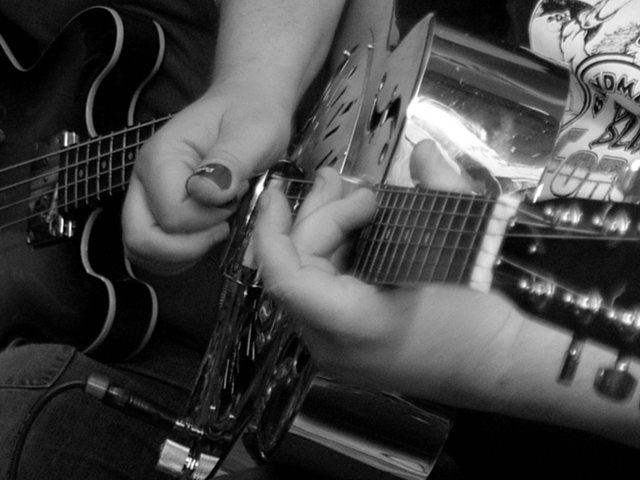
The obligatory shimmery reso shot….

29. Vintage AMG-3 “Notional” Resonator

Ah, the allure of the shiny metal guitar! Punters love ’em – can’t get enough of ’em! You can blame Mark Knopfler and THAT Dire Straits album, really, but there’s definitely something about the way they catch the light (married to the fact they’re often used for slide – a voodoo as sexy as it is incomprehensive to non-players). The first metal-bodied reso I ever saw was the one to which Lightin’ Phil treated himself soon after we started playing duo gigs together. It was brand new, utterly beguiling and blisteringly expensive. A National Style O – all bell brass, engraved palm trees and chrome plating (or was it nickel?). To say it was loud, acoustically, was an understatement. Played with a full handful of plastic thumb and finger picks, it was positively thunderous.
Phil’s resonator cost him the price of a moderately serviceable used car. My humble secondhand Vintage AMG3 I bought on eBay set me back £260 – complete with a hard case. It was a Far Eastern knock-off, with only a hint of the sound, vibe and general pizzazz of Phil’s National – but I soon learned there are things you can do to make them sound and perform better.
First I decided it needed a pickup. Amplifying resonators to capture the unique tone of that metal cone at the heart of the beast is a peculiar blend of art and science. If you have loads to spend, you get a Highlander system, simple as that. It’s what the top pros use, but the pickup and associated gubbins costs more than I paid for the whole guitar! Even Phil hadn’t gone that far with his Style O. He used some strange and rather inelegant, proprietary system involving small mics attached to the body and pointing into the F-holes attached by bits of sticky-back Velcro. It never seemed to work all that well, to be brutally honest.

The “Notional” as it is now…

I started off with a transducer from a very well-respected Canadian company called Schatten, which fitted under the “biscuit” – the round wooden disc in the middle of the cone upon which the bridge is mounted in this type of reso. It worked – up to a point – but sounded thin and weedy, no matter what you did to it. Next came a slimline Kent Armstrong humbucker attached to the body under the strings with a super-sticky pad. It worked, but never sounded like a resonator. Then I found a decent compromise in the shape of a Lace resonator pickup, a flat, slimline stick-on humbucker specially voiced to make the guitar sound, well, like a resonator. It works surprisingly well. It’s still there! (Thanks Richard Townend – I owe you one!)
Along the way, the guitar also acquired a new resonator cone – a vastly superior Quarterman job, procured at some expense from StewMac website – classy-looking new Waverly-style tuners (lovely, elegant, smooth-turning and great value from the GFS website) and a volume control and jack socket. It was only when I drilled holes for the last two that I discovered the body wasn’t brass, as Vintage claimed, but common-or-garden steel. Or at least the swarth coming off the drill was steel!

The “Notional” headstock

Oh yes, and while I had the tuners off, I sanded off the word, “Vintage” and added a snide, but very convincing snide National decal. Not that anyone who knows a thing about guitars would ever be fooled. If anyone ever asks me, I tell them it’s not a National, but a “Notional”!
Thus modded, it’s a pretty terrific working guitar, albeit relegated to second place these days by the REAL National I bought last summer. The Vintage still looks great (I remember an old boy coming up to me at a gig and telling me confidentially, in hushed and reverential tones: “That guitar is worth a lot of money, you know!”)
It sounds terrific, too and has served me very well. I gigged it a fair bet when Rob Barry, Paul Lester and myself had an acoustic blues trio called Los Tes Armadillos – and offshoot from the Rockin’ Armadillos.
I also recorded with it on the first WOLFPACK album and it’s also the resonator you hear Joel playing on a couple of tracks on the band’s second album.

My reso provided the backdrop for the the Los Tres poster…
When the drummer becomes a strummer – my dear old friend Paul Lester
Singin’ the blues…a nice shot of the “Notional” in action at a blues festival in Norfolk in 2017
In action with Los Tres Amradillos

Sundry Strats and Similar part 2

26. Black Modded Squier 51

ANOTHER of my creations, this dates from the time when Squier 51s were dirt-cheap and plentiful and I belonged an unbelievably nerdy specialist forum on the web, dedicated to modding Squier 51s. Much as I adored the simplicity of the original Indonesian Squier 51 design, there were a few things about them which definitely warranted improvement. That cheap and nasty top-loading bridge was definitely one. If through-body stringing was good enough for Teles and hardtail Strats, it stood to reason it would be a good choice for the bastard offspring of Fender’s two most famous instruments. (Fender Japan clearly thought the same when it produced the Pawnshop series a few years later, so I was in good company there.)
A logical progression, I reasoned, would be a Tele-style bridge – one of those units that takes a humbucker – and while I was at it, how about some of those natty-looking lipstick tubes they were offering on the GFS website?
The body came from a 51 I bought on eBay for £70. I fancied a rosewood board on this one and managed to find a suitable neck on eBay from a Squier Tele from the same factory, meaning it was a perfect fit. Like the pickups, the rest of the hardware was just about all from the GFS website – I swapped out the tuners for some nice Kluson lookalikes, and topped the body off with a lovely red GFS tortoishell pickguard and a really neat “Fender Squier 51” decal from one of the guys on the forum.

This image has an empty alt attribute; its file name is 0-s51head.jpg
The fake Fender decal supplied by the forum

I made a bit of a hash of lining up the holes for the string ferrules on the back of the body, I’m ashamed to admit, but from the front, the guitar looked great, even if somehow, it never quite lived up to the promise of the visuals. The pickups were especially disappointing and I ended up swapping them for a set of more conventional ones – I was saving the Squier units for another project, of which I’ll tell you later. However, my pal Howard really took a shine to it, so I ended up giving it do him. I think he still has it…

This image has an empty alt attribute; its file name is 0-bl51body.jpg
Classic lines – though the GFS lisptick tube pickups didn’t stay long
This image has an empty alt attribute; its file name is 0-fe-ferrules.jpg
Hardly the neatest through-string conversion ever seen!!!!
This image has an empty alt attribute; its file name is tim-bl-51.jpg
Proof positive this guitar did see some action… at the Heathcote jam in Leytonstone, East London. This was after I fitted more conventional pickups!
This image has an empty alt attribute; its file name is 0-pg-squierfront.jpg
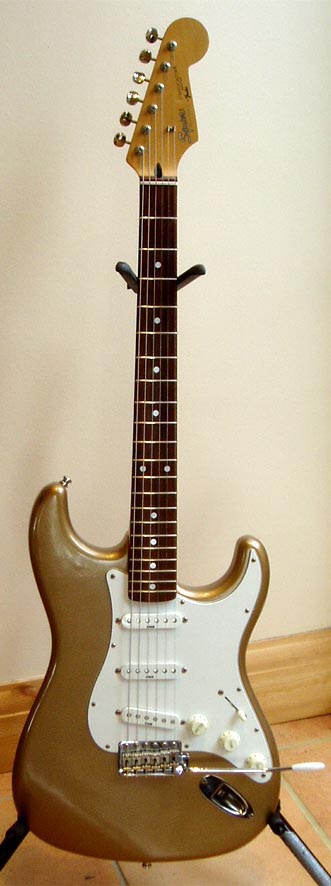
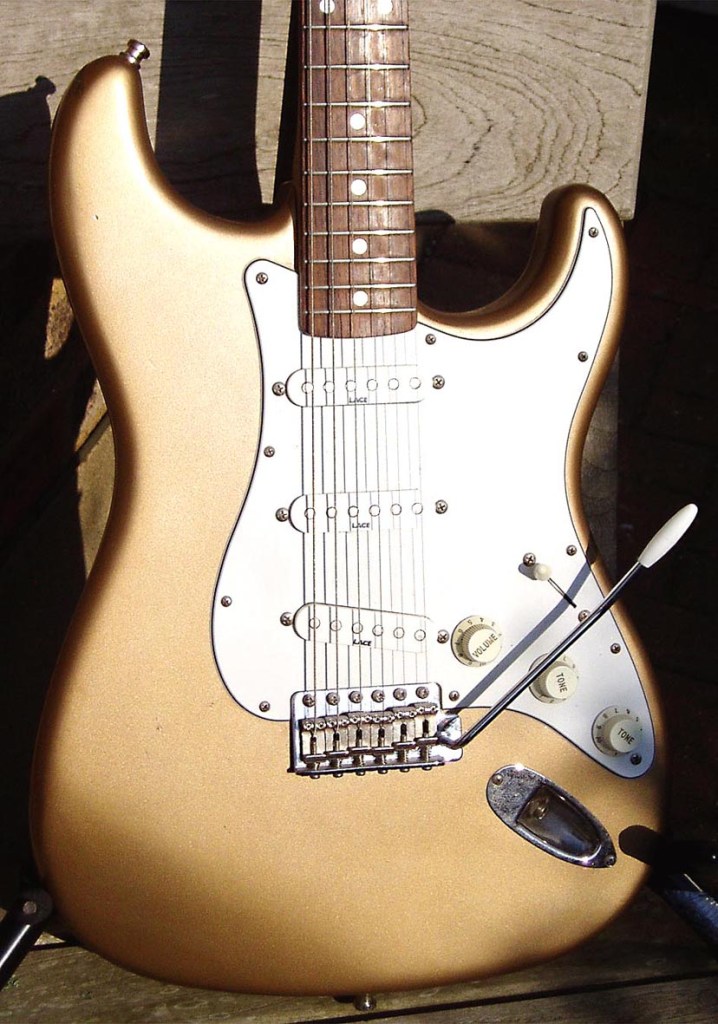
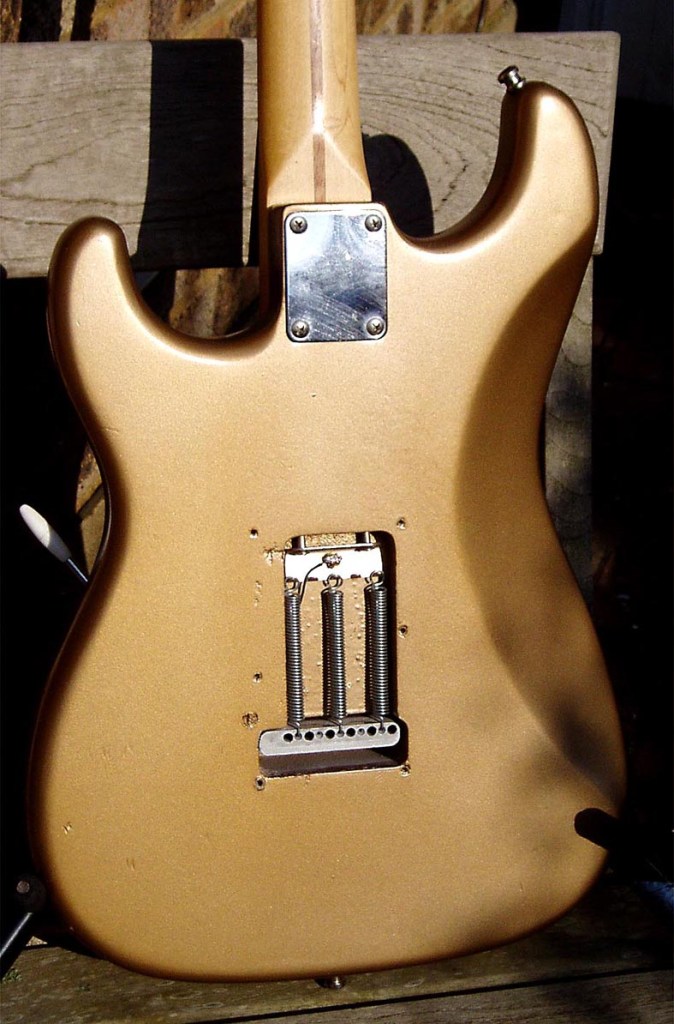
All that glitters – Squier MIJ Stratocaster in shoreline gold.

27. Shoreline Gold Japanese Squier Strat signed by Peter Green

THIS could be regarded as the sequel to my earlier post about gold Strats (No14), though it does have has rather more of a story to it. I spotted this Strat on eBay and decided the price was more or less right – not an amazing bargain, but the pictures looked terrific.
By and large – especially considering the sheer quantity of stuff I’ve bought on eBay down the years – I’ve only come unstuck and bought bought a duffer a handful of times. Sadly, this was one of them. Not a bad guitar in itself, I gigged it a fair bit in the year or so I had it. From a distance, it looked great. But the finish, in the cold light of day, was a huge disappointment. Up close, that lovely gold paint was a refinish – and not a terribly good one at that.
My decision to sell it coincided, more or less, with a charity gig at one of our haunts, Club Riga in Southend, by the legendary Peter Green and the Splinter Group, so I decided to take the Squier down to the gig and see if Green would sign it for me. (Quite cynically hoping it might make the guitar a bit more saleable.)

This image has an empty alt attribute; its file name is 0-pg-squiersign.jpg
That autograph…. note he used his original surname

We arrived early and our pals Dave and Steve, who ran the club let on that Green was having a quiet drink in the bar next door, so me, Owen and Dave Werewolf wandered in and found Greeny nursing an orange juice in the corner. This was the latter days of Green’s involvement in the Splinter Group. All sorts of stories have been told by Green’s family about his situation during that period, but I can only speak as I find. The man seemed reasonably all there and perfectly happy, if a bit distant. He was at his most animated when Dave got him talking about the old days in the part of East London where they both grew up – familiar haunts and characters, that sort of thing. Oh and yes, he has more than happy to signed the back of the Squier’s headstock. I’m not sure it added much to the value, but it may have made it a bit easier to sell – even with a dodgy paint job. 

This image has an empty alt attribute; its file name is 0-wpg.jpg
Yours Truly with Peter Green and the gold Strat
Gold – but not quite solid.

Sundry Strats and Similar part 1

24. Reverse headstock Bitsa Strat

FOR ages, I’ve had a bit of a passion for tinkering with, upgrading and modifying guitars. In fact, you may already have noticed very few of mine ever remain completely original for long. I’ve put the odd one together from bits, too.
Apart from the Strat I built for Owen in 1990 (see Number 8), this is one of my better creations and I ought to play it more often, as it’s a pretty cool instrument. Trouble is I have so many other nice Strats that seem to get in the way… (Current Strat count: Four)
The body started life on a white Japanese Fender 62 reissue which belonged to our friend Jamie. It had a modded tortoishell pickguard specially routed to take three Danelectro Lipstick Tube pickups, SRV-style. At some stage, it became Owen’s guitar. (That kept happening!) This was the time when Owen was mad for a Lake Placid Blue 62 Strat (I’ve already laid the blame for that one at the door of Mr Eddie Tatton, who played a real beauty in Out of the Blue, but it doesn’t hurt to point the finger again!) Jamie also had a rather nice Japanese Squier Silver Series Hank Marvin Strat, but decided he hated the colour. He ended up refinishing it in brushed-on maroon emulsion paint (!!!). Waste of a really good guitar, that, not least because those particular Strats are reputedly among the best non-JV Squiers ever made.

Anyway, that badly-painted body also found its way to Burnham. Stripped and refinished in Yorkshire at considerab le expense by the amazing Clive Brown, it was married to the neck from the white Japanese 62 reissue, with the addition of genuine “clay dot” position markers to form the basis of a longtime Owen standby, the Lake Placid Blue Strat. And a very fine thing it was, too. (Coincidentally, that one ended up with Jamie.)
In the process, I inherited the white Strat body and set out on a mission, inspired, chiefly, by a stripped early 60s Strat I’d recently admired in the hands of one of the guitar players in Marcus Malone’s band. I stripped the body (if you look hard, you can still see a bit of white in the trem cavity!), stained it dark brown and oiled it so it looked like an old body which had been stripped and then sweated into for about 40 years!
Then I needed a neck (rosewood board of course – at that stage, I held to the devout conviction that rosewood boards worked best on Strats, while maple best suited Teles!) This was the late 90s, when the Italian guitar importer Brandoni ran had a proverbial Aladdin’s cave of a warehouse near Wembley Stadium, packed with all manner of exotic necks, bodies and other guitar parts – including a huge stock of new-old-stock Italian-made Eko and Vox guitar parts. One of their most popular lines, however, included some really good, really cheap Strat and Tele necks and bodies. Our pal Freddie Overton, who used to front the old Chelmsford blues jam in the Bassment had a nice sideline in building and selling really nice bitsas from their parts. I think he was the one who put me on to Brandoni and I made a few trips to Wembley after that.
About the same time, I’d become intrigued by one particular Strat I’d seen Stevie Ray playing in pictures. It was fitted with a left-handed, reverse headstock neck.
The theory is that because the head is reversed, the bottom string length is five inches shorter than it would be on a right-handed head, while the top E is five inches longer. It’s subtle, but it definitely makes a difference to the way a guitar plays – giving the top strings a bit more “give”, which makes string bending easier, while the bottom strings have a bit more “snap”. Jimi Hendrix spent his glory days playing Strats effectively strung that way – yes, he turned the whole guitar upside-down, not just the neck, but it’s often said to be one of the reasons he played and sounded the way he did.
You could get a really good quality neck for £70 at Brandonis, so, tantalised by the left-handed thing, I felt perfectly justified in buying one left-handed neck, and one right. That way, if the leftie neck hadn’t worked out, I could have put the other one on the guitar and sold it. You only need to look at the pictures to get the answer to that one, though I wish I’d kept the other neck as well – it would have found a home on something, somewhere down the line
Add a black pickguard like the one of Marcus’s guitarist’s Strat, a secondhand set of Fender American Standard pickups and some Gotoh hardware and I had me a very playable, very distinctive and totally cool guitar! It was my spare Strat – second to the Surf Green one – for many years, making a comeback when I got my Firebird (more of which later), which has a similar stringing arrangement. (I reasoned it would be easier in mid-gig to get my head around tuning two guitars with the same tuner order.) These days though, neither guitar tends to get out much. The Gibson is arguably the coolest guitar I own, but it’s too big to fit in the car when I’m fully loaded, while the poor old Strat has been superseded, not once but twice, by other Strats.
All the same, it’s a damned fine guitar – and yes, I still have it!

VLUU L210 / Samsung L210

25. Fecker “Partsocaster”

THIS next example of vague Strattiness is further fruit of my love of putting bits together, though it came together a good ten years after No 24. The body was originally part of weird thing called a Fretlight – a Strat-shaped instrument which had LED lights all along the neck to tell the player where all the notes were. It was one of many bits of kit which found their way to my pal Pete Crisp’s studio in the days when he used to review gear for various music magazines. The neck on this one was badly damaged in transit to the studio (can’t help feeling the extra wood removed to fit all those LEDs and wiring may have weakened it). Anyway, the company didn’t want it back, so the body sat around unwanted until I claimed it.
The neck came from a (Korean, I think) Squier large-headstock Strat via eBay and the pickups and hardware was all from the excellent – and in those days, very cheap – American GFS website. Sadly, exchange rates and ramping USPS postage charges mean GFS is no longer the bargain site it once was.

That decal…

The resulting guitar wasn’t actually half bad, though the headstock decal is arguably the best thing about it. A friend of mine has a rather whizzy printer that can use metallic inks. For the price of a couple of pints, he’ll make you a really convincing-looking and period-correct Fender decal, but his crowning glories are the “Fecker” decals he makes. This one is a “Fecker Partsocaster, with Bastardised Tremolo” but he also does a nice line in bass decals, too. (I know of at least two examples of the Fecker “Jizz Bass”!)
The Fecker didn’t stay all that long, the victim of one of my periodic culls. I was delighted to sell it to my pal and erstwhile Echo workmate Steve “Statins” Crancher. He tells me he sold it on recently to a chap in Southend who is thrilled to bits with it.
Before that, though, the Fecker saw service with me in Scotland during what turned out to be one of the most enjoyable weekends of my playing career. A free BA flight to Aberdeen, courtesy of Airmiles, hooked me up with guitarist Son Henry, who I’d met on a blues forum on the web. After micking me up from the airport, we had an hour in a rehearsal room with his band, then headed down to Dundee. Over the next two days, we played no fewer than five shows at the Dundee Blues Bonanza. Me and the Fecker then boarded another BA flight back to Gatwick – just in time to start work i Basildon at noon on the Monday morning.
Rock’n’roll, eh?

A “fretlight” guitar similar to the one which donated the body for this project after its neck got smashed in transit.
The Fecker’s body

Two more for Slide

17. Danelectro U2 reissue

I CAN’T honestly remember how much I paid for it, or where it came from, but this rather nice maroon Danelectro U2 reissue was a bargain. After they they were re-released in the early 90s, just about every guitar player I knew had one of these cheap, cheerful, but funky guitars. The bodies were made of hardboard – yes, really. The Americans call it “Masonite”, but hardboard – the stuff you find the back of your Ikea wardrobe – it doubtless is, front and back, glued to a wooden frame, with a funny sort of plastic binding on the edges.
The bridge was about as crude as it could have been and the tuners looked like something from a child’s toy guitar. Then there were the famous “lipstick tube” pickups – apparently, the original ones in the late 50s (also the guitars the company made for the Sears Roebuck catalogue company) really did use surplus stock lipstick tubes to house the pickup coils.
For all its crudeness, there’s something about those Danos which works beautifully for slide. Jimmy Page used to play slide on an original double-cutaway Danelectro 3020 – the U2 is a pretty good, cheaper alternative.
Can’t remember where mine came from, or where it went, but it was with me for a good 10-12 years. It was my holiday guitar for a while. It was light and vaguely hollow, so it had a bit of an acoustic ring to it – enough to hear, without annoying the rest of the family too much.
And every now and then, I get the inclination to find another one, most recently when I saw the excellent Mike Ross playing a left-handed Dano.
I’ve managed to resist so far, but one of these days…

For such a flimsy guitar, it had six screws holding on the neck.

18. Tanglewood TBS500 “Blue Sound” Electric Resonator

ONE of the prettiest guitars I’ve ever owned – but sadly, also one of the cheapest and nastiest! If this guitar had been built to a quality, rather than price, it would have had the potential to be an absolutely stunning instrument. But sometimes you get what you pay for, I guess…if you want a National Resolectric, you have to pay National money.
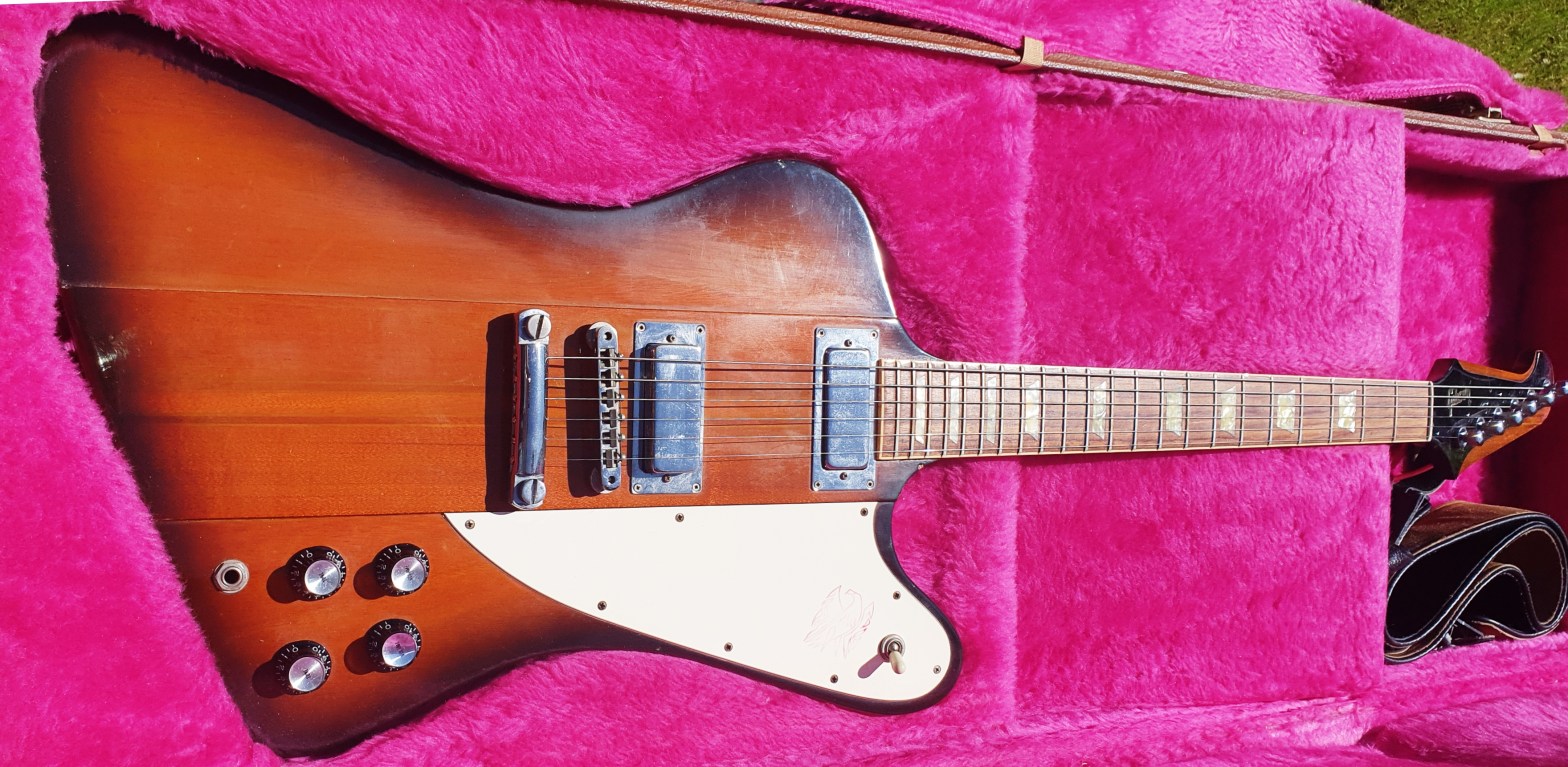
The reality was a nicely-proportioned, lightweight solid body and a ridiculously slim neck – more akin to what you’d expect to find on a pointy-headed shredder’s guitar than a bluesman’s squeeze – crowned with an elegant headstock, reminiscent of funky old 50s and 60s instruments from the likes of National or Supro.
The body was routed to take a cheap Dobro resonator cone, fitted with a pretty ineffective piezo pickup, a fairly indifferent mini-humbucker and most bizarrely of all, a random circular hole in the top horn, covered with what looked suspiciously like a tea-strainer – purely cosmetic, serving no purpose whatsoever! Volume, tone and pickup blend knobs completed the picture.
I really tried to make something of this guitar, but it never really worked – too quiet to use as an acoustic and pretty useless as an electric. If you see one (in the US they were sold under the Jay Turser brand), I’d think hard about paying much more than I gave for mine. (I paid £50 to a bloke I arranged to meet at South Mimms Services on the M25 – scene of many a dodgy-looking, but perfectly legit gear-for-cash rendezvous down the years).
That was probably about what it was worth. After persevering for a few years, it eventually went in the same purge as the Danelectro – though in this case, I just gave it away to a mate…

A Supreme Slide Machine…

16. Blonde 2003 Squier 51

FOR almost as long as I’ve attempted to play guitar, I’ve also attempted to play slide guitar, with varying degrees of success. It started, of course, with Automatic Slim. My hero, Dr Feelgood’s frontman, Lee Brilleaux played very effective, but rough-and-ready slide, tuned to open D. However, the regular slide numbers which became an integral part of the Slim set weren’t Feelgood tunes, but from the canon of Muddy Waters, George Thorogood, and Bob Dylan, the latter, “Highway 61 Revisited”, having more words in it than any sane person can remember!
For most of those years by guitar of choice was my old faithful 52 reissue Tele and tuning-wise I’ve always favoured open A – two-steps-up brother to the more popular open G used by country bluesmen and, of course Keith Richards (who, apparently, learned it from Ry Cooder).
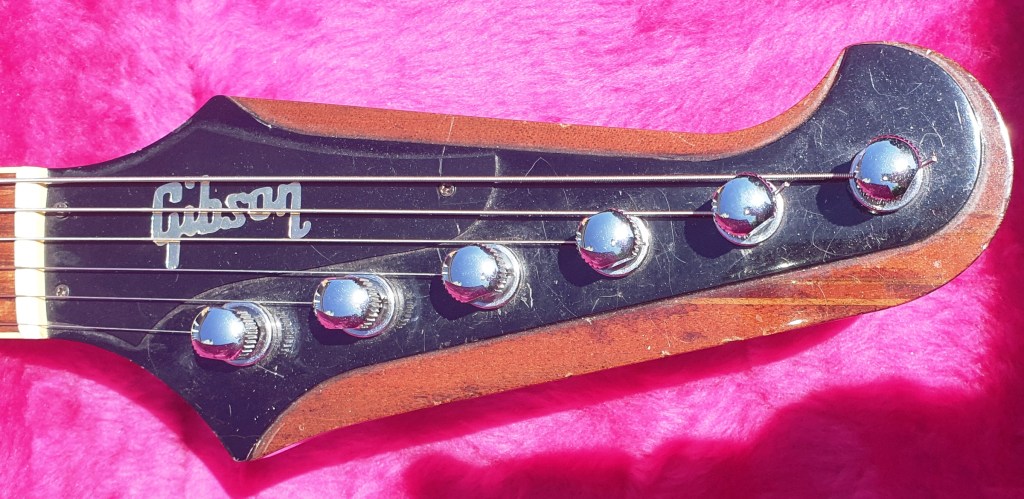
The A tuning has always worked for me as it means the strings are tighter, which on my old Tele pulls the neck a bit harder and makes the action a tiny bit higher – usually a positive benefit for slide playing.
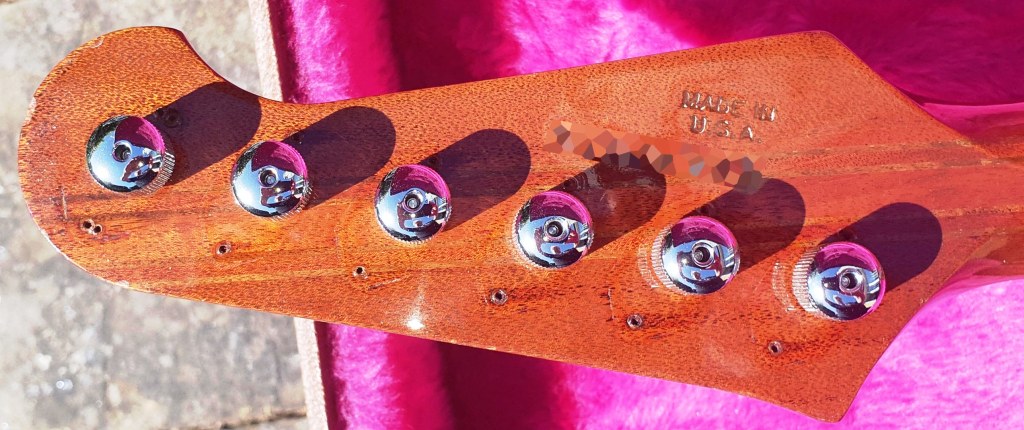
When I started, I was pretty hopeless. My cack-handed early attempts with an idiotically heavy brass slide left some pretty horrible grooves in two or three of the frets on that unlucky Tele. I did get better, though – a bit better, anyway – and I soon started looking at other guitars suited to the job.
My blonde Squier 51 is one of the tiny handful of guitars in this list that I bought brand new. Without a shadow of a doubt, it’s the best £120 I’ve ever spent. I generally gig with three guitars – one in standard tuning, a spare in case of string breakage and one set up and open-tuned for slide.
Of all the guitars I’ve owned, none has found so regular a place in the bags I take to gigs as this Indonesian-built 2003 Squier 51 . It’s my number one slide machine, the guitar I instinctively pick up first whenever I find a bottleneck on my finger.
The first time I saw a picture of one in a magazine I thought it just looked SO right! Tele neck, Strat-shaped body, funky pickguard and control plate inspired by Fender’s 51 Precision Bass (hence the name), a slanted Strat pickup at the neck, a humbucker at the bridge, hardtail bridge, one volume, one rotary pickup selector switch – no tone control. Elegant and simple – an almost perfect study in style and ergonomics. And certianly perfect for slide.
The 51 is a cheap guitar. The body is a thinner than a Strat, but still heavy. Not sure about the timber, but it’s clearly quite dense and I’m guessing Squier had to make it thinner to keep the weight down. The top-loader bridge isn’t the neatest thing and the tuners are big and ugly, but it’s a great platform for tweaking – and mine has been tweaked to perfection down the years.
The most significant change I made was fitting a Hipshot Trilogy* multiple tuning bridge, an amazing bit of hardware that uses levers and cams to allow instant access to a wide range of tunings at the flick of a lever – perfect for slide. The Hipshot was expensive – it cost more than the guitar! But strung with a decent set of Newtone Michael Messer 13-56s, I can swiftly and accurately get standard tuning (not that you’d find it terribly playable), A major, A minor, G major, G minor, E major, E minor and a host of open tunings that don’t even have names. Genius!
Of course, all that would be pointless if the guitar wasn’t up to scratch. Fortunately it is – and then some! The neck is one of the strongest and straightest I’ve ever encountered. It never moves – even with those fat old strings in the “rest” position in my chosen starting-point tuning (low to high, E-B-E-A-C sharp-E). That’s a LOT of string tension!

A close-up of the 51 body with the Hisphot Trilogy bridge, replacement knobs and added tone control between the volume and the chickenhead pickup selector

Those original, stock Squier pickups sound monstrous and are beautifully well balanced. Along the way, I replaced the tuners with a nice set of small-buttoned Wilkinson EZ-loks to help keep it in tune through all the changes, and added a graphite string retainer.
My guitar also sports a chicken-head knob on the rotary pickup selector and a matching black metal volume knob – for no other reason than because they look damned cool! I also later cheated and squeezed a mini-tone pot between the other two controls.
It’s been like this without any significant change for 15-odd years (I did switch the black pickguard for a white one at one stage to match Rob’s 72 Tele Bass, but soon changed it back)
It’s as perfect a tool for the job as I’ve ever come across. I actually have two 51s – the other, a very fetching sunburst (so gorgeous I removed the pickguard, the better for it to be admired) was given me by my dear old Automatic Slim bandmate, Howard Bills when he moved onto a narrowboat and no longer had space for it, bless him. That one’s totally stock except for the knobs and it lives in open D – one of the few tunings I can’t quite reach with the Hipshot.

The Squier 51 in action during its white pickguard phase. From the position of the levers on the Hipshot bridge, I can tell the guitar was tuned to E minor at the time. 🙂

In my opinion, the Squier 51 is the single best guitar design Fender have produced in the past 30 years. They were never a massive hit, while they were on sale in the shops, though, and the Indonesian Cort guitar factory stopped making 51s after just three years because they weren’t selling – guitarists can be incredibly conservative sometimes! Ironically, at that point the market became flooded and a couple of the big American music shop chains were offering brand new Squier 51s for as little as $60, simply to clear their stocks. This made the 51s super-popular with modders and hot-rodders and for a while in the 2000s, modifying 51s became a real thing, with web forums and groups dedicated to the pursuit.

Me and the Squier 51 in one of my less sedate moments on tour with the band I briefly co-fronted American lapsteel ace Son Henry.

Fender revived the concept a few years later with a rather more upmarket Fender Japan version in its Pawnshop series. Oddly, I’ve never played one, nor have I any particular desire to. They got so much of it right first time around for a retail price roughly a quarter of the Japanese version.
Fender Japan also produced a rather fantastic-looking Thinline variation with a rosewood board, an f-hole and two Wide Range humbuckers, called the Pawnshop 72. That guitar genuinely intrigued me for years and I did own a very eye-catching example in Surf Green for a very brief period. (More of which later – No 41, to be precise.)

The Squier 51 with its upmarket Fender Japan brother, the Pawnshop 72. I didn’t keep the 72 long enough to change the knobs, as I would doubtless had done eventually!
The 51 in action on the big stage at Ealing Blues Festival – tuned, here to open A.

*I recently discovered that for some inexplicable reason, Hipshot recently appears to have discontinued the Trilogy bridge. Baffling, unless they’ve managed to come up with something even better. Watch this space and if I find out, you’ll be the first to know. 🙂

Easy come, easy go…

13. Cherry Red Gibson Les Paul Special double-cutaway

OH for the days when a pound bought you almost two US dollars! We’re not talking all that long ago even – the late 90s, in fact, when I made several visits to Austin, Texas, in search of good music, great food and, yes, guitars!
I’ve not visited Austin since 2004 and by then, the town was visibly changing – becoming rather less funky and much more corporate. But the first time I went to Austin, in 1996, it still had a decent amount of the funky old hippyish ramshackleness for which it had been famous since the early 70s, when Willie Nelson was a regular at the Armadillo World Headquarters and Kinky Friedman was nowhere near respectable enough to run for mayor. Texas, as a whole, was pretty much Redneck Central, but Austin remained a liberal oasis in the middle the state. This was borne out by any number of conversations with the various (usually gun-toting) travelling salesmen staying at my Rodeway Inn, near the University of Texas, right by the side of the roaring twin-deck Interstate 35.

Right next to the twin-deck section of Interstate 35,, but this Rodeway Inn was clean, cheap and populated by a cast of interesting characters. Oh and it had a really great, really cheap Tex-Mex cantina next door!

But I digress…yes, guitars. Austin had (hopefully still has) some wonderful guitar stores, from numerous pawnshops, to famous South Austin institutions such as Ray Henning’s Heart Of Texas Music (SRV bought one of his Strats from Ray), to big, national chains like Mars Music. The small shops were fun – South Austin Music, next to the Saxon Pub on South Lamar – was my favourite because it carried a lot of interesting secondhand stock. It was there I found and tried one of only two super-rare Fender 30 combos I’ve ever seen. (I bought the other one on eBay a few years ago, but that’s a whole other story!) It was also where I played and nearly bought a used Houston-built Robin Ranger, a stunning Strat/Tele hybrid pre-dating my beloved Squier 51 by a good few years.
But it was Mars Music I kept going back to – the guitars there were SO cheap! Big chains have big buying power, I guess, though Mars went bust many years ago. Combine that with the way musical gear, like cars, always seems to cost less, in the States and the fact I was getting something like $1.82 to the pound at that stage and it made the prospect of a brand-new, made in the USA Gibson Les Paul for $499 pretty damned irresistible!
OK, it was a double-cutaway Les Paul Special, not one of those pricey furniture-grade common-or-garden Lesters, but even so, it was a colossal bargain – and I’d thought them impossibly cool ever since I first saw Mick Jones wielding a yellow one with The Clash.
It came home with me in one of those nice, heavily-padded triangular Gibson gig bags. It was a lovely guitar, but at that stage of my stumbling guitar journey, I still struggled with anything that wasn’t a Strat or a Tele (too many control knobs apart from anything), and it never quite felt, well, me! I had it about six months and barely gigged it before selling it on (for a decent profit, too.) Should’ve hung on to it, of course…
My abiding memory of that, my very first Gibson, is one that still brings a smile to my face, in a sort of I’ll-laugh-about-this-one-day way. The January after bringing it back from Austin, I took the Special with me when hosted some all-night jams for Monica Madgwick’s Boogaloo organisation at Littlecote House, a Tudor stately home near Hungerford. At about 3.30am, those wonderful West Country rockers, the Nightporters showed up from a gig somewhere in the vicinity. They were due to play at Littlecote the following day and it was easier than driving all the way home to Plymouth. The band’s frontman had clearly imbibed fairly freely at the evening’s gig and was as cheerful as a small, green amphibian. Pressed to get up and play, he agreed, if he could borrow a guitar. Foolishly, I offered him the Special, rather than one of my Strats. He was barely able to stand and only managed one song, swinging with my precious new guitar’s fragile headstock perilously close to various amps and bits of furniture. Then he fell over and spent the rest of the song playing on his back! Never have I been more relieved to get a guitar back!
Sadly, I was unable to find any pics of that Les Paul. The image here is one I found on Google…it was being advertised on Reverb for about five times what I paid for mine!

The SRV statute by the lake in Austin
Aztec Gold USA/Mexican Standard Strat

14. Aztec Gold (or Inca Silver) USA Standard Strat

NOT very much to say about this rather pretty guitar – one of two gold Strats I’ve owned over the years. I’ve long had a bit of a thing about gold Strats, but neither of the Strats I bought ended up staying for long. I’m a bit ashamed to admit this, but I don’t actually remember buying this guitar, playing it or selling it. I found the pictures on my hard drive, but only have a vague recollection. That’s it. What was I thinking?
Hugely successful and popular they have been, I’ve never really liked Fender’s workmanlike US Standard guitars, with their clunky tuners, flat fingerboards and horrible, modern bridges. Their only redeeming features in my eyes, were the pickups – the ones many players quickly replaced with expensive aftermarket sets. They are actually excellent-sounding pickups. You used to be able to buy for next to nothing on eBay and I’ve used several sets over the years.

15. Red Mexican 60s Tele

AN impulse buy, no doubt about it.. You may remember me telling you how Owen requisitioned my Mexican Tele and took it off to LA after using it at his sister’s wedding in 2009…
Afterwards, I’d suffering such terrible cold Tele turkey that I found myself in John Priest’s old Peach guitar shop, just outside Braintree, my mind set on getting another one.
I tried a few and rather took a shine to one from the Mexican “Roadworn” series. Far better than the US Teles of the day, though it was a shame about the supposedly “relic” finishes – not so much roadworn, as crudely belt-sanded!
Eventually, my eyes alighted on a rather fetching Candy Apple Red rosewood-board “60s” Tele at the back of young Mr Priest’s forest of Fenders. It had been knocking around the shop a couple of years and John was very happy to see it waltz out of the shop and past the peacocks in the yard in exchange for what I considered a very reasonable sum.

“Muddified” – a close-up of those knobs and my Tele switch tip of choice. I really dislike the “top hat” style switch tips Fender used from the 60s onwards. For one thing, they’re ugly and for another, they don’t stay on all that well. My solution – and I’ve used it several times – is to saw the end off a cheap, plastic RCA phono connector cover, inserta lengtj of rubber outer sheath from a bit of guitar lead inside and then jam it on the switch. Works a treat!
The Tele in action at a the Hot Hob Jam, Brentwood, Essex https://www.facebook.com/hothobjam/videos/1191105397948042

A Brace of Teles

11. Chandler Custom Tele with Joe Barden Pickups

AFTER going Strat-crazy for a while, the pendulum was swinging back to the Tele.
Not sure why. I think it had something to do with the hour I had to kill one Saturday, sitting in Automatic Slim’s van outside Langford Village Hall, waiting to collect one of the kids from a birthday party. I can’t remember exactly why I was in our blue Renault Master rather than the car, but I was. To pass the time, I grabbed a guitar from the back of the van.
It was Cundo’s spare, a beautiful 50s-style maple-board sunburst Tele he’d found secondhand for not much money in Honky Tonk Music in Southend. There was no name on the headstock, but it had “Tokai” stamped on the bridge plate and I’m happy to believe it really was a Tokai. It was easily good enough and played beautifully – so much more easily than my 51 reissue, which by that time, was strung high and heavy for slide. I wanted it… I think I even asked Ian to give me first refusal if he sold it, but somehow, he did manage to let it go not long afterwards without giving me the option.
I had – absolutely HAD – to find myself another Tele!
Soon after this, Owen, myself and our friend Jamie (he crops up in a good few of these tales from aroudn that time) found ourselves in Chandler’s guitar shop in Kew, for no particular reason other than to look at guitars, the Tele bug gnawing away at me.
There, in the shop, was this rather interesting example, built, I think by the shop’s repair guy from high-end parts – Warmoth, I think – and featuring a impressive set of super-high-output Joe Barden picks, as used by astonishing American Telemaster Danny Gatton. If it was good enough for Danny Gatton, surely it’d be good enough for me…
Somehow, mysteriously, it made its way back to Burnham. Funny that – a credit card and complete lack of self-control may have been involved.
What happened after that is a little hazy. I’m not even sure I ever even played it out. I do, however, remember playing it through one of the first blonde Fender Vibrokings in the country, which Jamie brought down to Burnham for us to try one day – Jamie used to bring down all manner of exotic amps and guitars for Owen to appraise. What a terrible fellow!
The Barden pickups were so hot they drove the front end of that amp absolutely crazy – and not really in a very musical way. It had a fender Tube Reverb circuit built in front of the the amp and the springs didn’t like too much wallop from the guitar.
I also remember, for some reason, the neck joint not being terribly stable – one of those thoroughly disconcerting necks where you could get a vibrato effect by pushing forward on it, always a tad fearful the damned thing might actually break off! It was something to do with the way the heel had been shaved away to improve top fret access (not that I play up there all that much anyway.) I suspect that was why this Tele’s sojourn with me was so short and relatively unmemorable…

My Fender Mexico Telecaster as it arrived.

12. Fender Mexico Contemporary Telecaster

I’VE long been of the opinion that (with the exception of the Custom Shop and the odd reissue) throughout the 90s, Fender was practically incapable of making a decent American Tele. Lord knows, I played enough of them during that time – and not one of them really did it for me. Those ugly, functional, flat bridges with the cast saddles looked all wrong. So did the big, clunky modern tuners they insisted on fitting – to my mind, absolutely nothing looks right on Leo Fender’s slim, elegant Telecaster headstock but a set of Kluson Deluxes! The big thing, Fender got wrong, though, was the neck. Flat, shallow and with nasty, sharp edges to the fingerboards – horrible!
Meanwhile, in Mexico, Fender was doing quite a lot of things right. I remember thinking this as I played a particularly sweet copper-coloured Tele with a humbucker at the neck, Keef-style, in a little music shop in Chelmsford’s Moulsham Street. I happened to mention it to Len Tuckey, a blues jam buddy by that stage, and a man who knows a thing or two about guitars. Lenny also knows a lot of people in the business, and he suggested a visit to his mate at the Fender Europe artist showroom near Gatwick Airport.
I came back through the Dartford Tunnel with a nice black Fender gig bag containing this rather fine Olympic White maple neck Mexican Contemporary Tele. Almost everything about this guitar (except, perhaps the weight – a bit on the heavy side) was right. The bridge pickup – I’m told the early Mexican guitars were fitted with USA electrics – was the clincher. Just the right combination of power and bite, without the brittleness Tele pickups sometimes have. From the go-get, was a struggle to wrest it from Owen’s hands!
It had a five-way switch, which did various coil-tappy/phasey things with the covered PAF-style humbucker. Our only quibble was that the humbucker tended to overpower the bridge pickup. You could set up the amp to get great sounds from one pickup or the other – but not both. If ever a guitar should’ve been an Esquire…on reflection, that’s what I probably should have done with it. In fact, I might yet to do. 🙂

The Tele – post-mods


What I did instead was to switch out the humbucker for a very nice Seymour Duncan Firebird pickup. The brighter, lower output was a far better match and the tortoishell pickguard I bought to take the mini-humbucker looked even cooler than the original mint green. At this point, something about the way I wired it meant the front position of the five-way switch muted the guitar…no idea why. So I made up a little metal stop and screwed to the switch – now it’s a 4-way switch!
It’s the guitar I dig out if I’m in an Albert Collins frame of mind, or often, if I want to good rock sound and don’t fancy playing a Les Paul – I’ve long believed Teles are the most versatile of guitars. A Strat will sound like a Strat, whatever you do, but you can literally play anything on a Tele and make it work.
This old Mexican Tele is a much-loved instrument, a much-played guitar and a much-travelled one, too. Aside from all the gigs and jams when I used it, it was one of Owen’s staples when he and Rob had a rather good rock band called Fakie.

Wedding guitar – Owen playing the Tele at Alice’s wedding

It was his axe of choice when he returned from California for the weekend to play with a reformed Armadillos at his sister, Alice’s wedding. Oh, and he took it back to LA with him, the bugger. I didn’t see it for some time – and even ended up buying another Mexican Tele to make up for losing it. In the end, I had to go out there and bring it back – and yes, I still have it!

It was a pretty fundamentally sound instrument – not a patch on the one Owen had lifted from me – but a decent beast. It wasn’t without its issues, worst of which was some viciously-rough fret ends above the 12th fret, and a very indifferent set of pickups. I never did get the fret issue sorted out (a big part of my eventual decision to let it go) but a set of DiMarzio Area Ts and some compensated brass bridge saddles made a huge difference to the sound. While I was changing the pickups I realised this red Tele was essentially similar to the (also Mexican) Muddy Waters Signature Tele. It simply had to be done – a couple of Fender amp knobs later and nobody would know the difference! A seriously cool-looking guitar.
I reckon I had it nine months before I went out to the States and ended up bringing back my original Mexican Tele – at which point I decided I really didn’t need both. Truly a case of easy come, easy go.  (More of which next time…)

The Tele in action….
Reunited – I had to travel all the way to Los Angeles to get my hands on the Tele again. Yours truly sitting by the pool at the Purple Melon house in Hancock Park, Los Angeles.

The Story of “Hubert”

10. Mid-80s Surf Green Fender USA ’62 Reissue Strat – aka “Hubert”

EVERY now and again, you pick up a guitar which is just so right you don’t want to put it down. For years, this was THE ONE, my go-to guitar bar none. I don’t usually give my guitars names, but have been known to refer to this one as “Hubert”, in honour of the late, great Hubert Sumlin, Howlin’ Wolf’s guitarist, who signed the back of the headstock at a gig in Stortford about 15 years ago. (Thanks, Richard!)

Famous name – Hubert Sumlin’s autograph on the back of the head – I really should have lacquered over it, as it’s now almost completely worn away.
Hubert Sumlin and myself the night he signed my Strat.

In the early 90s, I found myself in Future Music, Chelmsford, checking out one of the new brownface Fender 2×10 Vibroverb reissue amps they’d just got in. SRV had used Vibroverbs, and the promo and the reviews at the time all made a big deal out of the fact these amps had an old-style valve rectifier, the first such amp Fender had made since the 1970s. Intrigued, I just had to try one. So which Strat to pull off the wall? It was either a lovely blonde USA 57 reissue – TOTAL Jimmie Vaughan! – or this amazingly gorgeous USA Surf Green ’62 reissue, both allegedly brought back from Texas on a recent visit by Len Tuckey, Mr Suzi Quatro, as he still was then. No contest. It’s not an uncommon colour these days, but back then, I don’t think I’d even SEEN a Surf Green Fender before! An hour later, I was still playing the damned thing. A couple of months later £450 worth of pastel-coloured Fender guitar – complete with seriously cool tweed case – were mine. Wow!

Posing with the Strat with my pal Phil Davies, back in the early 90s, when we played in a duo called Slim Tim and Lightin Phil
(he was an electrician!)

After my old 52 reissue Tele, the Surf Green Strat (when I bought it, I was told it was Sea Foam Green, but I quickly learned the difference) is my second most played guitar. If you didn’t know, the…ahem…patina (filth) and the state of the finish on the body and the neck would give it away. Having said that, it hasn’t seen all much action since Owen built me a totally amazing Sherwood Green Strat a couple of years ago. For all that, it’s a fantastic guitar, though I have to admit if it reminds me of an even more famous “axe” – the one the executioner used to behead Henry VII’s wives at the Tower of London. You know, the one that’s had four new handles and two new heads!
The neck, body, tuners, neck plate and jackplate are original. That much I can vouch for. As for the rest…the white pickguard was replaced early on with a more vintage-looking mint green item (it currently sports a rather natty tortoiseshell one) while the Klein 62s are the fourth set of pickups to grace its routs. It’s also had a refret, at least three different styles of strap buttons and a new, Calaham tremolo block. The latter came after a certain guitarist managed to snap the original trem arm off during a visit home from California and it proved impossible to dig out the threaded end from the block. Grrr! Mind you, the used Calaham block on there now is far better – and I even rather like the fact the really short, gold-plated arm that came with it doesn’t match the rest of the hardware. Quirky.

?

A much-played guitar, the one which among other things, saw me through literally dozens of those mad all-night jams, Rob, Paul Lester and myself led at Boogaloo blues weekends over the space of two decades. As such, it found itself in the hands of a vast range of guitarists – good, bad and indifferent – that reads like a who’s who of the British blues scene (and a good few touring Americans, too.) The old Rockin’ Armadillos website even had a whole page devoted to pictures of some of those who played “Hubert” down the years.
Sadly, the site is no longer available… I would have loved to paste a link to it.

“Hubert” in action
Current incarnation – sporting a tortoishell pickguard. Torty is most definitely the new black!

Finally, here’s a short clip of Owen checking out the newly-fitted Klein pickups…sounds great, doesn’t it?

https://www.facebook.com/tim.aves.7/videos/10158916461635628

Stratocasters: The Romance Begins

I BLAME Gypie Mayo – no doubt about it. I was obsessed with Telecasters for ages, but then I had one, and the more I watched Gypie wailing so impressively on his Fiesta Red 62 Strat with Dr Feelgood, the more powerful became the jones for a Strat. I really fell in a big way for the gorgeous Fiesta Red JV Squier 62 reissue hanging on Hodges and Johnson’s wall – an acquaintance made repeatedly over a few months of lunchtime visits, the guitar plugged into a little “Rivera design” Super Champ Hodges also had so seductively sitting there. In the end I didn’t buy the Strat, rationalising (as if any of this is in the least bit rational!) that I already had a nice Fender guitar, so what I really needed was a decent Fender amp to plug it into. Each carried a £225 price tag and on this occasion, the amp won. (I still have the Super Champ and it’s possibly my single most coveted bit of musical gear. I could have sold it five times over – and for a LOT more than I paid for it – but sorry guys, I’m NOT selling!)
It didn’t stop my obsessing over Strats, though and not that long afterwards, I did buy one, though not, the red JV Squier.

Not actually my 1989 Squier Strat, but a very similar one from about the same time

7. Squier Japan Strat

In 1989, my dear friends Sue and Dave Harper decided to get married. Sue, wonderful woman that she is, decided she wanted to give Dave something REALLY special as a surprise wedding present – a Gibson Les Paul, no less! And who did she ask to procure said present? Yep, you guessed it.
It occurred to me that since I was venturing out into guitarland holding serious guitar-buying folding, I might be able to broker a deal on a Strat while I was at it. Guitar Village in Chadwell Heath was more than happy to oblige. Sue got her Lester, Dave got an amazing maple and mahogany surprise on his wedding day and I got my Strat. Automatic Slim also got to play at the wedding, just about the only wedding gig I’ve every enjoyed – I wouldn’t play one now for all the money in the world!
My new Strat was a rosewood board, Japanese Squier in that peculiar, ivory-ish, off-white colour Fender call Olympic White. Not Fiesta red, but it looked a hell of a lot like the one Stevie Ray Vaughan, by then was my new guitar idol, was playing on the cover the “Live Alive” album. The only fly in the ointment was the modern-looking tuners on the headstock – they didn’t stay long, replaced with of a set of Gotoh Kluson copies that were too small for the holes in the headstock. No problem. I just wound Sellotape round the mounting bushes until they were nicely wedged in. (I later discovered you could buy special adapter bushes, but my method worked fine.) A secondhand set of Fender American Standard pickups followed a while later.
This was the guitar with which I made my first forays into the world of the blues jam – bursting with enthusiasm, if not all that much guitar virtuosity. I was playing this Strat when I shared the stage at the old Chelmsford YMCA Tuesday jam with a very young Guthrie Govan – showing off a black Ibanez Jem and WAY too many notes for the blues! To my shame, I was so affronted I strode over to the frizzy-haired guitar-god-in-the-making and tugged the jack lead out of his guitar in mid-solo! I’m not that ashamed, though. It makes such a good story, and Guthrie, lovely chap that he is, has laughed about in the past when I’ve run into him.

8. Owen’s OTB Strat

BY 1990, my Stevie Ray Vaughan obsession was truly taking root. Owen, who had started playing guitar a few months before, also liked him. The guitars, the pile of amps, the boots, the hats, and of course, the passionate, incendiary playing – easily enough to turn an impressionable ten-year-old’s head. Then it all came crashing down along with that bloody helicopter in Alpine Valley, Wisconsin, that August Bank Holiday. Devastating news, easily on a par with Don MacLean’s “bad news on the doorstep”, a generation or two before.
Owen had been given his first electric guitar – a bright red, pointy-headed Charvette – as a birthday present that May. Now I decided to create an surprise Christmas present…as close as I could get it to a replica of SRV’s famous, battered Number One 1959 Strat. The sunburst body came from a Japanese copy I found in a small ad in Burnham. Six weeks of scraping, sanding and stripping away the paint gave it me a reasonable resemblance to Stevie’s. A nice new Schaller neck, a set of Gotoh tuners, a black pickguard with Owen’s initials in sparkly plastic letters, the old pickups from my Squier and the crowning glory – a genuine vintage (1964 I was told) left-handed Fender tremolo bridge – finished it off a treat and he was a VERY happy boy on Christmas morning!

Owen on stage with the guitar, aged about 14. This would have been one of the many gigs The Rockin’Armadillos played at the Juke Joint, Basildon

It was my first attempt at putting together a guitar and all things considered, it came out pretty well. Talk about staying power! That Strat was Owen’s main instrument for a good five years. He played it on countless Rockin’ Armadillos gigs and on the band’s first album and at Pebble Mill Studios for our first Paul Jones session on BBC Radio 2. Eventually, he pensioned it off in favour of a Lake Placid Blue bitsa he put together from parts from various Squier and Fender Japan guitars we came across. I blame you for this, Eddie Tatton!

Extra mojo: The guitar was autographed by Stevie’s rhythm section, Tommy Shannon (back of the headstock) and Chris “Whipper” Layton (back of the body and now more or less rubbed off) when we saw them play the 100 Club with Storyville in the late 90s. (Kudos to “Whispering” Bob Harris, the show’s MC, for ushering us into the dressing room to meet the band and get O’s guitar signed. Kenny Wayne Shepherd was hanging out there, too and was really taken with the Strat. He and Owen spent 15-20 minutes swapping licks on it in the corner!)

Thus abandoned, the OTB Strat languished forlornly under my bed for a good ten years, the victim of a crude attempt by Owen to glue in a taller nut for slide playing, until I decided to resurrect it, replaced the nut and decided it might be fun to take it out occasionally. That was the point, of course, at which Owen, by then about to head off to the US with Purple Melon, took a shine to it again. It ended up going to the States with him, as one of the three or four guitars in his shipping allowance.
He still occasionally plays it, though the SRV livery is long gone, as are the original pickups. I was especially chuffed that he took it on the road with him when he played with Tal Wilkenfeld on her six-week North American stadium tour, opening for The Who. Not bad for a little boy’s Christmas present…
PS: As bonus – a clip of Owen playing some gorgeous, ethereal slide on the guitar on the “No Guitar is Safe” video podcast:.
https://youtu.be/iBh4QFnL_ZE 

Owen aged 15 – around the time he won Guitarist magazine’s Young Guitarist of the Year competition
On stage with the Rockin’ Armadillos, approx 1998 – that’s my Fender Super Champ in the background, pointed sideways because the speaker is disconnected and the amp is actually driving the Leslie cabinet I built for Owen
The guitar, somewhat modified, with Owen playing it on tour with Tal Wilkenfeld’s band when they opened for The Who in football stadiums right across the USA and Canada.

9 Tokai rosewood-board sunburst Strat

There are a good few guitars I regret getting rid of, this is most definitely one of them. I only had it for about six months. This apology for a picture is the only image I have of it, unfortunately. I found it for sale in a music shop in Colchester for a price that was a bargain at the time and roughly a quarter of what it would fetch today. I can’t honestly remember how I came to part with it. I just hope I turned a profit!
Clearly an attempt to bridge the gap between vintage and the contemporary craze for horrible locking trem systems, it had had all the locking gubbins removed by the time I bought it, though the fittings and the rather non-traditional bridge remained. That aside, it was a damned good guitar and if I had it now, I would, no doubt, have switched out that bridge, put in some tasty pickups and played it occasionally.
But I don’t. C’est la vie!

My First two Six-Strings

One of the very few surviving pics of the Westone…

5. Westone Thunder 1A

I STRUGGLED a fair bit to make the transition from four strings to six – much as I love playing guitar, I still struggle! The main reason back in the early days, though, was that I didn’t actually have a six-string guitar to play. I borrowed a nice little Yamaha SG200 for a while, but sadly, had to give it back. But eventually I I did bite the bullet and bought my very first six-string.
It was June 1982, with the Falklands War grinding towards a conclusion thousands of miles away, when I found this nice secondhand Westone Thunder 1A in a junk shop in York while on a family holiday. For the princely sum of £60, it even came with a proper Westone fitted case! Built in the famous Japanese Matsamoko factory, it was actually a really good, solid instrument, with nice timbers, decent hardware and that most contemporary of features – a rather hairy active circuit which could drive amps into distortion with consummate ease.

The Westone silhouetted in this shot of Automatic Slim’s Ian Cundy at the Chancellor Hall, Chelmsford. If memory serves, we were opening for Albert Lee that night.

Not long after this, we got Automatic Slim up and running and when I wasn’t plonking away on the Westone at home, it doubled as a spare for the band’s guitarist, Ian Cundy, who used it for slide, tuned to open D. For this reason, there are no pictures of me playing it, but a few of it on a stand on Cundo’s side of the stage at gigs…
It was a nice guitar, but it wasn’t a Telecaster – and by then, I desperately wanted a Telecaster, more of which in a minute. I ended up selling the Westone to Cundo, who then sold it to an unknown third party.
An interesting footnote: I’m reasonably certain I spotted my old Westone Thunder advertised for sale on Facebook last year. The seller was in Maldon, the asking price about four times what I paid for it in 1982! I was tempted, but not THAT tempted.

6. 1982 Fender American 1952 Vintage Reissue Telecaster

My Tele as it is now…

And so to my oldest friend, the guitar I’ve owned the longest and gigged the most by a mile, my cherished 1982 Fender American 52 Vintage Reissue Telecaster.
It must have been one of the very first of Fender’s reissue guitars – they were launched in 1982 to almost original specs, when Fender completely revamped its by-then very out-of-date range. (The one thing they got wrong was the spacing of the dots at the 12th fret, which is wider than that on a genuine ’52, apparently because the machines being used at the time to make the necks couldn’t be adjusted to replicate the vintage spacing!)

The Tele before the revamp


In 1984, I worked in Chelmsford town centre, as did my pal Howard Bills, ‘Slim’s bass player, and we would regularly meet for lunch (planning the band’s campaign of world domination), before adjourning to Hodges and Johnson’s Chelmsford music shop in the shopping mall underneath the Chancellor Hall. Downstairs was all cheesey home organs and pianos, but upstairs they had a pretty decent stock of guitars and amps – including a rather characterful secondhand Tele .
The original owner had hung on to the snazzy tweed case and well as removing the original neck pickup, hacking a chunk out of the body and pickguard to accommodate a Gibson PAF humbucker and fitting a six-saddle bridge. (Presumably going for a bit of a Keef vibe.) The original pickup and the original bridge (which had the serial number stamped on it) were with it.
In exchange for £270 all this, plus a very impressive ally flightcase became mine. It was paid for in something like ten easy instalments – money I’d saved from finally giving up smoking.
It’s always been a really cool guitar, with an incredible vibe about it and the more I gigged it and the more beaten up it got, the cooler it became. In an age of artificially aged “relics”, I promise you every nick, scratch and bang on this Tele is genuine – inadvertently created by its dangerously clumsy oaf of an owner over the course of 3,000-plus gigs!

Battle scars…
More scars…

Soon after getting the Tele, I started playing a bit of slide with ‘Slim and so the Tele spent most of the next 25 years or so strung with 11s and set up for slide in open A. I swapped out the original bridge pickup for a hotter, less microphonic DiMarzio Pre B and that – give or take the odd top E tuner to replace machines snapped off or bent by thrusting the headstock into all manner of unmentionable places – is how it remained until August 2017, when I decided it was high time to return it to something like its original glory.
The bridge and pickups which came off the Tele went straight into another guitar I built specifically to play slide with ‘Slim. I call it the “Slimcaster” – it will feature in this series at Number 46, so stay tuned!
The original 52 resissue bridge had long ago emigrated to LA with Owen on a blue Tele he built in his Purple Melon days. That same bridge would later tour North America, opening shows for The Who with Tal Wilkenfeld – by that stage on another of his Tele builds – a much travelled bit of hardware!
Suffice to say, I claimed back the bridger, also managing to score an incredibly toneful set of Seymour Duncan Custom Shop pickups. All that remained new single-ply Bakelite scratchplate and a brilliant refret by the estimable Martyn Booth to transform it into as good a Tele as you’ll find anywhere. Ironically, that refret – very necessary after all those gigs, not to mention deep grooves in a few frets, the result of early, cack-handed experiments with a ridiculously heavy brass slide – cost me exactly the same as I paid for the guitar in 1984!
Strung with a set of Curt Mangan 10s, it’s an absolute killer guitar – one of the half-dozen or so which never leaves my guitar rack.

A candid shot from about 1984/5 when Automatic Slim rented a farmhouse in Suffolk for a week to do some recording.
The Tele in action with Automatic Slim

The Bass Years Part 2

3. 1975 Fender Precision bass

How many bass players, I wonder, have never owned a P-Bass? My rosewood-board Precision was my pride and joy for a good couple of years – including the Vieux Chapeau years, when inexplicably, I was pictured with the bass and a vaguely Ramones-ish haircut.
I wish I still had it today (the bass, not the haircut) It’d certainly be worth a lot more than the £180 I paid the seller, a guy from Bradwell near Braintree.
That’s my amp of the time in the background, a Custom Sound 150w head (as used by the Boomtown Rats, no less, according to the ads!) sitting atop a really heavy no-make 400w 4×12 cab that was too big to fit in the boot of my Mk1 Ford Escort… It used to hang out the back, with the boot lid tied down with a bungy cord and got wet on more than one occasion!
Later, I had a Mini and had to remove the passenger seat (a simple matter, involving the removal of just two bolts) so l could sit it alongside me… 

4. Ibanez Roadster active bass

A moody pic of the Roadster lookiing especially handsome!

It was the dawn of the 1980s. I’d recently passed my final jounalism exam (oddly named the Proficiency Test, a bit like the one you did on your bike at school, only less fun) and got a pay rise and a bonus.
In the wonderful world of gear, a new generation of original-design Japanese guitars was in the ascendancy and active basses were all the rage. I remember trying a MusicMan Stingray and not liking it at all. Then I spotted Phil Lynott playing what looked like an overgrown Precision with a headstock shaped like a meat cleaver and suffered my very first dose of G.A.S. – Gear Acquisition Syndrome. I read the blurb in a music mag ad, tried one at a trade show and decided I just had to have one, my first-ever brand-new guitar – and still one of only a handful I’ve bought in all these years.
It was a damned good bass. Heavy as hell, but it played well and the two-band active eq was super-powerful and very versatile – not that I ever really needed any sounds my P-Bass couldn’t do, in all honesty.
I really liked the way Lynott had fitted his Ibanez with a mirrored pickguard, so I bought some perspex and made one for mine… that’s when I discovered how bloody hard perspex (what the Americans call Plexiglass) is to work without cracking it. Still, it didn’t look too bad.
The Ibanez saw me to the end of my thoroughly undistinguished time as a bass player, including the rest of Vieux Chapeau (who became The Magnox Reactors, before ignominiously giving up the ghost). The band’s guitarist, Martin Brown, also had an Ibanez – a ridiculously opulent top-of-the-range model with three-band active EQ, gold hardware, mother-of-pearl inlays and a tree-of-life-motif laid into its sumptuous ebony fingerboard (a good decade and a half before Vai had one on his Jem).
I then moved on to a vaguely Costelloish pop-rock band called Emotion Pictures, where the Roadster continued to give good service, though the more we gigged, the more I became convinced I ought to give up bass and just sing and play harp, like my hero, Lee Brilleaux.
Turned out I was a bit better at that… 

On stage with Emotion Pictures

The Bass Years Part 1

1. Commodore short-scale two-pickup bass

MY very first guitar – a Japanese short-scale, vaguely Jazz-ish atrocity of a bass, with a plastic Commodore badge on the black headstock. I bought it (cost about £20 from a small ad placed by a bloke in Braintree, I think, complete with fancy strap, which I still have somewhere, a grey curly lead and a home-made oblong plywood case). I was earning about £28 a week at that stage, so it was a fairly serious purchase.
It was also the first bass I sold. I just found whatever I did, I couldn’t make the damned thing as sound fat and bassy as I wanted. Might have helped if I’d had something more than a 20w FAL practice amp to plug into, mind! Googling today to find a pic of something similar, I discovered similar basses are now being advertised for more than I paid two years after selling this bass for a secondhand USA Precision!
Soon after getting the Commodore, someone gave me a dreadful, battered and vaguely Precision shaped object, which was even worse, so I’m not quite counting that as one of my 43+. I hand-painted it jet black, bought a pair of pretty-looking Gibson-style hatbox knobs (though I didn’t know they were called that then) and somehow insinuated a Strat jackplate into the end of the pickguard by the controls, thinking it would look cool. (It did. Shame it had an action that was almost half an inch high and was unplayable above the fifth fret!)

2. Shaftesbury Rickenbacker 4001 bass copy

This image has an empty alt attribute; its file name is 5-shaftesbury-bass-1.jpg

A QUANTUM leap in terms of quality, with a through-neck, just like the real thing. This one really looked the part, too, and clanked away nicely when you played it with a pick, just like a Rick should. By that time, I’d been through a couple of amps – a 25w valve WEM Dominator 1×15 combo (a terrible bass amp, but a decent guitar amp – wish I still had it now!) and then a secondhand Simms-Watt 100w head and a 2×12 cab (not one of the cool and nowadays sought-after Simms-Watt tube heads, but a solid state job, which actually performed pretty well.)
The original “band” from the ad never really materialised, but I found some other n’er-do-wells to play with. We used to rehearse every Saturday afternoon in my dad’s dusty old barn on the farm, initially without a drummer – drummers were ridiculously hard to find in those days. We eventually recruited this bizarre character I’d sort of know of from school – his greatest claim to fame, reputedly, was being thrown out of a CSE exam for masturbating! True or not, for a fledgling punk band, it was perfect!

This image has an empty alt attribute; its file name is 2-shaftesbury-rehearse.jpg
Yours truly in action with the Shaftesbury in a rare Rabid Corgis rehearsal shot. That’s my recently-acquired Simms-Watt 100w head in the background and my other prized possession a Shure Unidyne B mic, purchased for £15 in a junk shop.

Our rag-bag, vaguely punky bunch were called The Rabid Corgis (this was the year after the Silver Jubilee!) and the Shaftesbury saw me through our very first gig. That was in the Maldon Labour Hall (these day’s it’s a small mosque), where we supported a band from Chelmsford called Anorexia. We played a mixture of my own (unspeakably bad) original songs and covers ranging from The Undertones’ “Jimmy Jimmy” to Alice Cooper’s “School’s Out”.
Unsurprisingly, it would be the Corgis’ one and only gig. We later changed our name to The Dentists, but never gigged again, though the Shaftesbury stayed with me a good couple of years, even after I saved up and bought a proper Fender bass.
It was great for doing the crashing chordy bits at the start of “”Pinball Wizard” with my next outfit, the amusingly-named (or so I thought) Vieux Chapeau. And yes, our set was composed of the very corniest of rock covers – well and truly old hat!

The 20-year-old me with my fake Ricky